There is little doubt that the current state of the American criminal justice system is one of abject corruption and rampant unfairness. The United States is also the most incarcerated nation in the world, with an estimated 2.2 million people behind bars. While the U.S. represents about 4 percent of the world’s population, it houses around 22 percent of the world’s prisoners. Sadly, this number does not include the staggering 4.5 million people that are supervised on probation or parole. Compounding this issue is the sheer racial and economic disparities of that system. There are many factors that have aided in the creation of this malignant environment of cancerous oppression – inherited unconscious biases, outright racist politicians, and well-intentioned community leaders – that is our criminal justice system.
The American criminal justice system is a complex web of individuals, policies, laws, and socioeconomic dynamics that all intersect to form what we have today, a system that was remade from the Jim Crow era and criminalizes the poor. So, with so many different variables, what is the most important piece to this puzzle? Who is the most influential person or entity in this system? Is it the judges that oversee trials and pass down sentences? What about the police, with their frequent use of force? All have their spheres of influence, but the prosecutor stands above them all in power and discretion. Indeed, the prosecutor is the most powerful person in the criminal justice system.
The prosecutor is the only person with the power to decide who to charge with a crime, what charges to bring, what sentence to seek, or to simply dismiss a case. All of these falls under the prosecutor’s discretion. Most people do not even realize that 97 percent of cases do not even go before a judge, the majority of cases are resolved in the plea bargain process.
Also, many do not know that almost all District Attorneys are elected officials. Given that these individuals hold this much power, it is essential that the right people are elected to the office. Here steps in the ‘progressive prosecutor.’ The term progressivehas become a buzz word on the left, with many politicians and public figures trying to claim the title – rightly so or not. The ‘progressive prosecutor’ may be somewhat of a conundrum, as the two words seem to go together as well as oil and water. Historically, the institution of the prosecutor’s office has been anything but progressive, instead it has been just another regressive arm of an equally repressive system. Even presidential candidate, Kamala Harris, has tried to brand her time as a District Attorney in California in this way. I would contend, given her record, this is a fairly far stretch of its intended meaning.
Oftentimes, activists and organizers rely on fighting an unjust system with outside pressure. While this will always be needed, even with a perceived ally on the inside, a sympathetic fighter in the seat of power can do a lot to move the needle of justice. There is hope, however. Across the country people are waking up to this fact and are working towards electing progressive prosecutors, individuals that are helping to rethink the criminal justice system. In fact, during the 2016 election cycle, there was a slew of more progressive prosecutors elected to public office.
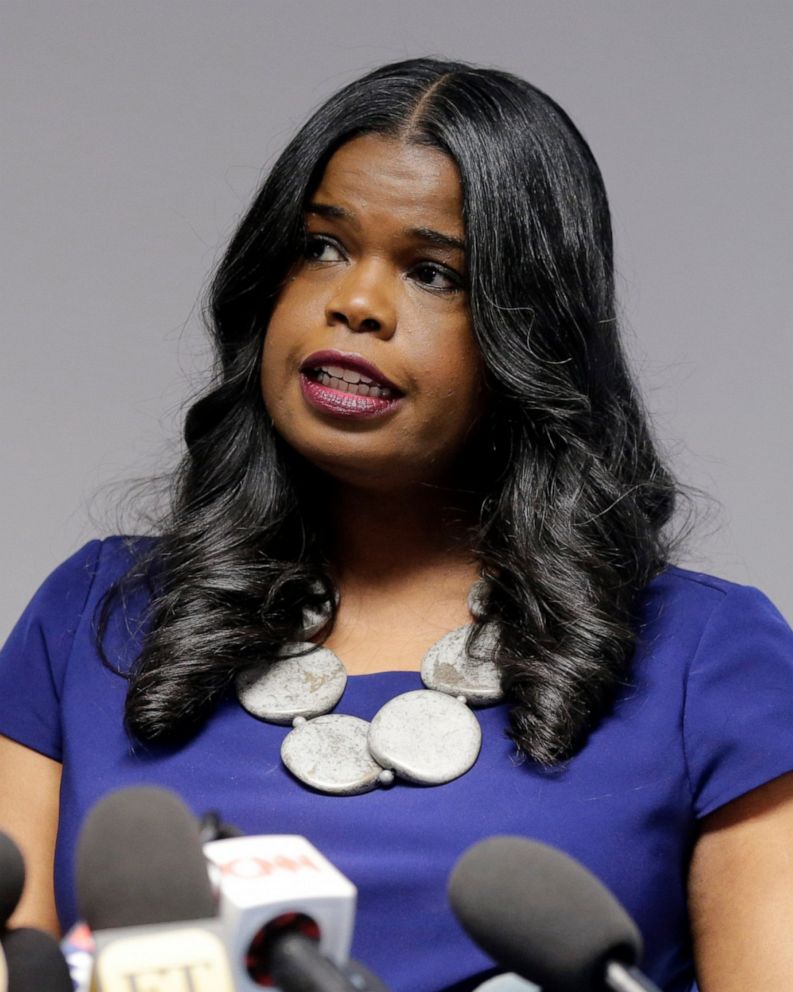
One such election was that of Kim Foxx of Cook County, Illinois. Foxx ran against controversial incumbent, Anita Alvarez. Alvarez was criticized for her handling of the murder of Laquan McDonald by a police officer, leading to a ground swell of activism to unseat her. Kim Foxx stepped up to the challenge and now runs the second largest prosecutor’s office in the nation, encompassing the city of Chicago.

Zbigniew Bzdak/Chicago Tribune
Foxx’s background, growing up in the inner city of Chicago, gives her a unique perspective that she brings to the table. She has stated that her objective is to rethink how we approach crime and its causes. Calling for an ‘holistic’ approach to criminal justice, she recognizes that crime is not just “an issue of good guys versus bad guys.” She understands that this issue is not simply black and white, but inherently complex, often a product of concentrated poverty. There are many reasons for the existence of crime – poverty, childhood experiences, acts of desperation, etc. – and people that commit crime cannot always be seen as just bad people. This ‘either-or’ approach to criminal justice does not reflect the underlying factors of crime or even a logical approach to combating it. Kim Foxx understands this, “I’ve seen people I know and love do bad things – and it makes people hard to sum up.” Most prosecutors believe that there are good and bad people, instead of understanding that sometimes there are good people that do bad things for a myriad of reasons.
Since taking office, Foxx has undertaken an aggressive agenda of reform. She has publicly voiced support for the legalization of marijuana and has said that her office would begin the process of expunging all misdemeanor marijuana convictions. “The question is, how far back can we go? How far back does the data go — which will give us what our universe looks like? But we’re in the process of figuring that out,” says Foxx.
Kim Foxx is also intent on reforming the bail system in Cook County, using what is called the I-Bond. Under this system, individuals that are charged with misdemeanors and low-level felonies with no history of violent crime and do not pose a public safety risk are released pre-trial.
“Routinely detaining people accused of low-level offenses who have not yet been convicted of anything, simply because they are poor is not only unjust – it undermines the public’s confidence in the fairness of the system.” – Foxx
The issue of cash bail has long been a complaint of activists, essentially criminalizing the poor. It’s not uncommon for defendants to simply plead guilty to crimes that they haven’t committed just to get out of jail. There have been countless cases of individuals sitting in jail for months, because they can’t afford to pay bail, before charges are eventually dropped. Once such story is of 16-year-old Kalief Browder. The young man was arrested and charged with stealing a backpack and his bail was set at $3,000. Unable to pay, he sat in jail for three years, two of which were in solitary confinement (a deplorable tactic by the system as well). Although the charges were eventually dismissed, once he was in the system it was difficult for him to escape it due to his prior criminal history. Sadly, he was unable to cope with his imprisonment and took his own life behind bars.
When talking about Kim Foxx, the case of Jussie Smollet can’t be ignored. It now seems apparent that Smollet did indeed fake his own altercation. Does that mean that he should go to jail, locked up behind bars? All of the talk surrounding criminal justice reform has been somewhat abstract, ‘what ifs.’ Now that we have real reformers in office working towards changing a broken system, things are going to get messy and complicated. Part of that means understanding that just because someone committed a crime, that doesn’t always mean that they should go to jail. It’s about reducing the numbers of incarcerated people and figuring out other ways of dealing with ‘crime and punishment.’ The rest of the world deals with crime in various ways besides throwing people in jail, and those societies are doing just fine. This doesn’t mean they escape some form of punishment, however. Foxx explained it in this way, “We must separate the people at whom we are angry from the people of whom we are afraid.”
Philadelphia’s District Attorney, Larry Krasner, has also been called a progressive prosecutor. Elected in 2017, Krasner also ran on a reformist agenda. Since taking over the district’s office, he has begun implementing a laundry list of criminal justice reforms. The new head of the department made waves when, a week after taking office, he fired 30 prosecutors in the DA’s office that were not committed to the changes he planned on implementing. Krasner has virtually decriminalized marijuana possession by no longer seeking charges for small amounts. For other drugs, his office has begun redirecting people to drug treatment programs instead of jail time. Like Foxx in Chicago he has also stopped asking for bail for nonviolent low-level offenders, saying, “We do not, we should not, imprison people for being poor.”
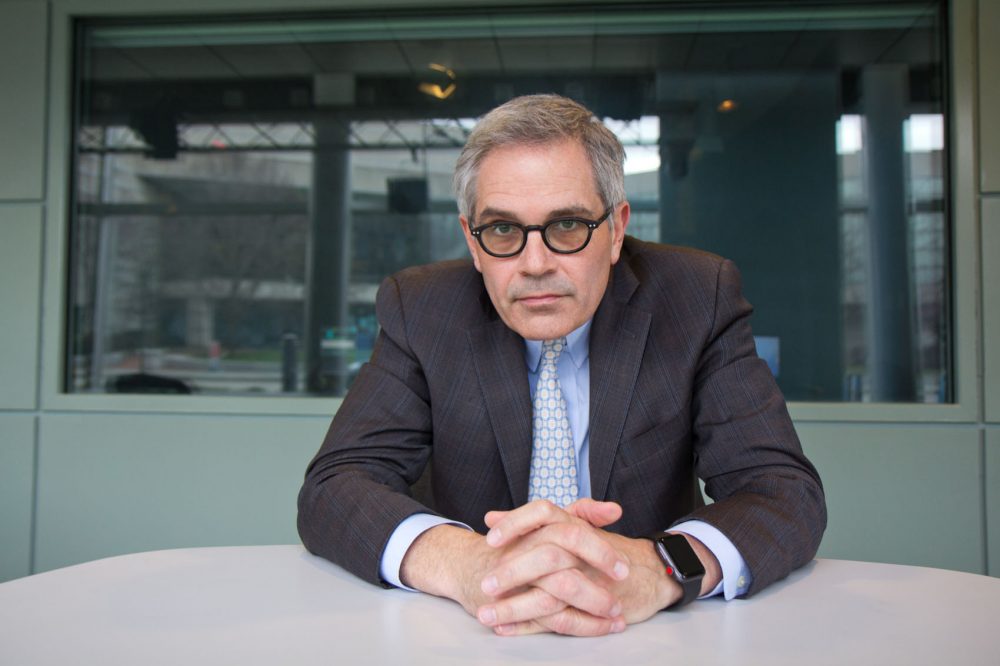
Kimberly Paynter/WHYY
Krasner has also changed the DA’s office approach to sex work. He has instructed his people to stop charging sex workers that have fewer than three convictions with any crime and has dropped all current cases against workers who also fit that description. Instead, they will be redirecting people to diversionary programs. In fact, he has instructed all prosecutors to avoid convictions if possible and guide cases to diversionary programs. This is radically groundbreaking since prosecutors and DA’s offices usually pride themselves on high conviction rates and jail time.
Krasner also instituted a policy of stopping the wide-ranging practice of beginning plea deals with the highest possible sentence, instead starting at the bottom end. This practice has frequently frightened innocent people into pleading guilty to crimes that they did not commit. Faced with disgustingly long jail sentences and an unnecessarily complex criminal justice system, people will choose pleading guilty and getting possibly probation or a shorter sentence. He has requested his prosecutors to recommend no probation or a 12-month probationary period. Philly currently has 44,000 people in the probation system, a number so high that it’s nearly impossible to manage. Largely nonviolent offenders, that shouldn’t be in the system as it is, are lumped in with more serious cases, making them harder to manage.
These reformers, doing absolute necessary work, aren’t without critics. Most of the push-back has come from local police unions. Kevin Graham, the president of the Fraternal Lodge 7 in Illinois has criticized many of Kim Foxx’s policy changes, with most coming from her effort to expunge misdemeanor pot convictions. The police union in Philadelphia has largely criticized Larry Krasner’s new marijuana policies as well.
Marijuana may still be classified as a Scheduled I substance, but science and the general public have long understood that marijuana is less dangerous than substances that the government does not prohibit, like tobacco and alcohol. Indeed, the criminalization of the drug and its severe classification, in the same category of drugs like heroin, has done more harm to ‘offenders’ and society than the actual drug ever could, disproportionately effecting the poor and communities of color. Moving away from the prosecution of simple marijuana possessions frees up money, resources, and time to work on more important and dangerous crime.
With organizers finally beginning to understand that we must move past criminal justice reform in the abstract and try to understand it in a more tangible way in the real world. We must reexamine how we think about criminal justice and punishment. The easiest thing to do is to just lock someone up but, is this always the best thing to do. This can have crippling effects on a person’s future, family, and on society as a whole. In fact, we as a nation are seeing these ill effects as the most incarcerated nation in the world.
Electing so-called progressive prosecutors is not enough. These prosecutors can work towards dismantling mass incarceration from the inside out. But once elected, activists must continuously hold their feet to the fire and keep a vigilant eye on them. It is our job to make sure that they hold true to their promises of reform and change. Whatever the future holds, with a lot of work still to do, the movement for criminal justice is beginning to see the fruits of its labor. The unsung soldiers working in the trenches, for years unnoticed, have paved the way for us today. Let’s honor their work and sacrifice and continue to fight. The fates, and very lives, of hundreds to thousands of our brothers and sisters are in our hands.
Dale Seufert-Navarro

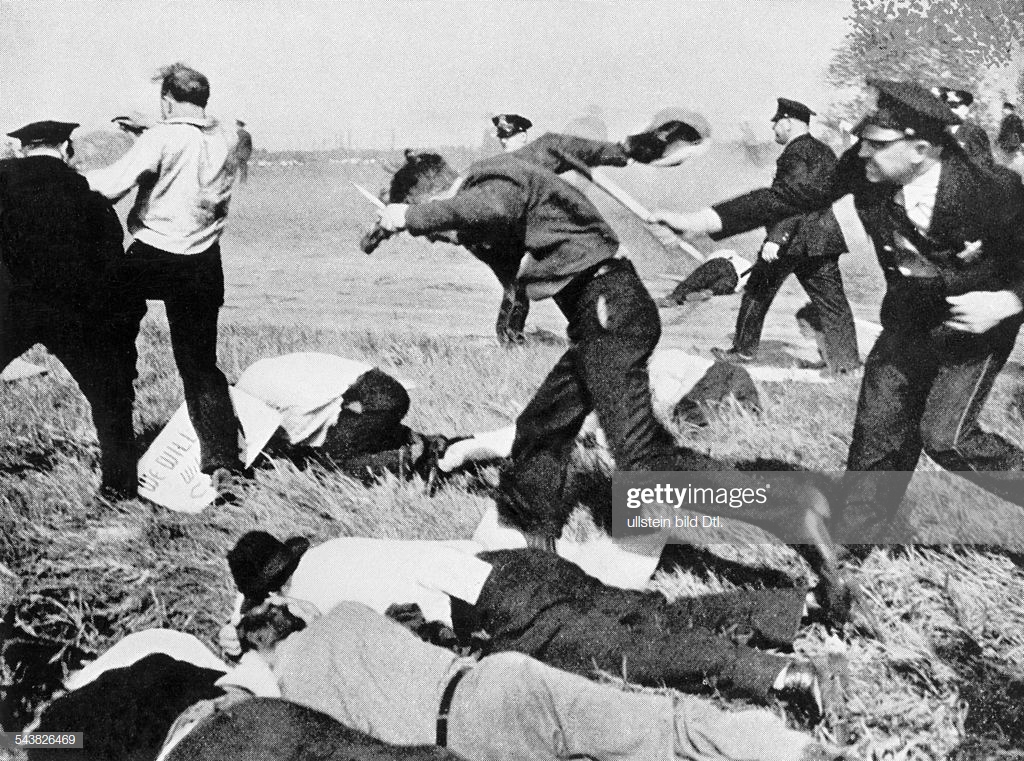 Youngstown Steel Mill Strike –Photo by Archiv Gerstenberg/ullstein bild via Getty Images
 to the LEFT