For the past few weeks, I have been writing profiles on the various candidates running in the 2020 Democratic presidential primary. As they announce, I have tried to look at their pasts and analyze what they bring to the discussion to the left and their chances at grasping the Democratic nomination and hopefully the White House.
As I laid out in my last post, I have not posted in quite some time. I needed to step back and focus on more personal things. This time gave me time to reflect on the direction of the blog, ‘to the LEFT.’ My goal in starting the blog was to focus on issues and policies that matter to me and that I believe have an impact on our country and world. My biggest critique of the media at large is that they often times do not focus on the issues that matter the most. Instead, they focus on shallow information for ratings and controversy. It makes perfect sense as to the reason for this. The media companies are a part of a very lucrative industry. Like everything else in our vain capitalist society, it is about money.
The time that I was away from working on the blog, I realized that I was falling into the same trap. Instead of focusing on policy and issues, I was only attending to the horse-race way that the media covers elections. They have become sports, with running and campaigning more important than governing.
With only so much time in a day to focus my energy on school, work, and my personal life, I have decided to not do anymore 2020 Spotlight profiles. I’m sure that the rest of the media will have that lane covered.
My energy, instead, is going to go back into the important issues that face our society and the policies that we need to champion in order to make that society flourish. I also plan on focusing more energy in local grassroots activism to push these policies and help elect the next president. I plan on writing a piece soon endorsing who I believe is the best option for championing progressive values and policies, while also defeating Donald Trump.
Life, and politics alike, is about priorities; the things that are most important in time and energy. Sometimes it takes a moment to step back to reevaluate those priorities. I am ready to jump in the trenches and help to create real sustainable change. I invite you all to join me in that fight. No man is an island unto himself, and our future depends on all of us.
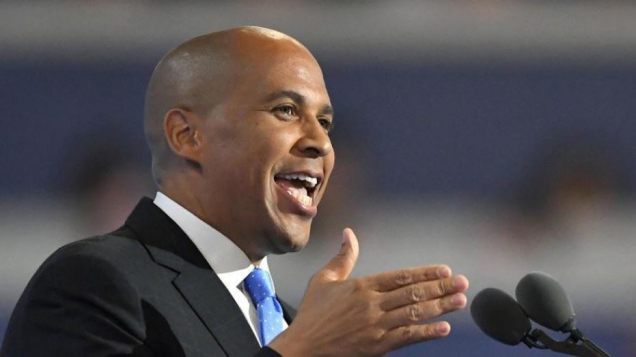
On February 1st, Cory Booker joined a quickly growing list of Democratic candidates running for the presidency. His announcement video draws on his time as mayor of Newark, New Jersey and calls for a return of ‘civic grace.’ Booker points to his unique path in politics, claiming that it is just what our country needs at this rough moment in history. He is a gifted orator and certainly knows how to use a media platform to his advantage. Some parts of his political past are quite interesting, but some on the left remain skeptical of his progressive intentions.
Cory Booker was born in Washington D.C., but grew up in Harrington Park, New Jersey. Booker received a degree in Political Science and a Masters in Sociology from Stanford University. He also attended the University of Oxford, studying American History, and Yale Law School, receiving his Juris Doctor.
His political career started in 1988, when he successfully won a seat on the Municipal Council of Newark. It was during this time that he tried to highlight problems facing urban development. Booker went on a 10-day hunger strike, lived in a tent in the inner city of Newark, and began a week-long challenge to live on $30 food budget – the amount of SNAP benefits recipients receive. The new councilman’s proposals – initiatives to help young people, people of color, affordable housing, and transparency of local government – were routinely outvoted by his fellow members. In 2006, Cory Booker won his race for mayor of Newark, bringing with him a bench of council candidates that became known as the ‘Booker Team’. This gave the new mayor a strong mandate to govern. A central focus of his time as mayor was crime reduction, increasing police forces and working hard to get illegal guns off the streets of Newark. His tenure saw the increase in the amount of affordable housing, increased wages of city workers – while simultaneously reducing his own salary, and the institution of open office hours where residents could regularly meet the mayor to discuss concerns.
Booker gained lots of national media attention during his time as mayor. He once shoveled snow from an elderly resident’s drive way, rescued a woman from a burning building – receiving mild burns and smoke inhalation, and invited displaced residents into his home after Hurricane Sandy destroyed much of the shoreline. Many have claimed that Booker is a master of social media and the attention it brings, using these platforms to elevate his profile. While this may be true, that he seeks out ways to enhance his brand for opportunistic personal reasons, these incidents are noble nonetheless and should be praised and acknowledged.
In 2013, Cory Booker became the first African-American Senator from the state of New Jersey. His time in the Senate has been a mixed bag with the Junior Senator voting for some very good legislation yet, he has drawn criticism from progressives for other votes and campaign fundraising.
On a positive note, Booker co-sponsored and voted for the Employment Non-Discrimination Act and the Respect for Marriage Act – repealing DOMA and requiring the federal government to recognize same-sex marriages. He has been relentless in his opposition to the Trump administration, voting overwhelmingly against the presidents’ nominees and even testifying against fellow Senator Sessions when he was nominated to U.S. Attorney General. Perhaps his most notable achievement recently was his work in getting the First Step Act, an important bipartisan criminal justice reform bill, passed and signed by President Trump. Booker is a proponent of ending the failed ‘War on Drugs’ and supports medical marijuana research as well as decriminalization. The Humane Society has called the Senators voting record the most pro-animal in Congress. Interestingly the Senator has been a vegan since 2014, and a vegetarian for over 20 years.
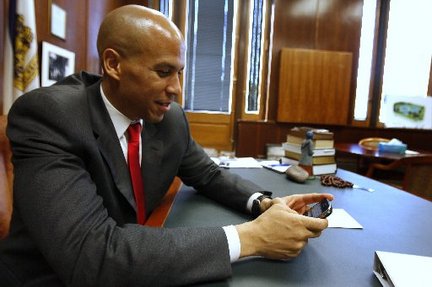
Booker during his time as mayor of Newark, NJ – NJ.com/Robert Sciarrino
Most of Cory Bookers criticism from the left is not about his views on social issues but his fundraising and close ties to the financial and pharmaceutical industries. In 2017, Booker, along with 12 other Democrats, voted against a bill allowing Americans to buy prescription drugs from Canada – where the exact same drugs are significantly cheaper. Walter Bragman at Paste Magazine stated, “This is classic Booker – stand out front on feel-good social issues… and align with big money everywhere else.” It is interesting that Bookers home state of New Jersey is home to many pharma headquarters, and the Senator received about $57,000 from pharmaceutical PACs in 2016. But in 2014, an election year that he actually ran in, he received $160,000 from the industry. To Bookers credit, the Senator has recently come out in favor of a Medicare for All system, cosigning Bernie Sanders’ legislation. Many ask why the sudden support, when the Senator has been arguing for a single payer system for years now, questioning his sincerity.
Many have characterized Booker as Wall Street’s favorite Senator. In fact, the Senator received more money from the financial industry than any other member of Congress, with Mitch McConnell in a close second. The past election cycle he received about $1.8 million from securities and investment firms. He even publicly defended Bain Capital in the 2012 election when President Obama criticized Mitt Romney for his work with the company. On Meet the Press, Booker said the Obama campaigns attacks on Romneys career at Bain Capital was “nauseating” and Democrats should “stop attacking private capital”. In Esquire Charlie Pierce wrote, “When the predatory nature of America’s business elites threatened to become a political issue, Cory Booker leaped to salve the wounded fee-fees of the crooks…”.
Booker has also been a supporter of charter schools; which most progressives reject as they see them as a means to privatize education. In 2012, Booker spoke at the School Choice Policy Summit. There he said the traditional public-school system, “still chokes out the potential of millions of children…your destiny is determined by the zip code you’re born into.” While this is indeed true in some respect and the education system needs to be reformed, better funded, and funded differently, the answer is not to privatize education or take more money out of the public system. The group that organized this event was the American Federation of Children, chaired by Betsy DeVos.
There are indeed some positive parts of Booker’s record and some very admirable actions in his past. Every politician is just that – a politician. Their pasts and voting records must be analyzed with nuance and contextualized attention to specific times in history and politics. That being said, it seems unclear if Cory Booker will be able to convince progressives and Democrats that he is the best option to lead an evolving party. The left is finally beginning to understand that the Democratic party has become too close to certain industries and is out of touch with the larger party base, choosing to surround themselves with wealthy donors at fundraisers. Progressives have been skeptical of Booker’s fundraising and apparent ties to financial industries. These issues will undoubtedly come out in the primaries and debates. The Senator will have to find a way to reconcile his past with his current positions.
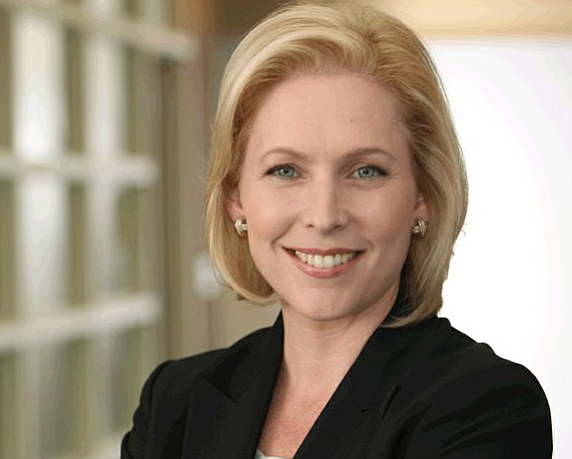
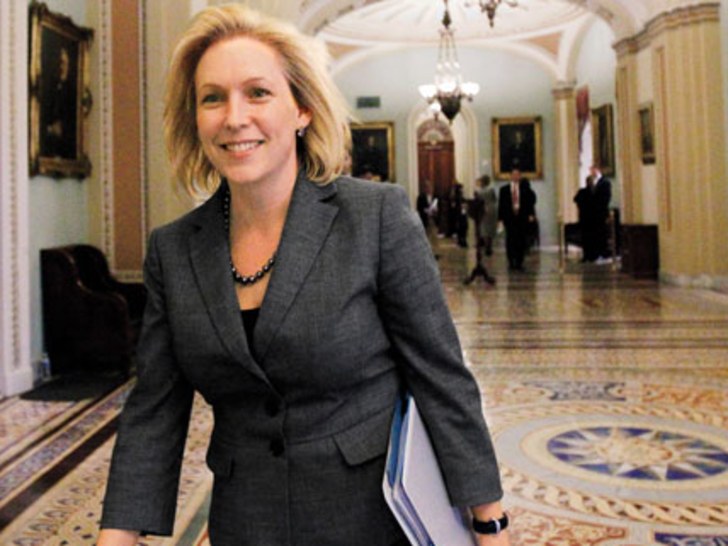
Another powerhouse in the Democratic party has announced a bid for the White House, Kirsten Gillibrand. The Junior Senator from New York state has long been rumored to be planning a Democratic primary challenge and has become a polarizing figure in the party. A centrist Democrat with past conservative views, she has been criticized by the progressive left and adored by establishment donors. More recently though, she angered the party establishment and donor base by criticizing Bill Clinton and calling for the resignation of Senator Al Franken because of sexual misconduct. In a time when the Democratic party is shifting back towards a more progressive and populist message can a centrist Senator, that literally represents the territory of Wall Street, win the nomination of a party yearning for real change and beat an incompetent and floundering Donald Trump.
Kirsten Gillibrand is a graduate of Dartmouth College and the UCLA School of Law. After graduating in the 90s she worked for a private law firm in Manhattan and clerked for Judge Roger Miner of the U.S. Court of Appeals in New York. Working for a private law firm in New York she served as a defense attorney for the tobacco company, Phillip Morris. She helped to defend the company when they were charged with lying to Congress about their previous knowledge about the link between cigarettes and cancer. She has claimed that she had no choice in the types of cases she was handed, but the law firm has stated that all lawyers were given a choice not to work on the case for moral reason, she chose to work for them regardless. Also, during her time she took on pro-bono cases involving tenants’ rights and battered women. It is during this time in the late 1990s that Gillibrand began working on Hillary Clinton’s Senate campaign. The two became close, with Gillibrand seeing the former First Lady as a mentor. In 2006 she successfully ran for Congress in New York’s 20th congressional district.
Her time in the House is becoming somewhat of a liability for the Senator. Upon entering Congress, she joined the Blue Dog coalition in the House, a conservative Democratic caucus. The seat she represented is a traditional conservative district, with her campaigning and voting in Congress that way. Since announcing her run for president she has come under fire for the way she campaigned in that election. Most notably her positions on immigration have come to haunt her, running to the right of her Republican opponent. In a 2007 interview she said that securing the border was a national security issue and closing the border was the first step in this direction. Even as soon as 2008, she claimed the need to expedite ‘illegal alien’ detention and deportation. Gillibrand has since said she is ashamed of this and regrets these positions, calling them unkind and not ‘empathetic’. She said her views were because she lived in and represented a more rural district and did not take the time to put herself in the shoes of immigrant families, crediting her travels as Senator to New York City to talk to these immigrant families as helping to change her views. Before her time in Congress, Gillibrand worked at two law firms based out of Manhattan so one must wonder why she was not able to understand this issue during her time living in a city filled with many immigrants and cultural backgrounds. During her time in the House she also was to the right on guns and received a ‘A’ plus rating from the NRA, voting for a bill that limited information sharing on firearm purchases between government agencies.
In 2008, the then Senator, Hillary Clinton was nominated as Secretary of State by President Obama. Gillibrand campaigned hard for the Governor of New York to appoint her to the vacant seat, ultimately coming out on top. Her time in the Senate has seen her move towards more liberal positions. She has made sexual assault a key part of her agenda, introducing legislation that would remove allegations of cases of sexual assault in the armed forces from official military chain of command and place them in the civilian criminal system. She was also very vocal about calling for the resignation of Senator Al Franken amid his sexual misconduct. Gillibrand even said that President Clinton should have resigned during his Monica Lewinsky scandal. Her views on immigration and guns have also swung leftward during her Senate tenure. She was the first sitting Senator to call for the abolition of ICE and now receives an ‘F’ rating from the NRA. On social issues Gillibrand supports abortion rights and the rights of the LGBTQ community. Economically, she has even come out in favor of Bernie Sanders’ legislation for Medicare for All. In the House she voted in favor of the Bush Tax cuts, but now says she is in favor of raising taxes on high income earners. Once one of the highest receivers of corporate campaign funds, she now says she opposes PAC and other corporate donations.
While in the Senate, Gillibrand seems to be doing everything right – saying all of the right things and voting in all of the right ways. Recently, she has come out in favor of many progressive policies like Medicare for All, raising the minimum wage, and a federal jobs guarantee to name a few. But do these reflect her true intentions or are they platitudes to a party that she sees moving to the left. In 2018, while speaking on a panel about the financial crisis of 2008, she was quoted as saying, “…if it wasn’t Lehman brothers, but Lehman sisters, we might not have had the financial collapse.” This is intellectually lazy at best, disingenuous at worst. This shows a very shallow understanding of the dynamic that unfettered capitalism is playing on society and the economy. This feminist capitalism doesn’t solve the ills of a cruel and heartless system. As a feminist myself I want women to be visible in every aspect of society, but this should not be the goal of feminism. Simply putting a female face on capitalism will not fundamentally change the system, especially for women of the working class or working poor.
These new found views stand in contrast to her tenure in the House of Representatives. Progressives and the left wing of the party worry about the genuineness of Gillibrand and her sudden change in views. While evolution and moving on issues is good and needed, does that mean that you get chosen from a crowded field of people to now represent these issues – to be our champion versus other people who have been right on certain issues from the beginning or longer. To some these changing views show a lack of a moral compass, with a goal of winning elections and advancing a career. Her past views on immigration will be hard for some to get past, especially in today’s climate. Too often the Democratic party is willing to throw marginalized groups under the bus for political expedience and expect them to continue to support the party.
At the current moment the Democratic party is going through a much-needed cleansing, a fight for its very soul. To some on the left Gillibrand represents the neoliberal policy of triangulation adopted by the New Democrats of the 1980s – shifting away from the progressive and populist roots of the Democratic party. We, as a party, need to break away from this thinking, and yes burn some bridges. What I worry about is that the party, and the corporate powers that have gained control over it, will use this time to simply revert back to the pre-Trump status quo – epitomized by seemingly ‘woke’ politicians offering platitudes to working Americans but doing little to actually push real change in people’s lives. This very situation is the reason that the Democratic party has lost its reputation for being the party of the working class, and an unprecedented number of state and federal seats. This, among other factors, is what created the perfect situation for an opportunistic leech like President Trump. The election of Donald Trump is a symptom of this. Thankfully the Democratic party is indeed changing, and for the better. Will Kirsten Gillibrand be able to convince Democratic voters that she is the right person to lead a new and more progressive party?
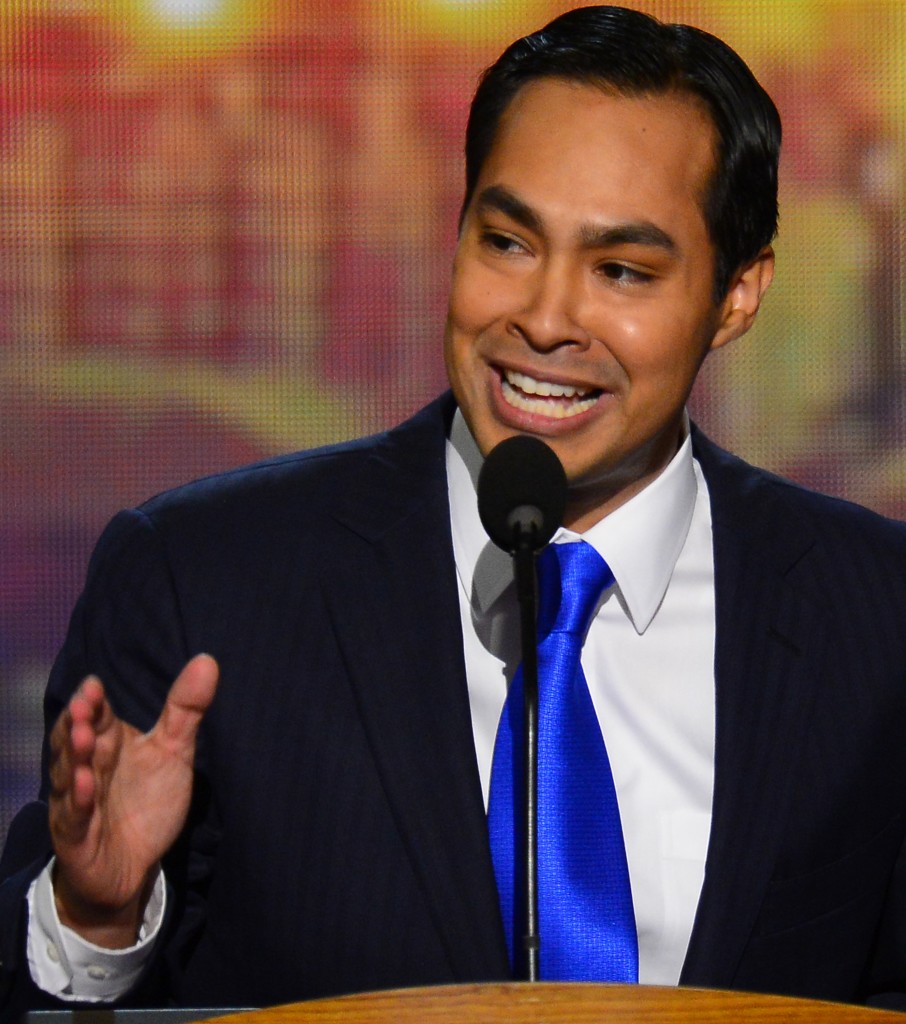
Julian Castro has been called a rising star in the Democratic party since he delivered the keynote address at the Democratic National Convention and his work in the Obama administration. He is a young charismatic politician and was the youngest member of the Obama cabinet. While some may view his bid for the nomination as a long shot, he serves as the antithesis of the Trump administration – a repudiation of the racist and xenophobic narrative that this president has tried to paint of Mexicans and Hispanics at large.
Castro was born in San Antonio, Texas, to parents that were both political activists. His mother, Maria ‘Rosie’ Castro, helped establish a political party called La Raza Unida, out of exasperation with the Democratic party. Julian has credited his mother’s activism for his entry into politics. Castro received a Bachelor of Political Science and Communications from Stanford University in 1996. During this time, he interned for the Clinton administration. After graduating from Harvard Law in 2000 he worked for a private law firm before eventually starting his own practice with his twin brother in 2005.
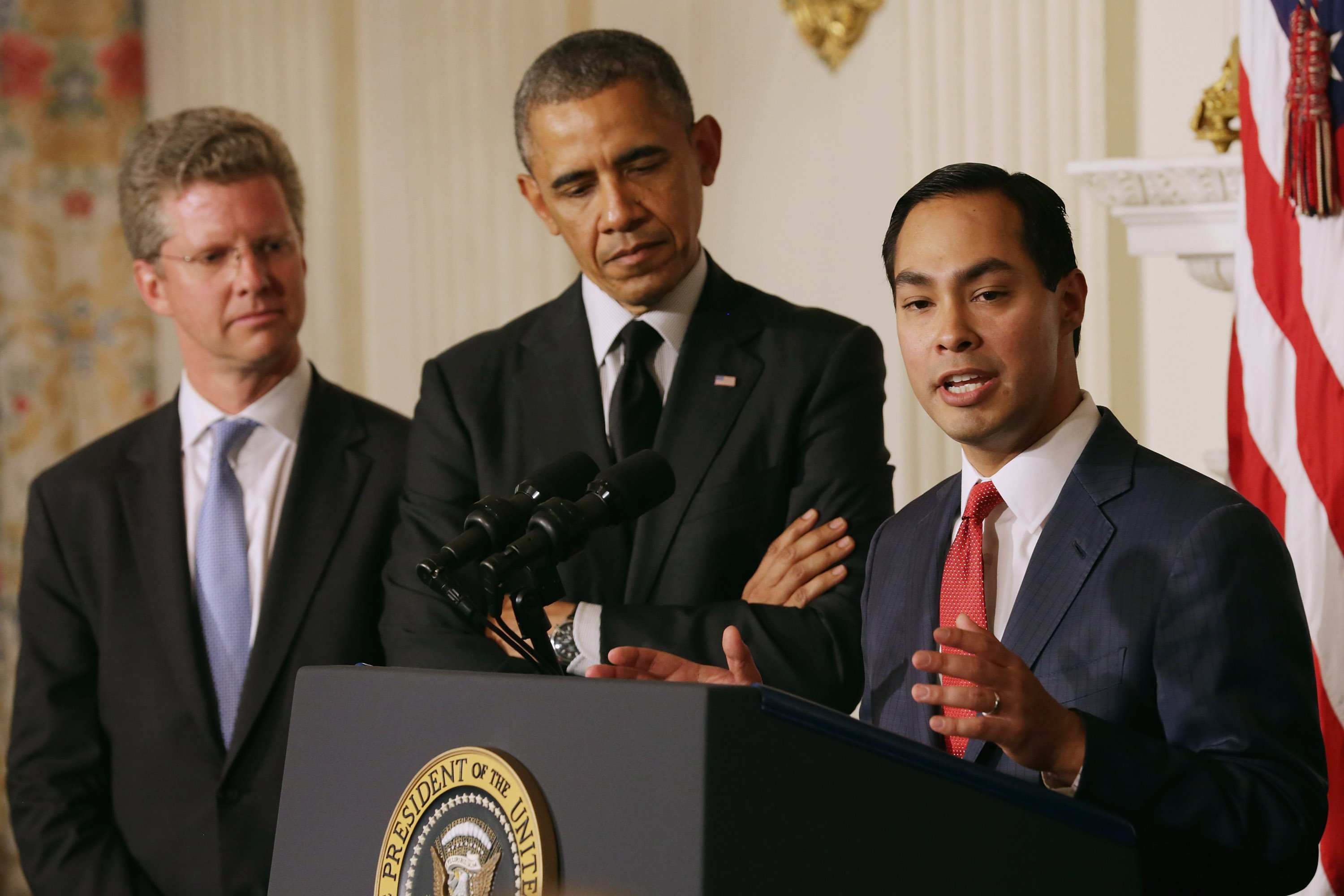
Chip Somodevilla—Getty Images
In 2001, Castro became the youngest person elected to the San Antonio City Council at 26 years old. Four years later he unsuccessfully ran for mayor and after his defeat, he opened his private law practice with his brother. In 2009 he tried running for mayor again, this time winning. He would go on to win he re-elections in the years to come with huge overwhelming majorities. In 2014 he was nominated and confirmed as the Secretary of Housing and Urban Development. Almost immediately, rumors swirled about his possible Vice Presidential nomination on the 2016 Democratic ticket.
On the issues, it is a bit difficult to pin down this rising star in the party. As a former mayor and cabinet member, Castro doesn’t have a voting record. This could prove to be beneficial to him; less baggage. His time as mayor in Texas does offer some insights into his views. Castro has been a long supporter of LGBTQ rights. As mayor of San Antonio he fought against a Texas law banning same-sex marriage, pushing for domestic partner benefits in the city. He was the first mayor to walk in the gay pride parade in his home city. On reproductive rights, he fought alongside Wendy Davis against a Texas law that would have banned abortion after 20 weeks and limited facilities in the state.
Castro has thrown his support behind a number of important pieces of legislation at the moment. He supports some version of the Green New Deal and rejoining the Paris Climate Agreement. His overall approach has been to appeal to the business community stating that it is in their best interest to support and increase their funding for renewable energies. With Medicare for All getting national attention, the young politician has also endorsed the proposal. On immigration, Castro supports comprehensive immigration reform with a pathway for citizenship for undocumented immigrants. Unlike some other Democrats, he has not called for the complete abolition of ICE, instead the agency needs to be reformed. Not much is known about Castro’s foreign policy views, except the fact that he supports the planned withdrawal from Syria, criticizing the president’s announcement of an ‘unplanned’ withdrawal.
Julian Castro is young, at age 44, and ready to hit the ground running. He brings to the Democratic party a vision of fresh energy, something that has been lacking for a long time. In what is becoming a very crowded field of candidates, it is going to be difficult for Castro to set himself apart and stand out. His policies and rhetoric seem to be more in the centrist style of the party, which at the moment is not clear if that will be a liability or an asset. The Democratic party is increasingly being pushed more to the left, a good thing in my opinion. Identity politics are still important in Washington and the fact that he is a Latino will be very interesting to watch as the primaries begin. Castro is the antithesis and the perfect foil to Trumps racist rhetoric. Julian is sure to get under the skin of President Trump in coming months, nominee or not. Another thing to consider is Texas. The state has been a reliable red state for decades, with Jimmy Carter being the last Democratic presidential candidate to win the state in 1976. In recent years, the state’s politics have been slowly trending blue, due to demographics and internal state politics. Could a young Hispanic candidate do the unthinkable in 2020? Who knows, modern American politics has been very unusual and surprising over the last decade.
In a recent CNN interview, Tulsi Gabbard announced that she would be running for president in 2020. The young Congresswoman is somewhat of an enigma in the Democratic party, with her policies seeming to be a mix of the left and centrist wings of the party. Most notably, her announcement has stirred up some fierce opposition, with others clamoring to defend her.
Tulsi Gabbard was born in Leloaloa, Samoa, to a Samoan-European father and a mainland American born mother. She grew up in a mixed-religion household, her father catholic and her mother a practicing Hindu. As a teen she chose Hinduism as her faith. She went to Hawaii Pacific University, receiving a Bachelor of Science in Business Administration in 2009. She is a member of the Hawaii State National Guard and has been deployed to Iraq and Kuwait. In 2002, at age 21, she became the youngest state legislator in Hawaiian history and the youngest female legislator in U.S. history, representing Hawaii’s 42nd state district. She decided not to run for reelection after being ordered to deploy for the National Guard. In 2011 she won a seat on the Honolulu city council. Then when Hawaii’s 2nd congressional seat became available in 2012, she successfully ran and won, becoming the first Samoan-American and the first Hindu elected to the U.S. House of Representatives.
In the House, most of her work and legislation had been focused on military and environmental issues. She has proposed bills to assist wounded veterans and military victims of sexual trauma. The Congresswoman holds many economically progressive views as well. She fought very hard against the passage of the Trans Pacific Partnership, which became a focal point of the 2016 Sanders presidential campaign and the greater American left. She supports the reinstatement of the Glass-Steagall Act, which separates commercial and investment banking, and raising the minimum wage to $15. She is equally as vigilant on the environment. She is continually endorsed by the Sierra Club and in 2017 she introduced legislation that would transition the United States to 100% renewable energies by the year 2035. In 2016 she, along with many other veterans, traveled to North Dakota to protest against the construction of the Dakota Access Pipeline near the Standing Rock Indian Reservation.
Gabbard at the DNC – Saul Loab/AFP/Getty Images
On social issues, Gabbards positions become a bit more nuanced. Early in her life and career she held many openly conservative views on abortion and LGBTQ rights, most likely due to her conservative catholic fathers influence. She previously opposed same-sex civil unions and marriage, working with her father and his various organizations to promote ‘traditional marriage’ and conversion therapy. When her mother ran for office in Hawaii she gave this alarming quote, “This war of deception and hatred against my mom is being waged by homosexual activists because they know, that if elected, she will not allow them to force their values down the throats of the children in our schools.” She now has said she regrets those views and fully supports the rights of the gay community to marry and their full equal inclusion in society. She credits her tours in the Middle East for her change in views. To her credit, she has supported every pro-LGBTQ legislation since her time in the House, actively speaking out against measures aimed at restricting gay rights. She has also reversed her position on abortion and has received two 100% lifetime ratings from Planned Parenthood and NARAL America.
Her foreign policy positions also need some defining and clarification. She has been an outspoken critique of American military intervention with regards to regime change, opposing the invasion of Iraq, Libya, and the intervention in Syria. She calls these measures counterproductive to American security. Gabbard has also voiced opposition to our relationship and arms sales to Saudi Arabia. While she has spoken out against much of the U.S. governments policies in the Middle East, she is a bit more hawkish when it comes to the so-called ‘War on Terror’. She most likely would continue the use of drone strikes in the region, which has been a driving force of animosity towards the U.S. in the area. Gabbard commended the Obama administration for clarifying that the use of drones would not be authorized for non-combatant U.S. citizens, but has not spoken out against the use of drones on civilians in the Middle East. The U.S. currently carries out drone strikes in 5 known countries. These so-called ‘targeted killings’ are anything but, with excessive civilian collateral damage documented. The exact number of these causalities are nearly impossible to compile. Critics claim that the excessive amount of civilian casualties greatly outweigh the amount of combatants killed. Gabbard has also been criticized for her support of far-right Indian Prime Minister, Narendra Modi. Modi is a controversial figure domestically and internationally, criticized for Hindu nationalist policies and anti-Muslim sentiment.
Tulsi Gabbard is fairly new to the national consciousness but has quickly become a polarizing figure in the Democratic party. In 2016 she stepped down as Vice Chair of the Democratic National Committee to support Bernie Sanders in his presidential campaign. She criticized Debbie Wasserman-Shultz and the party for tipping the scales in favor of Hillary Clinton, through unfair media coverage towards Sanders and an anemic debate schedule. Much of the criticisms coming from the party’s establishment and loyalists are due to the fact that she refuses to toe the party’s corporate line. She bucked the party in 2016 and that is not acceptable to many in party leadership. She also represents a realignment of American foreign policy, one without a lust for regime change and constant military intervention that is short cited and reckless. For this she is unacceptable to the D.C. military establishment that is intertwined with the corporate world and both major parties.
The future of Tulsi Gabbards presidential campaign remains to be seen, but one thing for sure is she faces a steep uphill battle to win over some in the Democratic party. Will she be able to get past her old anti-gay comments and her pursuit in opposition to a key Democratic base? In the past, other Democrats have been able to show their evolution on this issue, Hillary Clinton and Barak Obama, and were embraced by the party. Bill Clinton was the president that signed the Defense of Marriage Act into law in the 1990s, throwing the gay community under the bus for political expedience. Some will argue that these Democrats did not go as far as Gabbard, but there is precedent to suggest that people can evolve and be forgiven. Gabbard is not what the leadership and establishment of the Democratic party wants in a candidate – that is evident from the relentlessly negative reporting from the media, right or wrong – but that doesn’t mean she isn’t good for the party. Centrist establishment candidates get glowing coverage from the corporate media, glosses over or conveniently omitting information, while hammering hard on progressive candidates that question corporate or established opinion. She questions the economic and militaristic direction of the Democratic party, and that is a good thing. She will further add a voice to the conversation that should have been had a long time ago – where is the heart and soul of the Democratic party?
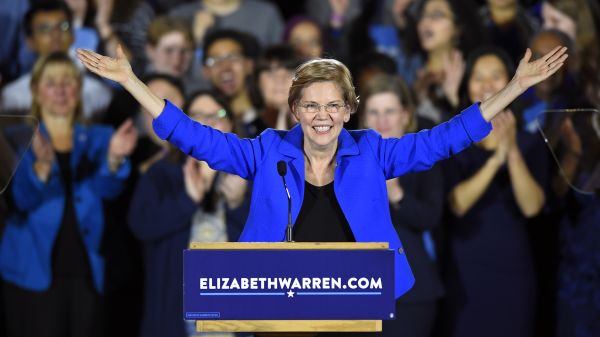
It’s official, the first major player from the Democratic party is running for president. On the eve of the new year, Elizabeth Warren announced that she would be forming an exploratory committee to run for president. While this is not an official announcement, she is all but telling us that she’s running. Along with her twitter announcement, she released a moving and very powerful video explaining her reasoning for wanting to become the next president of the United States. Many progressives have called on the Senator from Massachusetts to run for president since the 2016 primaries, and now we will see if Elizabeth Warren can pull it off.
Warren was born in Oklahoma City to modest middle-class parents. Her father worked at Montgomery Ward and as a maintenance man. After her father had a debilitating heart attack and was unable to work, her mother started working at Sears to help pay the bills. At 13 years old, Warren started waiting tables at her aunt’s restaurant to help with the family’s income. In 1968 she married her high school sweetheart, Jim Warren, and received a Bachelor of Science from the University of Houston two years later in 1970. After moving with her husband to New Jersey, she enrolled in Rutgers Law School at Rutgers University-Newark. After graduating in 1976, she wrote wills and real estate contracts for clients out of their home. The couple had two children but divorced in 1978. Soon after she remarried Bruce Mann but kept the name of her first husband.
Warren as a Special Advisor to President Obama – CNN.com
Elizabeth Warren has taught law at several universities including: Rutgers University, the University of Houston, Texas, Pennsylvania and most recently Harvard Law School. Warren quickly became an expert in bankruptcy and commercial law. In the 90s, she worked to protect consumers as an advocate on the National Bankruptcy Review Commission. In the aftermath of the recession of 2008, Harry Reid appointed Warren to a Congressional Oversight Panel to monitor the government’s handling of the financial crisis. Her work on the committee led her to advocate for the creation of the Consumer Financial Protection Bureau (CFPB), which she later helped to formally establish. In 2010, after the death of Senator Ted Kennedy, Warren was elected as the first female Senator from Massachusetts in a special election.
Although a former Republican, Warren has been a darling of the progressive wing of the Democratic party since her election to the Senate. While she advocates for many progressive issues, her main focus has been on banking and the financial sector. Videos of her relentless questioning of Wall Street executives have gone viral and have been shared by thousands. Following the crash of 2008, she has repeatedly called for the resignation and criminal investigation of banking executives. In October of 2017, during a Senate Banking Committee hearing, Warren called out Wells Fargo CEO, Tim Sloan, stating “At best you were incompetent, at worst you were complicit”.
The progressive and feminist battle cry, ‘Nevertheless she persisted’ has been attributed to Warren and other female leaders. It originated from the Senate confirmation process of Jeff Sessions to Attorney General of the United States by President Donald Trump. During debate on the Senate floor, Warren objected to his appointment and began to read a letter written by Coretta Scott King in 1986 when she opposed the nomination of Sessions to be a federal court judge. A Republican Senator interrupted her and reminded her of a Senate rule against attributing “to another senator or to other senators any conduct or motive unworthy or unbecoming a senator.” Warren was unfazed and continued to read, but Majority Leader McConnell instructed the Senator to cease and have a seat. A vote along party lines silenced Warren for the rest of the hearing. McConnell’s own words were used as a rallying cry — “Senator Warren was giving a lengthy speech. She had appeared to violate the rule. She was warned. She was given an explanation. Nevertheless, she persisted.”
Two important pieces of legislation put forth by Senator Warren are the Anti-Corruption and Public Integrity Act and the sweeping Accountable Capitalism Act. The Anti-Corruption bill is aimed at curbing corrupt campaign spending and getting money out of politics in all three branches of the federal government. The bill would place a lifetime ban on lobbying for presidents, vice presidents, federal judges, members of Congress, and cabinet members and a multi-year ban for federal employees. It would force presidents to place all assets in a blind trust and require candidates to release a certain amount of tax returns in an effort to prevent conflicts of interests. The bill would also change the rule-making process to restrict corporate influence on law-making. Most importantly, the bill would create a new independent office that would investigate and enforce rules of ethics.
The Accountable Capitalism Act is far more important in that it is one of the most sweeping bills to combat corporate power in decades. The basic premise of the bill is that if corporations claim the legal rights of personhood, following the disastrous Citizens United Supreme Court Case, then they should also accept the moral obligations as well. Currently, corporations have prioritized shareholders and enriching their bottom lines over the very workers that make those profits possible. Her bill puts more power in the hands of those very workers and ensure they have a voice in business decisions, not just shareholders. The law would require businesses with profits over $1 billion – a small group, but with a large share of economic activity and employment – to allow workers to elect 40 percent of the membership of their board of directors. The bill also requires executives to wait at least five years to sell stocks that are received as pay compensation in an effort to disincentivize stock buybacks as a way to enrich their own pay instead of investing in workers and the business.
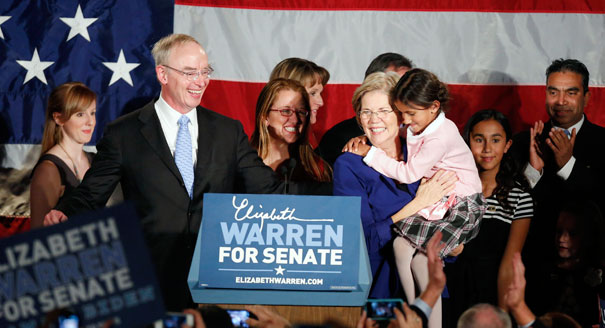
Elizabeth Warren and family – Politico
Elizabeth Warren is better known for her progressive populism, but she also supports many other ideas that will excite Democratic voters. The Senator has said she supports new hot topic policies like Medicare for All and a Green New Deal. She is pro-choice and a strong supporter of reproductive rights. Warren is equally as supportive of the LGBTQ community, supporting same-sex marriage and passage of the Employment Non-Discrimination Act. In 2015, she was one of several Senators to write a letter to the FDA asking them to lift the ban on gay men from donating blood saying it perpetuates the stereotype that all gay men pose a health risk to the rest of society. She supports an overhaul of the criminal justice system, calling it a racist and prejudiced against black and brown Americans. Warren has also advocated for the rights of states to legalize marijuana.
While there are many things for progressives to love Elizabeth Warren for, there are a few things that have made the left stop and question. The Senator from Massachusetts was noticeably silent when water protectors from the Sioux Tribe were protesting the construction of the Dakota Access Pipeline near Standing Rock Indian Reservation. Members from the tribe and protesters from around the country were brutally assaulted by local police using extreme force and fire hoses during below freezing weather. Future Congresswoman, Alexandria Ocasio-Cortez attended some of these protests. She did eventually release a statement in support of the water protectors, but many said it was a little too late, waiting until President Obama halted construction. Many on the left were also disappointed that the Senator didn’t endorse and support Bernie Sanders during the 2016 primary season, waiting to endorse Clinton until she had all but wrapped up the nomination. With Sanders losing Massachusetts by only 1.2 percent, many claimed the endorsement from one of the most loved members of the progressive wing of the party could have pushed Sanders to victory. People on the left also worry about Warrens foreign policy. In 2017 she voted for a whopping $700 billion budget for the military, way more than the Pentagon or even President Trump asked for. When it comes to Israel and Palestine she says she supports a two-state solution but adds that Palestinian application to the UN doesn’t help the peace process. If I may add, nothing but a clear and adamant condemnation of the treatment of the Palestinian people by the Israeli state is short of moral and just.
The announcement of Warren for president has been met with cheers and relief from Democrats of all shades. Warrens voice will be sure to add a needed momentum and continued economic push leftward of the Democratic party. For too long the Democratic party has lost sight of what really matters, creating a society in which every voice is valued. The New Democrats of the 80s and 90s traded corporate power and money, tossing the interests of the working class to the wayside. The prospect of the first woman president is also sure to bring voters to the polls. With a few other female candidates rumored to run as well, Elizabeth Warren will have to find a way to make herself stand out. Her relentless pressure on corporate power will motivate and excite Democratic voters, but will it be enough to set herself apart in a crowded field of candidates. Only time will tell, but as it stands right now Elizabeth Warren will quickly become a frontrunner.
The 2020 general election may be over a year away, but the Democratic primaries have officially begun. The first candidate to announce a bid for the White House is Richard Ojeda, a state Senator from West Virginia. With very little name recognition, it is very likely that most of you have never even heard his name.
Ojeda is 48 years old and was born in Rochester, Minnesota. His paternal grandfather was born in Mexico, and his father lived there until the age of 8. After high school Ojeda joined the Army where he served for 24 years, reaching the rank of Major. While in the military he graduated from West Virginia State University and Webster University, earning his Masters Degree in Business Administration. After retiring from the Army, he worked as a high school teacher before successfully running for West Virginia State Senate in 2016.
Ojeda first came on the national scene in progressive circles when he ran for the U.S. House of Representatives in the 2018 election cycle. He also gained notoriety for being very vocal in his support for the 2018 West Virginia teachers strike. Unfortunately, he did not win his bid for Congress but most notably he improved the Democratic results by 32 points, only losing to his Republican opponent by 12 points. For a Democrat in West Virginia this is pretty impressive given the fact that the previous Democrat only won 24% of the vote, with Ojeda taking 44% of the vote.
Ojeda has called himself a moderate Democrat, but many have said that his views are more in line with a left-wing populist platform. In the West Virginia State Senate, he has made increasing teacher pay a key part of his agenda, criticizing the states moderate pay increase. He also sponsored the Medical Marijuana Act, which was signed into law in 2017.
In November of 2018 he announced that he would be running for president on the Democratic ticket. A large part of his campaign is an anti-corruption and anti-lobbying platform, pledging not to take any corporate PAC money. In his 2018 House run, he only accepted small donations from individual donors and labor unions. He has endorsed Medicare for All and full legalization of marijuana.
While Ojeda may have some economic planks in his platform that will appeal to progressives, there is one notable obstacle that Democrats may not be able get past – in 2016 he cast his vote for Donald Trump for president. He stated that he thought Trump would be good for West Virginians, but has since said that he regrets that decision. Ojeda tried to justify his vote by saying that on the campaign trail Trump talked a good game about the little man and helping working class people, but since becoming president, he has become a twitter using, divisive con-man, that has empowered the very characters he claimed to reign in.
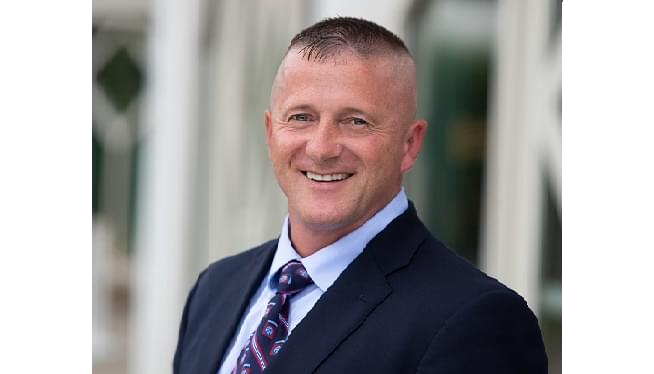
Richard Ojeda – youtube.com
In what is going to be a very crowded primary season, with candidates battling over who is the most progressive choice, does a Trump voting Democrat stand a chance? Ojeda lacks national name recognition and is relatively new on the political scene. Just last primary season, Bernie Sanders, who also had low name recognition, almost successfully took down one of the most well-known and powerful Democrats, Hillary Clinton. Ojeda is hoping for the same underdog success this time around. A key difference is the fact that while Sanders was not very well-known nationally, he was a sitting U.S. Senator and had been involved in politics for almost 40 years. The West Virginian is also personally pro-life but has said that he believes access to abortion should be legal. In a time when reproductive rights are under assault and the very existence of Roe v. Wade is in question this may also make some Democrats hesitant about supporting the candidate.
The Democratic primaries have kicked off and are sure to be fiercely fought by all of the candidates. Richard Ojeda is arguably the biggest longshot of the race but if 2016 proved anything, it’s that all political norms have been tossed aside and anything can happen, and at least Ojeda is more qualified than the current occupant of the Oval Office. That being said, I don’t see Ojeda being a frontrunner in any way, except in helping to push the party in a more economically populist direction focused on the working class.
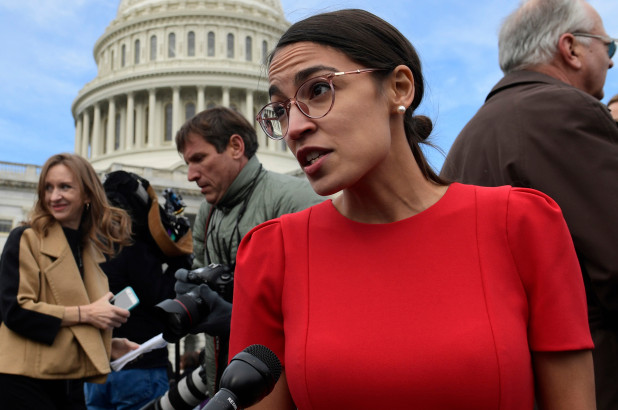
One of the biggest complaints about Congress is that it is too out of touch, unable to understand the basic needs and struggles of everyday Americans. The halls of Congress are filled with elitist millionaires with bank accounts larger than what most Americans will ever see. The average net worth of a Senator is $3.2 million and $900,000 for a Representative in the House. Studies have shown that Congressional offices give preferential treatment to large campaign donors while ignoring calls from everyday citizens. While most members of Congress are unattainable, there is one freshman congresswoman making waves and changing the way members of Congress interact with their constituents. Alexandria Ocasio-Cortez has become a political rockstar ever since she beat longtime Democratic incumbent, Joe Crowley, in their June primary. From the very beginning of her campaign, she has shown that she will be beholden to her constituents and the movement behind her. In a debate with Crowley she was asked if she would support and endorse her opponent if she lost her primary challenge. Her response was brave and honest. She said that decision would not be up to her alone. She was representing a movement and would therefore need to go back and discuss what would be best for the larger movement. This is what it means to be the leader of actual people and not special interests. As it turns out, honesty and sincerity are still important to voters.
Now that Ocasio-Cortez will officially be a member of Congress, she intends to be a different kind of politician, one that sees herself as part of, instead of above and seperate, from a community. Ocasio-Cortez has been very open and honest about her struggle to find affordable housing in the D.C. area, where housing prices are some of the highest in the nation. Many in the media, and on the right, have criticized her and made a joke out of her financial situation. In pointing to, in their minds, her inadequate savings, they have revealed how out of touch they really are. According to the Economic Policy Institute, the median American household has less than $5,000 in savings, with about 30% having less than $1,000. What makes her appealing and relatable is the fact that her situation is more like the lived experience of everyday Americans than the wealthy beltway pundits laughing at her bank account or lack thereof. This is especially true of millennials. Millennials get a very bad rap when it comes to the job market and the housing market, but what some fail to acknowledge is that this generation – my generation – came of age during a time of financial crisis; a time and economy very different then our parents’ generation. Wages have stagnated, the types of jobs have changed, the labor market has become less unionized, the cost of living has increased, the cost of education has skyrocketed, and housing has become very unaffordable. That equation has been very difficult for younger generations to maneuver, and Alexandra Ocasio-Cortez is speaking truth to power about this experience. Unless more millennials and young people run for office and become politically engaged, the political system will not be prepared to speak to the problems affecting a new economy.
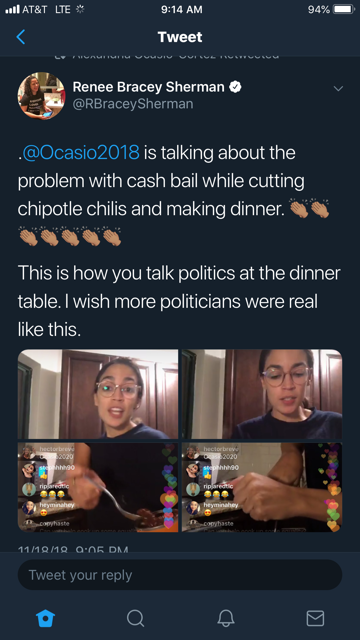
Society is changing and calls for making all aspects of it more democratic grow louder, as it should. One part of this is social media (although there are many downsides to this platform as well). Social media has become a very prevalent part of our society, especially for young people. Her strategic use of the platform is smart and builds on the innovations of the Obama and Sanders campaigns. If you are not following her on Instagram, then you are truly missing out. The voters sent her to Washington and now she is bringing everyone along for the ride. Her posts narrating congressional freshman orientation will put a smile on your face and are very useful in lifting the mysterious veil over Congress. Even before heading to Washington she regularly live-streamed herself cooking dinners at home while discussing politics with her followers.
Via Twitter @Envisioned_One
These Instagram live-streams are comparable to the FDR fireside chats during his presidency in the 30s and 40s. Roosevelt knew that accessibility was important to the general public, and Ocasio-Cortez knows this as well. Alexandria Ocasio-Cortez brought us along with her as she navigated her first week of orientation, fangirling her meetings with other members of Congress. The videos of her discovering underground hallways in the capital building and the Congressional train remind you of an excited kid starting at a new school.
Instagram
Instagram
Instagram
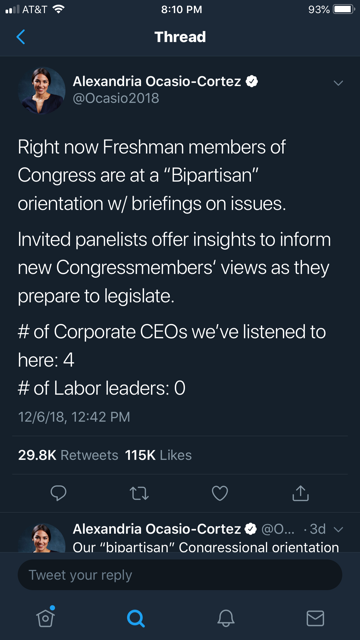
But don’t let this excitement fool you, Alexandria is an articulate and gifted fighter. Recently she revealed that a panel for congressional orientation was packed with corporate CEO’s and lobbyists, but conveniently excluded labor and activist representation.
Via Twitter @Envisioned_One
How often do our elected officials reveal how intertwined and compromised our politicians are to business interests? Many times, candidates run on a platform of change and populism only to abandon those promises once elected. Ocasio-Cortez appears to be sticking to her guns. What she is doing is very important. She is lifting the veil on a mysterious institution clouded in mistrust and showing ordinary people that Congress and politics is not just for rich old white men but can and should be for anybody. I can’t wait to see what she does with her new-found power and platform. I see a long and exciting career ahead of her, even living in a certain famous house one day.
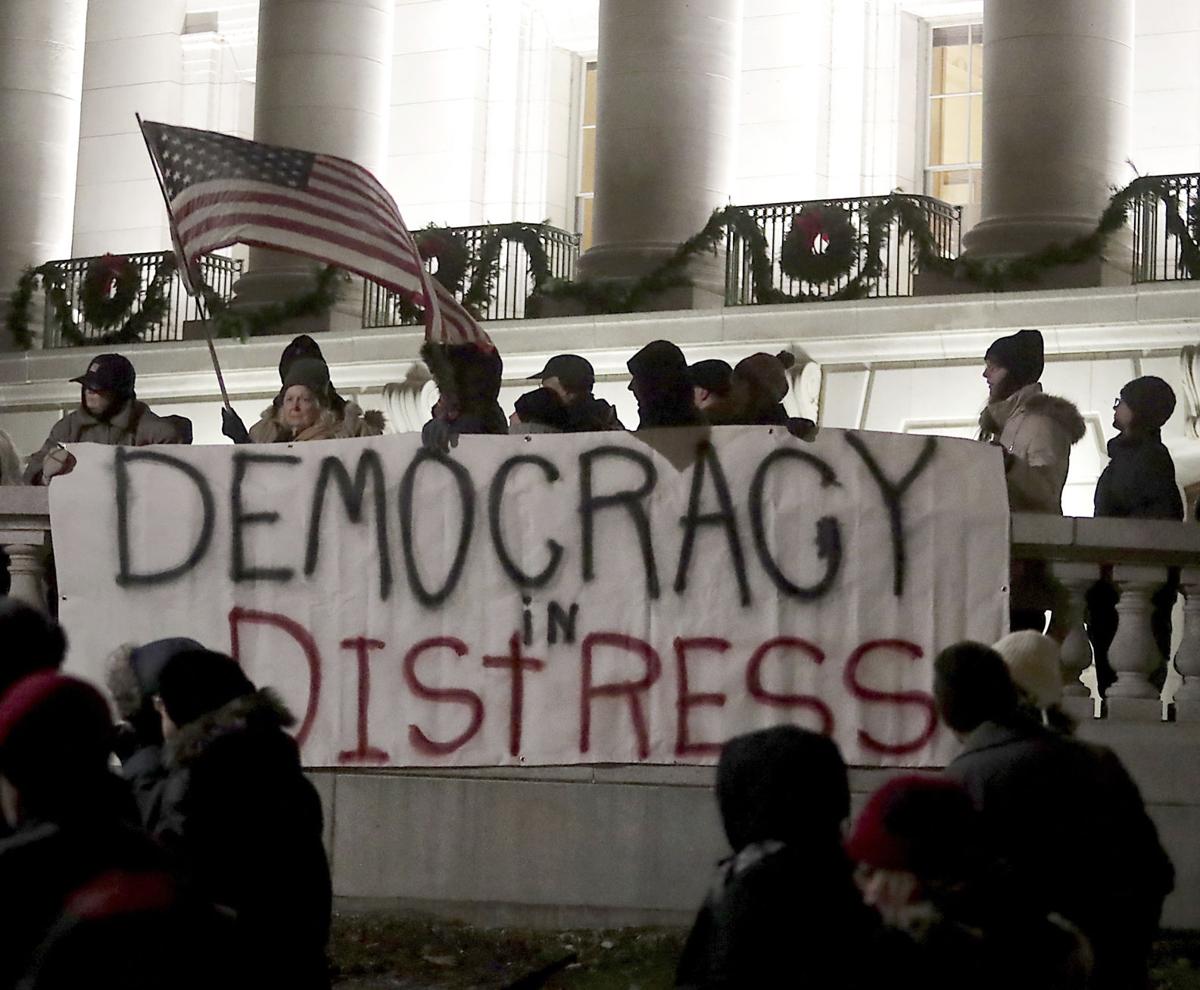
Protests outside of Wisconsin Legislature – Omaha World-Herald
The Republican party has truly become an anti-democratic political party that increasingly relies on underhanded tricks and deceit. From voter suppression to political gerrymandering, the party has created a situation in which they continue to control state legislatures while receiving less votes statewide. Election after election Republicans lose more of the popular vote. As the GOP has failed to win voters over with ideas, they have resorted to outright cheating. While all political parties play games, Democrats included, the blatant power grabs by Republican controlled state legislatures are unprecedented.
This past November the Republican Incumbent governor of Wisconsin, Scott Walker, lost his bid for a third term to Democrat Tony Evers. Next door in Michigan, Democrat Gretchen Whitmer will be replacing the term limited Republican Rick Snyder. The GOP-led legislatures of both states are quickly going to extreme lengths to weaken the powers of the two incoming governors.
Wisconsin and Michigan Republicans are taking a page right out of North Carolina’s playbook. In 2016 the North Carolina state legislature attempted to strip the governor-elect, Roy Cooper of many of his executive powers. Now Wisconsin and Michigan Republicans are aiming to do the same thing.
Due to a heavily gerrymandered political map, the Wisconsin State Assembly will remain under Republican control even though they only received 46 percent of the overall popular vote and lost every major state-wide office in the 2018 midterms. Now, in what is being called a legislative coup, the Republicans are trying to shift power to the themselves while stripping power from the incoming Governor, Tony Evers, and Attorney General, Josh Kaul. Lawmakers are aiming to essentially neuter the Attorney General by requiring legislative approval for decisions usually up to the discretion of the state’s top lawyer. One key component of the campaign, Kaul and Ever’s promise to withdraw the state from a lawsuit against the Affordable Care Act, will now be prevented from happening. The bill would also allow the legislature to hire its own private lawyers to defend state laws that the Attorney General does not wish to defend. This is very problematic because a private law firm, hired by lawmakers, will not have the same interests and accountability that an elected Attorney General is supposed to have. The state legislature also wants to prevent Evers from disbanding an economic agency that has long been seen as a way to funnel taxpayer funds to large corporations with no real value to state interests. Evers campaigned on eliminating the agency. In more voter suppression efforts, the bill cuts early voting from six weeks to two weeks. The Republican majority remains unabashed by public protests. The state House Speaker even stated, “We are going to have a very liberal governor who is going to enact policies that are in direct contrast to what many of us believe in.” This is not how elections and democracy work. The people of Wisconsin voted, and clearly the state legislature is trying to subvert the will of the people.
In Michigan, Democrats won contests for the Governor, Attorney General, and Secretary of State. The GOP-led state legislature there is also trying to restrict the powers of the newly elected officials. Jocelyn Benson, the Secretary of State-elect, ran on election and campaign transparency and now lawmakers are trying to take her power of overseeing campaign finance law and shifting it to a commission controlled by the state legislature. Similar to the Wisconsin bill, Michigan Republicans want to weaken the Attorney General’s office by giving lawmakers the ability to intervene in any stage of a legal battle over passed laws. As the state’s top lawyer, this right is granted to the Attorney General. The most appalling part about the actions of Michigan Republicans is their efforts to reverse or scale back ballot initiatives designed to help working class people. Before the election, citizens gathered enough signatures to add initiatives on minimum wage and paid sick time to the ballot. Supporters dropped the initiatives after the legislature agreed to pass bills first. Now Republicans are trying to scale those back. An amendment to the minimum wage bill pushes the timeline for increasing the minimum wage to $12 from 2022 to 2030, and no longer links the minimum wage increases to inflation. Another amendment changes the paid sick time. The old bill allotted an hour of sick time for every 30 hours of work, capped at 72 hours. The new bill changes to an hour of time for every 40 hours, capped at 36 hours. The goal of the legislature is to get all of the changes passed and signed by outgoing governor Snyder, so the new incoming governor won’t be able to veto the new bills.
Back in North Carolina, Republicans once again lost the popular vote but was able to hold on to majorities in the state legislature. Thankfully, the GOPs voting suppression efforts didn’t completely succeed. Republicans lost seats and will no longer hold a ‘supermajority’, preventing them from overriding a veto from Governor Cooper. For all of the GOPs unsubstantiated claims about voter fraud, it is ironic that Republicans are wrapped up in a allegations of election fraud. The details about North Carolinas 9th congressional district remain unclear, but all fingers seem to point to a coordinated effort to collect absentee ballots in such a way to favor the Republican candidate, Mark Harris. What is known is that a large number of absentee ballots from two counties were requested, but not all of the ballots were returned. It seems that many of these ballots were collected by an operative paid by the Harris campaign. Investigations are underway, and the state board took an unprecedented move of not certifying the election. Now it looks likely that a new election will be held.
The assault on American democracy is real and intensifying. While there are many factors and groups contributing to this threat, the Republican party has completely thrown its support behind efforts to restrict voting and any real democratic input from the American people. The American people will have to be vigilant and contiue to push back.
In the 2010 midterm election, Democrats saw the highest loss of a party in a House midterm election since 1938. Republicans gained 63 seats that night. For 8 long years Republicans have controlled the House of Representatives, frustrating Democrats and progressives. On November 6, 2018 that finally changed. Democrats picked up at least 40 seats, regaining control of the House. After being locked out of every seat of power in Washington since the 2016 election, Democrats have the opportunity to legislate and put forth an agenda to the American people. The question now becomes what will the Democrats do with this new-found power? What should the priorities of the 116th congress be in January? Many people now hope that a Democratically controlled House will finally be a check on scandal ridden administration and a corrupt president. While congress should definitely investigate apparent corruption and hold the president accountable for any crimes that are revealed, it should not be the primary focus. The new Majority must not forget that their primary job in Washington is to govern and legislate.
The most pressing issue of our time is the threat of Climate Change. Earlier this year the Intergovernmental Panel on Climate Change, a committee convened by the United Nations, issued a report describing a world with worsening droughts and food shortages, wildfires, animal extinctions, and mass die-offs of coral reefs as soon as 2040. This date is far sooner than previously believed. In dealing with this threat, the report called for transforming the world economy at a rate and scale that has “no documented historical precedent.” Alexandria Ocasio-Cortez joined Climate Action activists in Nancy Pelosi’s office to draw attention to the issue. Many other freshman members of congress have called for legislation, a Green New Deal, to combat Climate Change. The legislation would create a House select committee to come up with a definitive plan to move the U.S. economy towards 100% renewable energy and push lawmakers to stop taking political contributions from fossil fuel companies.
Campaign finance reform and voting rights should be at the top of a list of priorities of the new congress. Elections in this country are bought and sold to the highest bidder, with everyday citizens pushed out of the political discussion. The obscene amount of money pouring into our political system is having a corrupting effect. Congress should work towards a constitutional amendment reversing the disastrous effects of the Citizens United Supreme Court decision. The U.S. should start moving towards publicly funded elections in order to put all citizens on an equal playing field in our democracy. Instead of making it harder for people to vote, voting rights should be strengthened. The oversight and process of voting should be nationalized, instead of each state setting its own rules. The constitution gives congress broad authority over congressional elections. Automatic voter registration should immediately be instituted. Election day should be a national holiday with legislated opportunities for everyone to vote. Individuals that have committed crimes but have paid their debt to society should have their voting rights restored.
For additional input I implored opinions from Michelle Durney-Croniser, a progressive living in Seattle, Washington,
With the upcoming shift of power in congress there’s debate about what Democrats in congress should focus on in the coming year. Many people see this as a chance to finally check the president and his administration after having our hands tied for two years. Many more are thinking that we can finally go full steam ahead to get answers about what happened between the president, his campaign staff, and Russian leaders during the campaign. Then there’s the idea of worrying less about investigations and Russia, and more about moving important policy proposals forward. In my humble, non-expert opinion, no matter how the democratic controlled congress approaches the next two years, there will be political ramifications that will be tough to predict given that the outcome of the last presidential election defied all expectations. It is also essential to keep in mind that we need to be able to reach across the aisle if we are going to get anything done. Also, I’m tired of playing nice. It’s time to be sharks. I must restate, this is my humble opinion…
Let me start by highlighting policies I think we need to focus on over the course of the next two years and then explain why I think we need to head in this very specific direction. Gun violence is in the very front of my mind. While I understand that for many, this might seem like a secondary topic to things like corruption and reforming the justice system, we see and hear about gun violence on a daily basis. Many of us have been impacted or have had a close call. Furthermore, this is important to young voters and teenagers who will be of voting age by the next election. Not only do we need to focus on reducing gun violence so that we as Americans can feel safe at work, home, schools, movie theaters, church, concerts, and in hospitals, but we also need to make sure that American children don’t grow up in an era in which they ask themselves if today is the day, or if it’s their turn. Let me speak about the political ramifications of addressing gun violence. For the sake of politics alone, we need to address this issue. If we leave out one of the issues that is most directly impacting young and new voters before the next election, then we automatically cut our chances of winning back the White House. Democrats in congress should propose more comprehensive background checks, close loopholes in gun show purchases, and propose policies that allow for the removal of guns from individuals who are considered high risk due to mental health or relationship violence and draft those proposals in a way that will elicit bi-partisan support. To me, it’s really that simple. Remember the turnout of the March for our Lives protest in D.C. and around the country? They care. Young people are paying attention and know how to connect with each other to build a coalition. Do we want them to be civically active in future elections and vote for candidates who are fighting to end gun violence? Yes, we do. Also, republicans know that young voters care about this issue which increases the likelihood that some will attempt to cooperate when presented with proposed legislation.
The next issue I think we need to address is corruption. Maybe you’re confused about why I would think this is such an important issue, but may I point you to the person who makes this point most obvious to me, Alexandria Ocasio-Cortez. Another person we cannot forget is Bernie Sanders. Why did we love him so much until the DNC took him out of play? He represented honesty in politics and was the only true representation of “by the people, for the people.” If we want people to believe that their vote matters, we need voices like Ocasio-Cortez, Sanders, and Beto O’Rourke. In the midterms, across this country, we elected people who ran honest grassroots campaigns. Yes, we also elected establishment politicians who received corporate money, but there’s a trend and if we ignore it we’ll regret it. This country is truly being run by the wealthiest and the rest of us are left to fight over scraps.
Other issues that it’s time to tackle include criminal justice reform, health care coverage for all, raising wages for all, infrastructure investment, renewable energy, and tax reform for the people. Our government is getting out of control and Democrats, as a party, have played nice for too long. It’s time to get down to business. We can be as ruthless as the GOP has been since Reagan was in office. Being nice has gotten us into this big mess and being nasty is the only way to get out. Use our system to back the GOP into a corner so that they have to play along, or they die as a party. Use the nuclear option. Stack federal courts in our favor. Educate the young so that they can rise up and continue to fight for the people of this country.
Now, do we go after the white house for Russian interference and collusion? Absolutely. But, if it looks at all like that is all we’re focused on, we’re setting ourselves up for a big loss in 2020. We can’t afford to take that risk. We have to think about the next presidential election. We have to get things done. The GOP and specifically 45, will be breathing down our necks and exposing every failure for the next two years. It will be part of their campaign messages. What’s your opinion on this matter? I’d like to know what you think is most important right now. What did I miss or get completely wrong? – Michelle Durney-Croniser
Progressives have been waiting for this opportunity since the House or Representatives was lost in the 2010 elections. There is practically a laundry list of things that Democrats need to do with their newfound power, and they should do them all. Yes, the Senate is still controlled by the GOP and yes, the White House is controlled by an incompetent aspiring dictator, but this is the time to force the Republicans hands. If they are going to oppose key reforms and legislation that will help American families, then force them to vote against them. Throw everything at them and put them on the record of selling out the American people. When 2020 rolls around the Democrats will have the upper hand and the higher ground. These votes will be what the political adds in 2020 will be all about. The ads will practically write themselves. The two years between now and 2020 are crucial. Will Democrats use this moment and fight for working families and the working poor or squander a chance at real change?
Dale Seufert-Navarro
Contributor: Michelle Durney-Croniser
(UPDATE: It has been reported that the first bill introduced by the new Congress, H.R. 1, will have sweeping reforms to campaign finance, elections, and voting)








 to the LEFT