Henry Wallace: ‘The Dangers of American Fascism’

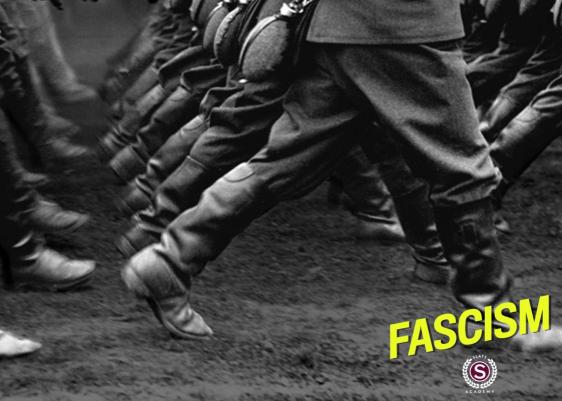
fascism boots
Photo Illustration by Slate. Photo via Corbis/Getty Images 

Everywhere you turn, you hear the word fascism. With Donald Trump’s affinity for violence and a superficial toxic masculine world view, the comparisons between him and historical fascist strongmen are not hard to connect. Because of all of this renewed discussion about fascism, I decided to explore the topic and its historical roots in America.

In 1944, at the height of World War II and the rise of the European fascists – Hitler, Mussolini, and Franco – the Vice President of the Unites States, Henry Wallace, wrote an op-ed in the New York Times warning about the influence and threats of fascist ideology taking root in America. While some of the content of his piece is distinct to the situation and time in which he wrote it, wartime 1940’s, it is still shockingly relevant to our modern era.

Before I posted my own piece on fascist ideology in American politics, I wanted to present Henry Wallace’s entire NYT op-ed article to highlight him in his own words. As you read his piece, imagine the world he faced and the circumstances that created that world. Now look around at the world us today. What are its warnings? What are its parallels?

Dale Seufert-Navarro


*************************************************************************************

An article from the New York Times, April 9, 1944.

From Henry A. Wallace, Democracy Reborn (New York, 1944), edited by Russell Lord, p. 259

henry wallace
Henry Wallace

On returning from my trip to the West in February, I received a request from The New York Times to write a piece answering the following questions:

  1. What is a fascist?
  2. How many fascists have we?
  3. How dangerous are they?

A fascist is one whose lust for money or power is combined with such an intensity of intolerance toward those of other races, parties, classes, religions, cultures, regions, or nations as to make him ruthless in his use of deceit or violence to attain his ends. The supreme god of a fascist, to which his ends are directed, may be money or power; may be a race or a class; may be a military, clique or an economic group; may be a culture, religion, or a political party.

The perfect type of fascist throughout recent centuries has been the Prussian Junker, who developed such hatred for other races and such allegiance to a military clique as to make him willing at all times to engage in any degree of deceit and violence necessary to place his culture and race astride the world. In every big nation of the world are at least a few people who have the fascist temperament. Every Jew-baiter, every Catholic hater, is a fascist at heart. The hoodlums who have been desecrating churches, cathedrals, and synagogues in some of our larger cities are ripe material for fascist leadership.

The obvious types of American fascists are dealt with on the air and in the press. These demagogues and stooges are fronts for others. Dangerous as these people may be, they are not so significant as thousands of other people who have never been mentioned. The really dangerous American fascists are not those who are hooked up directly or indirectly with the Axis. The FBI has its finger on those. The dangerous American fascist is the man who wants to do in the United States in an American way what Hitler did in Germany in a Prussian way. The American fascist would prefer not to use violence. His method is to poison the channels of public information. With a fascist the problem is never how best to present the truth to the public but how best to use the news to deceive the public into giving the fascist and his group more money or more power.

If we define an American fascist as one who in case of conflict puts money and power ahead of human beings, then there are undoubtedly several million fascists in the United States. There are probably several hundred thousand if we narrow the definition to include only those who in their search for money and power are ruthless and deceitful. Most American fascists are enthusiastically supporting the war effort. They are doing this even in those cases where they hope to have profitable connections with German chemical firms after the war ends. They are patriotic in time of war because it is to their interest to be so, but in time of peace they follow power and the dollar wherever they may lead.

American fascism will not be really dangerous until there is a purposeful coalition among the cartelists, the deliberate poisoners of public information, and those who stand for the K.K.K. type of demagoguery.

The European brand of fascism will probably present its most serious postwar threat to us via Latin America. The effect of the war has been to raise the cost of living in most Latin American countries much faster than wages of labor. The fascists in most Latin American countries tell the people that the reason their wages will not buy as much in the way of goods is because of Yankee imperialism. The fascists in Latin America learn to speak and act like natives. Our chemical and other manufacturing concerns are all too often ready to let the Germans have Latin American markets, provided the American companies can work out an arrangement which will enable them to charge high prices to the consumer inside the United States. Following this war, technology will have reached such a point that it will be possible for Germans, using South America as a base, to cause us much more difficulty in World War III than they did in World War II. The military and landowning cliques in many South American countries will find it attractive financially to work with German fascist concerns as well as expedient from the standpoint of temporary power politics.

Fascism is a worldwide disease. Its greatest threat to the United States will come after the war, either via Latin America or within the United States itself.

Still another danger is represented by those paying lip service to democracy and the common welfare, in their insatiable greed for money and the power which money gives, do not hesitate surreptitiously to evade the laws designed to safeguard the public from monopolistic extortion. American fascists of this stamp were clandestinely before the war, and are even now preparing to resume where they left off, after “the present unpleasantness” ceases.

The symptoms of fascist thinking are colored by environment and adapted to immediate circumstances. But always and everywhere they can be identified by their appeal to prejudice and by the desire to play upon the fears and vanities of different groups in order to gain power. It is no coincidence that the growth of modern tyrants has in every case been heralded by the growth of prejudice. It may be shocking to some people in this country to realize that, without meaning to do so, they hold views in common with Hitler when they preach discrimination against other religious, racial or economic groups. Likewise, many people whose patriotism is their proudest boast play Hitler’s game by retailing distrust of our Allies and by giving currency to snide suspicions without foundation in fact.

The American fascists are most easily recognized by their deliberate perversion of truth and fact. Their newspapers and propaganda carefully cultivate every fissure of disunity, every crack in the common front against fascism. They use every opportunity to impugn democracy. They use isolationism as a slogan to conceal their own selfish imperialism. They cultivate hate and distrust of both Britain and Russia. They claim to be super-patriots, but they would destroy every liberty guaranteed by the Constitution. They demand free enterprise but are the spokesmen for monopoly and vested interest. Their final objective toward which all their deceit is directed is to capture political power so that, using the power of the state and the power of the market simultaneously, they may keep the common man in eternal subjection.

Several leaders of industry in this country who have gained a new vision of the meaning of opportunity through cooperation with government have warned the public openly that there are some selfish groups in industry who are willing to jeopardize the structure of American liberty to gain some temporary advantage. We all know the part that the cartels played in bringing Hitler to power, and the rule the giant German trusts have played in Nazi conquests. Monopolists who fear competition and who distrust democracy because it stands for equal opportunity would like to secure their position against small and energetic enterprise. In an effort to eliminate the possibility of any rival growing up, some monopolists would sacrifice democracy itself.

It has been claimed at times that our modern age of technology facilities dictatorship. What we must understand is that the industries, processes, and inventions created by modern science can be used either to subjugate or liberate. The choice is up to us. The myth of fascist efficiency has deluded many people. It was Mussolini’s vaunted claim that he “made the trains run on time.” In the end, however, he brought to the Italian people impoverishment and defeat. It was Hitler’s claim that he eliminated all unemployment in Germany. Neither is there unemployment in a prison camp.

Democracy to crush fascism internally must demonstrate its capacity to “make the trains run on time.” It must develop the ability to keep people fully employed and at the same time balance the budget. It must put human beings first and dollars second. It must appeal to reason and decency and not to violence and deceit. We must not tolerate oppressive government or industrial oligarchy in the form of monopolies and cartels. As long as scientific research and inventive ingenuity outran our ability to devise social mechanisms to raise the living standards of the people, we may expect the liberal potential of the United States to increase. If this liberal potential is properly channeled, we may expect the area of freedom of the United States to increase. The problem is to spend up our rate of social invention in the service of the welfare of all the people.

The worldwide, agelong struggle between fascism and democracy will not stop when the fighting ends in Germany and Japan. Democracy can win the peace only if it does two things:

  1. Speeds up the rate of political and economic inventions so that both production and, especially, distribution can match in their power and practical effect on the daily life of the common man the immense and growing volume of scientific research, mechanical invention and management technique.
  2. Vivifies with the greatest intensity the spiritual processes which are both the foundation and the very essence of democracy.

The moral and spiritual aspects of both personal and international relationships have a practical bearing which so-called practical men deny. This dullness of vision regarding the importance of the general welfare to the individual is the measure of the failure of our schools and churches to teach the spiritual significance of genuine democracy. Until democracy in effective enthusiastic action fills the vacuum created by the power of modern inventions, we may expect the fascists to increase in power after the war both in the United States and in the world.

Fascism in the postwar inevitably will push steadily for Anglo-Saxon imperialism and eventually for war with Russia. Already American fascists are talking and writing about the conflict and using it as an excuse for their internal hatreds and intolerances toward certain races, creeds and classes.

It should also be evident that exhibitions of the native brand of fascism are not confined to any single section, class, or religion. Happily, it can be said that as yet fascism has not captured a predominate place in the outlook any American section, class, or religion. It may be encountered in Wall Street, Main Street or Tobacco Road. Some even suspect that they can detect incipient traces of it along the Potomac. It is an infectious disease, and we must all be on our guard against intolerance, bigotry, and the pretension of invidious distinction. But if we put our trust in the common sense of common men and “with malice toward none and charity for all” go forward on the great adventure of making political, economic and social democracy a practical reality, we shall not fail.

Henry Wallace
Pelosi, Read the Room

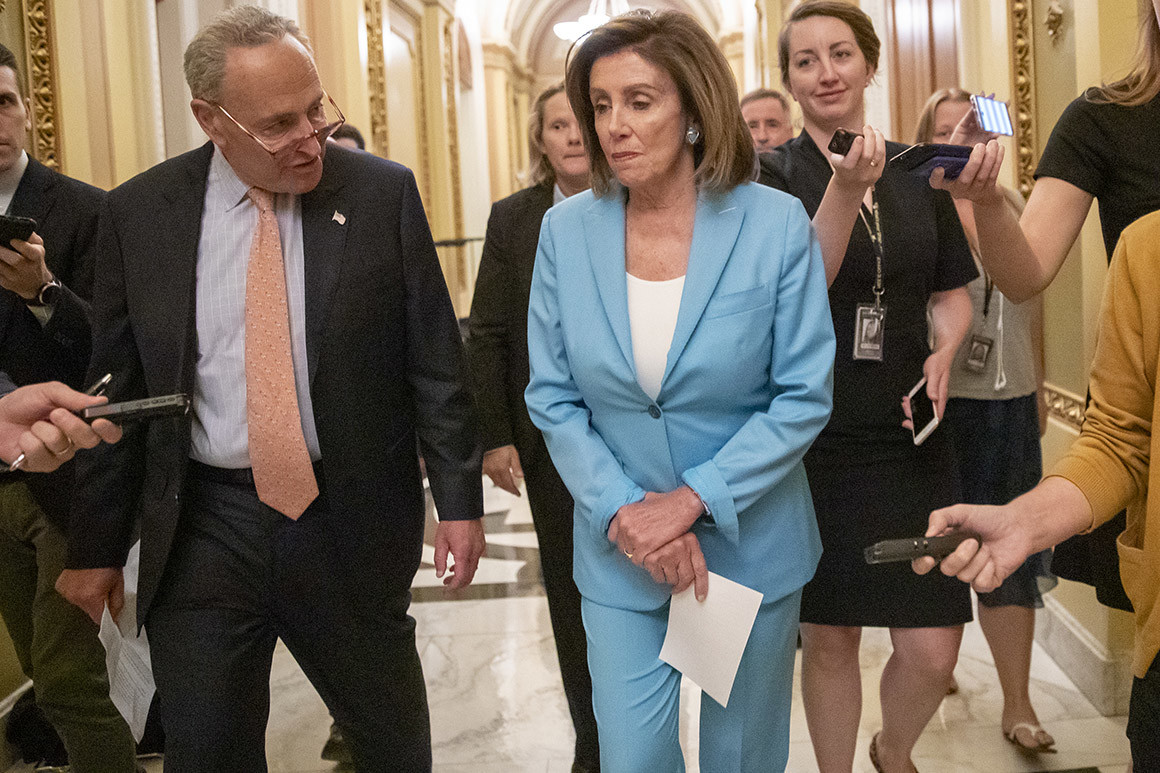
politico - J. Scott Applewhite:AP Photo
Politico – J. Scott Applewhite/AP Photo 

There is a saying in politics; The Republican Party is terrified of its base, while the Democratic Party – along with its leadership – despises its base. While perhaps comical, this cuts to the core the differences between the two major parties and decades of history have proven this sentiment true. GOP leadership actively panders to its base with an ever-increasing ferocity, playing to its most far-right and racist tendencies. At the same time, the base of the Democratic party has awakened, becoming more progressive and supportive of bold new ideas. The leadership of the Democratic party has actively tried to water down these ideas or simply rebuff them altogether. Much of the Democratic party’s leadership legislates and campaigns in a weak and antiquated fashion. Perhaps, someone should inform them that it is 2019, not 1999.

We live in a very different world now, one inhabited by an imbecilic president that knows nothing about the inner workings of government and has zero respect for our collective democratic ideals. Our planet and our very lives are threatened by the growing existential threat of climate change. We have always had a world divided on the lines of class and privilege, but the segregation of power increasing the amount of economic inequality in this country is shockingly immoral and dangerously unsustainable. Racial and gendered hierarchies are nothing new, serving as the very brick and mortar of the founding of this country. While it is certainly not unique to have a racist occupant of the White House, its present incarnation lays bare the deplorable under-rot of hatred and bigotry that inhabits the psyche of this nation.

In steps Nancy Pelosi, self-proclaimed master legislator, leader of the Democrats, and Speaker of the House. Pelosi has been a member of congress since 1987 and was first elected Speaker in 2007. She is inarguably one of the most powerful Democrats in the country. After Democrats regained control of the House of Representatives in 2018, she successfully fended off a disorganized insurgency from centrist (and mostly white male) members and once again reclaimed the Speakers gavel.

Now, more than ever, Democrats, and the country, need a strong and strategical leader. Speaker Pelosi is proving to be neither of those things. Every day, it is more and more apparent that she is failing abysmally at resisting a racist and authoritarian president and is ever more out of touch with the base of the Democratic party. Now she is certainly not the only member of Democratic leadership that this can be said about. In the Senate, Chuck Schumer is even more spineless. What is different in Pelosi’s case is that given her majority in the House, she has power; power that she is wielding ineffectively. The 2018 midterms were seen as a rebuke on the Trump administration, with Democrats flipping forty seats. This blue wave provided a glimmer of hope for a frustrated left. Then and now, Speaker Pelosi has claimed that “no one is above the law”, and “we will hold the president accountable.” But, what does that accountability look like?

The most obvious way to hold this authoritarian petulant man-child of a president accountable is the process of impeachment. It is the only real tool given to Congress in the Constitution for checking the powers of the presidency. With all of Pelosi’s repeated claims about Trumps abuses of power and criminality, she consistently rules out the possibility of impeachment. Due to her memories of the Clinton impeachment hearings backfiring on Republicans in the 90’s, she has decided that the risks to her majority in the House are too high.

While the proceedings that the Republican held Congress brought forth against Bill Clinton had nominal negative effects on the party, the two cases are worlds apart, politically and constitutionally. Firstly, at the height of the Clinton hearings the president held the highest approval ratings of his entire presidency, as high as 73%. In stark contrast, President Trump is highly divisive and unpopular, currently sitting at an approval rating of 42%. In fact, the president’s approval rating has never gotten above 46%.

Setting unpopularity aside, there is a strong legal and constitutional justification for immediately beginning impeachment hearings. Article II, Section 4 of the constitution lays out the grounds for impeachment, “…treason, bribery, or other high crimes and misdemeanors.” While treason and bribery are fairly straightforward, the high crimes and misdemeanors provision is a bit more ambiguous, at least on its face. Some argue that an actual criminal crime must be committed, but this is not consistent with the founder’s intent or with historical precedent. It is apparent from the Federalist papers and other documents from the debating of the Constitution that the act of impeachment was political in nature and was intended for more than just criminal offenses. Hamilton spoke of the “violation of public trust” and “injuries done to society itself”, much of this noncriminal in nature. The historical application of this process proves this point as well. Most of the cases brought forth against public officials did not actually involve criminal offenses – biased or inappropriate decision making, excessive drunkenness, misusing an office for personal profit, and inducing parties to enter into financial contracts.

As the Trump administration clumsily careens towards authoritarianism and self-destruction, the growing list of moral, political, and criminal indictments grows. The president payed hush money to adult film star, Stormy Daniels, covering up his extramarital affair. This effectively broke campaign finance law. Through the use of his hotel’s and properties around the world, Trump has used the office of the presidency as a yet another way to enrich himself and his family. This president has created the most nepotistic and mob-like administration that most of us have ever seen. There is also plenty of evidence to prove that this president is an out and proud racist with an affection for fascism, even if he is too ignorant to understand the term or its implications. But, perhaps the most alarming reason for his immediate impeachment is his obstruction of justice during the Mueller investigation. While the report did not claim that the president worked with the Russian government during the 2016 election, a clear case of obstruction was put on the table. Ultimately, Mueller left the decision of impeachment in the hands of Congress. Just like the specific findings of this investigation, every action by this president during his time in office has been for his own personal enrichment and surreal narcissistic reality show.

It is true that if impeachment in the House were successful, it is unlikely that a Republican controlled Senate would convict the president on any charges. Pelosi is most likely correct in this assessment. But this does not mean that she should abdicate her responsibility to the Constitution or to the American people. She should force the Republican party to choose the side of accountability and integrity or the side of naked power and deceit. By not holding this president accountable, she and the entire Congress is setting a dangerous precedent, for this president and all future office holders. This only serves to embolden Donald Trump, validating his claims that he is above the law.

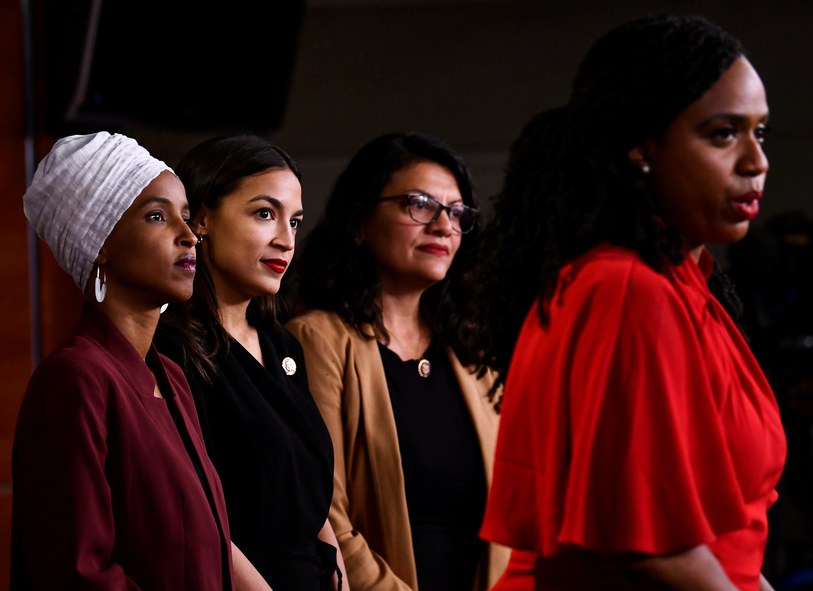
When it comes to her own party and its base, Nancy Pelosi is out of touch and dismissive. Four female congresswomen, known as the Squad, have captured the attention of the Democratic party and the entire nation. Each woman – Rashida Tlaib, Ayanna Pressley, Ilhan Omar, and Alexandria Ocasio-Cortez – has found a way to speak truth to power and question a corrupt status quo in such a simplified way that brings an enormous amount of energy to a base that is yearning for soul and passion. Instead of embracing them, Pelosi has repeatedly dismissed them and their ideas. The Speaker is more than happy to stand beside these women of color on the cover of the Rolling Stone but is not willing to symbolically stand with them when it matters the most. How perfect a representation of the modern Democratic Party that takes for granted the loyalties of communities of color, especially women, instead of truly elevating their work that is of immeasurable importance? Perhaps Pelosi’s qualm with her caucuses left flank, and most specifically the four superwomen of the Squad, is that they represent everything that she is not. Indeed, she was once a young idealistic woman that was criticized for being too far to the left. Now she aids in the propping up of an oppressive and corrupt system, standing in the way of renewed energy for change.

the squad
From left to right: Ilhan Omar, Alexandria Ocasio-Cortez, Rashida Tliab, Ayanna Pressely – Brendan Smialowski/AFP/Getty 

In a Democratic caucus meeting Pelosi told her members not to use Twitter to air their grievances but has used several public interviews to single out and bash many of these women. In one such interview she was quoted as saying, “All these people have their public whatever and their Twitter world… They’re four people and that’s how many votes they get.” How incredibly dismissive and willfully dense at understanding that these four women represent something far more important. They bring with them the power of the various social movements that catapulted them into office, not to mention that they represent thousands of actual constituents. This is most evident with the singling out of Representative Ilhan Omar. Omar has been an outspoken critic of the racist and borderline fascist far-right government of Israel and for that has received relentless criticism from the right and even many Democrats, most notably from the Speaker herself. This on slot of vilification resulted in the spine-chilling ‘Send her back’ chant at a Trump rally in North Carolina, for which Democratic leadership is partly culpable. It seems the Speaker is more willing to belittle four freshman congresswomen then she is at holding a dangerous president accountable.

This is all the more enraging when taken into the context of Pelosi’s last bid for the Speakers gavel. At a time when many Democratic members called for new leadership and with all eyes on the newest progressive members of Congress, they all stood up and proudly cast their votes for the only woman to ever hold the honor. The ‘moderate’ and conservative Democrats – which happen to mostly be white men – that fought to derail her bid for Speaker get a free pass from criticism. Instead, all of her attention is hyper focused on these women that had her back. This protection of the so-called moderates in the party highlights the fallacious idea that the party is moving too far to the left, costing the party elections. Instead, the party should focus on invigorating its base and expanding the electorate to disaffected non-voters.

Nancy Pelosi’s contempt doesn’t seem to just lie with progressive members of Congress, but with important progressive legislation. She has publicly trivialized the Green New Deal, referring to it as the “…green dream, or whatever they call it…” and her office has actively worked against perhaps the most important legislative and ideological issue for the base of the party, Medicare for All. Weeks after Democrats retook the House of Representatives, a top aide for Pelosi urged health policy groups to raise public concerns about Medicare for All. Questioned about this and her disparaging comments about the policy, she touted her support for a single payer system of healthcare early in her career, even claiming she has single payer support signs in her basement from decades ago. This is yet another fitting symbol of entrenched establishment politicians and the modern Democratic party, one that has long forgotten its ideals and traded in its core values for big money and a superficial veneer of empathy for the working class.

Is this insistence on swerving on progressive policies a disagreement on tactic, ideology or simply a lack of courage? Over the years Democratic leadership has shown a real reluctance to fight, instead cowering under the threats and pressures of their Republican counterparts. Democrats are always willing to compromise and meet on GOP terms in the hopes that they will eventually be met halfway, when of course this never occurs. Republicans always tow the party line. The latest example of this is Nancy Pelosi, and originally Chuck Schumer’s, capitulation on a recent border funding bill. She allowed the passage of a Senate bill without any reconciliation or changes, in what she said was an effort to “reluctantly get resources to the children [at the border] fastest.” This was absolutely the wrong move, effectively giving the Trump administration everything and securing nothing in return. Progressive members were correct to oppose the measure and publicly call out their colleagues. There were no protections in the bill that would have guaranteed the humane treatment of the migrants at the border, especially children. After progressive members began to speak out, Pelosi released a letter to Trump urging him to improve the conditions of children and migrants at the border. Her feckless and inept response, “I would deeply appreciate your soonest consideration of the proposals contained in the House legislation…”, shows her lack of courage and frankly a lack of understanding of the critical times we now inhabit. This is not the work of a master legislator.

This is also not the time for ‘civility’ in the traditional Washington beltway sense of the word. The call for civility is often used to undermine dissent and protect a corrupt status quo, as if language and tone are more important or offensive than the policies called into question. What is civility when children are dying at the borders and fellow human beings are treated like animals? What is civility when our democracy is hollowed out to the core by the rich and powerful? What is civility when the only home that we have is literally being killed due to the greed of multi-national corporations that worship at the altar of greed and profits? What is civility when the rhetoric of a white supremacist president directs violence upon sitting members of Congress and already marginalized communities? When the opposition leans into its fascist tendencies and stokes racial and economic violence, we need leadership that is willing to fight in new and audacious ways.

The strange and dangerous times that we find ourselves in call for direct and resolute action, not the current sedated approach that occupies much of the Democratic leadership. With 2020 on the horizon, turnout and energy are going to be crucial. The party is going to need an excited base that believes in its leaders will to fight and knows that its leaders are fighting for them. The 2016 presidential election was a complicated web of understanding, but a large reason for its outcome was a deeply flawed Democratic candidate resulting in a lower turnout of key demographics.

The world, and nature of politics, has drastically changed. The Republican party is an entirely different beast, one that has shown no desire to honestly compromise and work towards real solutions. Indeed, one of the gravest sins of the Obama Era was the president’s belief that the GOP would meet him halfway and work together. This never happened and we should learn from that mistake. When someone shows you who they are, believe them. When the history of this tenable time is written, the enablers of this fascist authoritarian administration and the detractors of humane progressive legislation will be indistinguishable from the very monsters that they superficially and fecklessly ‘resist’. There is no neutrality on a moving bus and Democratic leadership should learn to fight. No one escapes judgment from history, especially when one is in a position of power. Pelosi, it’s time to read the room or get out of the way.

“If you are neutral in situations of injustice, you have chosen the side of the oppressor.” – Desmond Tutu

Dale Seufert-Navarro

Priorities

voting

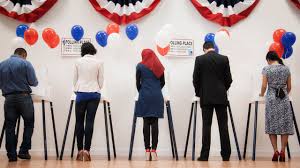
For the past few weeks, I have been writing profiles on the various candidates running in the 2020 Democratic presidential primary. As they announce, I have tried to look at their pasts and analyze what they bring to the discussion to the left and their chances at grasping the Democratic nomination and hopefully the White House.

As I laid out in my last post, I have not posted in quite some time. I needed to step back and focus on more personal things. This time gave me time to reflect on the direction of the blog, ‘to the LEFT.’ My goal in starting the blog was to focus on issues and policies that matter to me and that I believe have an impact on our country and world. My biggest critique of the media at large is that they often times do not focus on the issues that matter the most. Instead, they focus on shallow information for ratings and controversy. It makes perfect sense as to the reason for this. The media companies are a part of a very lucrative industry. Like everything else in our vain capitalist society, it is about money.

The time that I was away from working on the blog, I realized that I was falling into the same trap. Instead of focusing on policy and issues, I was only attending to the horse-race way that the media covers elections. They have become sports, with running and campaigning more important than governing.

With only so much time in a day to focus my energy on school, work, and my personal life, I have decided to not do anymore 2020 Spotlight profiles. I’m sure that the rest of the media will have that lane covered.

My energy, instead, is going to go back into the important issues that face our society and the policies that we need to champion in order to make that society flourish. I also plan on focusing more energy in local grassroots activism to push these policies and help elect the next president. I plan on writing a piece soon endorsing who I believe is the best option for championing progressive values and policies, while also defeating Donald Trump.

Life, and politics alike, is about priorities; the things that are most important in time and energy. Sometimes it takes a moment to step back to reevaluate those priorities. I am ready to jump in the trenches and help to create real sustainable change. I invite you all to join me in that fight. No man is an island unto himself, and our future depends on all of us.

Dale Seufert-Navarro


CALL TO ACTION: Stand with Ilhan Omar

Ilhan-Omar
AP Photo/Carolyn Kaster

One of Congress’ newest members has been facing harsh criticism – from Democrats and Republicans – over remarks some have referred to as anti-Semitic. I am here to say that she did nothing wrong, and we must stand with her.

Since entering Congress Omar and Representative Tlaib, have been outspoken critics of the nation of Israel and its treatment of the Palestinian people. The most recent controversy was due to Omar’s tweet related to AIPAC and a bill in the Senate. What was her grave sin? In a tweet responding to Republican Leader McCarthy calling her anti-Semitic for supporting the BDS – Boycott, Divestment, and Sanctions of Israel – movement, she said, “All about the Benjamin’s baby!” This was a reference to the money that AIPAC – the American Israel Public Affairs Committee – uses in Washington to influence American politics. In fact, their own website states its purpose is to influence Congress for the benefit of Israel. Why does Israel get the distinction of getting shielded from criticism? The media and Democratic party rightly call out the money and influence of the pro-Saudi Lobby, the NRA, Wall street, big Pharma, among others.

She was clearly trying to draw attention to the power that the lobbyist group AIPAC has in Washington, like any other lobby. She faced swift criticism from both parties, with Nancy Pelosi even calling for her to apologize. Omar has since released an apology.

Her apology on twitter:

“Anti-Semitism is real, and I am grateful for Jewish allies and colleagues who are educating me on the painful history of anti-Semitic tropes. My intention is never to offend my constituents or Jewish Americans as a whole. We have to always be willing to step back and think through criticism, just as I expect people to hear me when others attack me for my identity. This is why I unequivocally apologize. At the same time, I reaffirm the problematic role of lobbyists in our politics, whether it be AIPAC, the NRA or the fossil fuel industry. It’s gone on too long and we must be willing to address it.”

In her criticism of the State of Israel and support of BDS she is unequivocally right. The nation of Israel is an undemocratic apartheid nation that is perpetuating the oppression of the Palestinian people. In trying to highlight this injustice she is absolutely right. If she misspoke in her wording that she must acknowledge, but we cannot be more upset about semantic wording than actual physical injustice. Let me be abundantly clear, criticizing a secular nation – not a faith – is NOT anti-Semitic. Israel and its far-right proponents have used this claim to suppress debate and paint its critics in this light. No nation is above fair criticism.

Benjamin Netanyahu and his far-right government have continued and worsened the oppression of the Palestinian people. He will claim that there is no occupation, but the facts are very clear on this. International law and the UN, with countries around the world, have condemned many of Israel’s actions, from the forced removal of Palestinians and the building of illegal settlements to open air assassinations by snipers during protests. During its bombing campaigns over the past years, Israel has bombed schools, hospitals, and press buildings – all in direct violation of international law. The Palestinian infrastructure is heavily restricted. Israel controls their airspace, territorial waters, all crossings, telecommunications, and population registries – controlling who can leave or enter Gaza. This blockade even prevents some international aid from getting to the Palestinian people. Now I ask you, how is this not an occupation? Most recently Israel passed the ‘nation state law’ that essentially is a Jewish Supremacy law essentially making Arab citizens second class citizens.

All that being said, the nation of Israel has the right to defend itself but the disproportionate response by the government of Israel is horrendous. Also, anti-semitism is real, and Jews face a rise in violence. But we must divorce actual bigotry with valid criticism of a government not a religion. This cheapens real anti-semitism and muddies the waters when trying to have a valid discussion about policy.

All of this comes at a time when the status quo on Israel and Palestinian relations is rapidly changing. Progressives and young people are beginning to see the occupation of Palestine for what it is – a racial and ethnic apartheid state created by state violence. Young American Jews are some of the loudest critics of the state of Israel and even within the nation, its own citizens are questioning and protesting the actions by their government.

Ilhan Omar is an easy target for Republicans and the conservative media, she is a hijab wearing woman of color and she is strong in her convictions. As progressives and lovers of justice and equality we must stand with our sister in Congress and the Palestinian people.

I urge you to call, write, or email the Congresswoman and voice your support. Let her know that she is not alone, and we are all standing behind her.

Washington D.C. Office Information

1517 Longworth HOB
Washington, DC20515

Phone: (202) 225-4755

Minneapolis Office Information

404 3rd Avenue North
Suite 203
Minneapolis, MN55401

Phone: (612) 333-1272

Dale Seufert-Navarro

2020 Spotlight: Cory Booker


cory1
Cory Booker – CNN.com

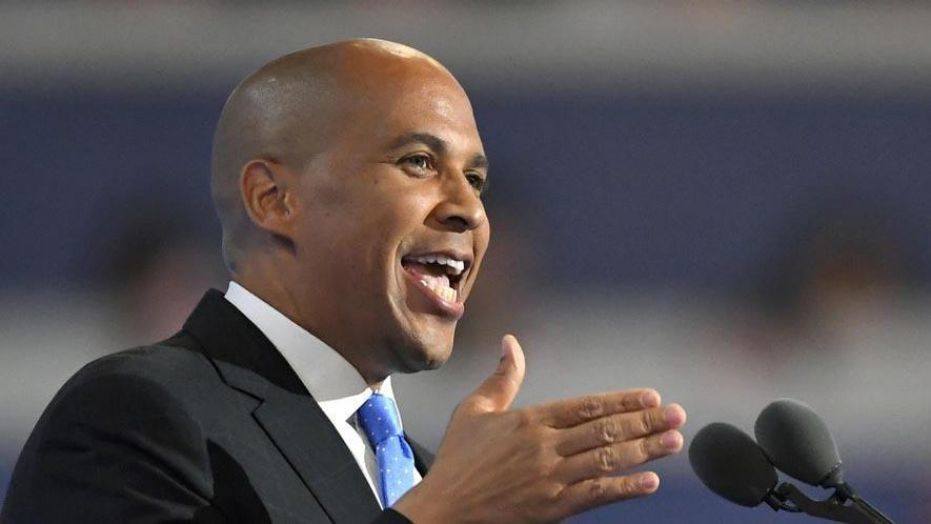
On February 1st, Cory Booker joined a quickly growing list of Democratic candidates running for the presidency. His announcement video draws on his time as mayor of Newark, New Jersey and calls for a return of ‘civic grace.’ Booker points to his unique path in politics, claiming that it is just what our country needs at this rough moment in history. He is a gifted orator and certainly knows how to use a media platform to his advantage. Some parts of his political past are quite interesting, but some on the left remain skeptical of his progressive intentions.

Cory Booker was born in Washington D.C., but grew up in Harrington Park, New Jersey. Booker received a degree in Political Science and a Masters in Sociology from Stanford University. He also attended the University of Oxford, studying American History, and Yale Law School, receiving his Juris Doctor.

His political career started in 1988, when he successfully won a seat on the Municipal Council of Newark. It was during this time that he tried to highlight problems facing urban development. Booker went on a 10-day hunger strike, lived in a tent in the inner city of Newark, and began a week-long challenge to live on $30 food budget – the amount of SNAP benefits recipients receive. The new councilman’s proposals – initiatives to help young people, people of color, affordable housing, and transparency of local government – were routinely outvoted by his fellow members. In 2006, Cory Booker won his race for mayor of Newark, bringing with him a bench of council candidates that became known as the ‘Booker Team’. This gave the new mayor a strong mandate to govern. A central focus of his time as mayor was crime reduction, increasing police forces and working hard to get illegal guns off the streets of Newark. His tenure saw the increase in the amount of affordable housing, increased wages of city workers – while simultaneously reducing his own salary, and the institution of open office hours where residents could regularly meet the mayor to discuss concerns.

Booker gained lots of national media attention during his time as mayor. He once shoveled snow from an elderly resident’s drive way, rescued a woman from a burning building – receiving mild burns and smoke inhalation, and invited displaced residents into his home after Hurricane Sandy destroyed much of the shoreline. Many have claimed that Booker is a master of social media and the attention it brings, using these platforms to elevate his profile. While this may be true, that he seeks out ways to enhance his brand for opportunistic personal reasons, these incidents are noble nonetheless and should be praised and acknowledged.

In 2013, Cory Booker became the first African-American Senator from the state of New Jersey. His time in the Senate has been a mixed bag with the Junior Senator voting for some very good legislation yet, he has drawn criticism from progressives for other votes and campaign fundraising.

On a positive note, Booker co-sponsored and voted for the Employment Non-Discrimination Act and the Respect for Marriage Act – repealing DOMA and requiring the federal government to recognize same-sex marriages. He has been relentless in his opposition to the Trump administration, voting overwhelmingly against the presidents’ nominees and even testifying against fellow Senator Sessions when he was nominated to U.S. Attorney General. Perhaps his most notable achievement recently was his work in getting the First Step Act, an important bipartisan criminal justice reform bill, passed and signed by President Trump. Booker is a proponent of ending the failed ‘War on Drugs’ and supports medical marijuana research as well as decriminalization. The Humane Society has called the Senators voting record the most pro-animal in Congress. Interestingly the Senator has been a vegan since 2014, and a vegetarian for over 20 years.

booker2
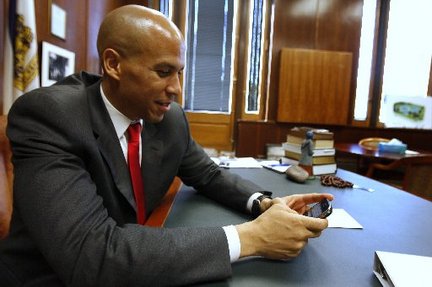
Booker during his time as mayor of Newark, NJ – NJ.com/Robert Sciarrino

Most of Cory Bookers criticism from the left is not about his views on social issues but his fundraising and close ties to the financial and pharmaceutical industries. In 2017, Booker, along with 12 other Democrats, voted against a bill allowing Americans to buy prescription drugs from Canada – where the exact same drugs are significantly cheaper. Walter Bragman at Paste Magazine stated, “This is classic Booker – stand out front on feel-good social issues… and align with big money everywhere else.” It is interesting that Bookers home state of New Jersey is home to many pharma headquarters, and the Senator received about $57,000 from pharmaceutical PACs in 2016. But in 2014, an election year that he actually ran in, he received $160,000 from the industry. To Bookers credit, the Senator has recently come out in favor of a Medicare for All system, cosigning Bernie Sanders’ legislation. Many ask why the sudden support, when the Senator has been arguing for a single payer system for years now, questioning his sincerity.

Many have characterized Booker as Wall Street’s favorite Senator. In fact, the Senator received more money from the financial industry than any other member of Congress, with Mitch McConnell in a close second. The past election cycle he received about $1.8 million from securities and investment firms. He even publicly defended Bain Capital in the 2012 election when President Obama criticized Mitt Romney for his work with the company. On Meet the Press, Booker said the Obama campaigns attacks on Romneys career at Bain Capital was “nauseating” and Democrats should “stop attacking private capital”. In Esquire Charlie Pierce wrote, “When the predatory nature of America’s business elites threatened to become a political issue, Cory Booker leaped to salve the wounded fee-fees of the crooks…”.

Booker has also been a supporter of charter schools; which most progressives reject as they see them as a means to privatize education. In 2012, Booker spoke at the School Choice Policy Summit. There he said the traditional public-school system, “still chokes out the potential of millions of children…your destiny is determined by the zip code you’re born into.” While this is indeed true in some respect and the education system needs to be reformed, better funded, and funded differently, the answer is not to privatize education or take more money out of the public system. The group that organized this event was the American Federation of Children, chaired by Betsy DeVos.

There are indeed some positive parts of Booker’s record and some very admirable actions in his past. Every politician is just that – a politician. Their pasts and voting records must be analyzed with nuance and contextualized attention to specific times in history and politics. That being said, it seems unclear if Cory Booker will be able to convince progressives and Democrats that he is the best option to lead an evolving party. The left is finally beginning to understand that the Democratic party has become too close to certain industries and is out of touch with the larger party base, choosing to surround themselves with wealthy donors at fundraisers. Progressives have been skeptical of Booker’s fundraising and apparent ties to financial industries. These issues will undoubtedly come out in the primaries and debates. The Senator will have to find a way to reconcile his past with his current positions.

Dale Seufert-Navarro

2020 Spotlight: Kamala Harris

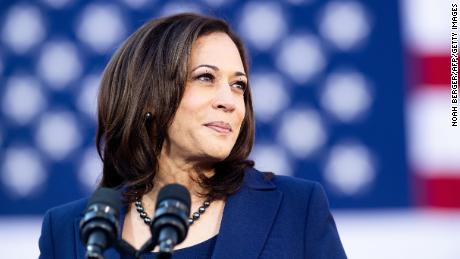
Noah Berger/AFP/Getty Images

In perhaps the most anticipated announcement of the Democratic primary season, Kamala Harris is officially running for president. Many in the media have called the junior Senator from California a front-runner to be the Democratic nominee in 2020. Harris has been a relentless adversary to the Trump administration, grilling many of his nominees in the Senate. Over the past few years, she has become the darling of many on the left and large financial donors alike. While her candidacy excites some, parts of her past as a District Attorney in California worry others. Will Harris be able to convince Democratic voters to take her past with a grain of salt and make her the progressive standard bearer that can ultimately take down Donald Trump?

Kamala Harris was born in Oakland, California to an Indian born mother and Jamaican father. She grew up attending a Baptist Church and a Hindu temple. After her parents divorced, Harris moved with her mother to Canada where her mother took a job doing medical research. Kamala Harris graduated from her Québec high school and then attended Howard University, majoring in Political Science and Economics. Harris then received her law degree from the University of California in 1989. Kamala went on to become the deputy District Attorney of Alameda County, the District Attorney of San Francisco, and then the Attorney General of California. In 2016, Harris successfully ran for Senate in California after Barbara Boxer announced her retirement.

Since announcing her intent on running for president, her time as a prosecutor in California is increasingly becoming an issue of contention for the left. In a time when people on the left are beginning to see the power, and abuses of power, that prosecutors and District Attorneys have, can a former prosecutor win the Democratic nomination?

To the dismay of progressive organizations like the ACLU of California and many Democratic politicians in her state, she opposed and urged voters to reject Proposition 66. California, like many other states, has a ‘three-strikes law’, but the state is one of the strictest – imposing an automatic life sentence, a third-strike, for any minor felony. Proposition 66 would have changed the law to make only violent felonies a trigger for three-strikes. In fact, in her book she states, “Getting smart on crime does not mean reducing sentences or punishments for crime.” While this statement is very broad and does not break down specific crimes and punishments, the very broad nature of it is alarming. We indeed, should be rethinking punishments for certain nonviolent crimes and reducing sentencing accordingly. In 2014, a federal judge in the state ruled that the death penalty is unconstitutional, after which,  she appealed and fought this ruling. Harris also opposed a bill in 2015 requiring her office to investigate all shootings by police officers and did not support standards for body cameras for officers. In a time when the national attention has been on police brutality and the use of excessive force, this decision seems odd.

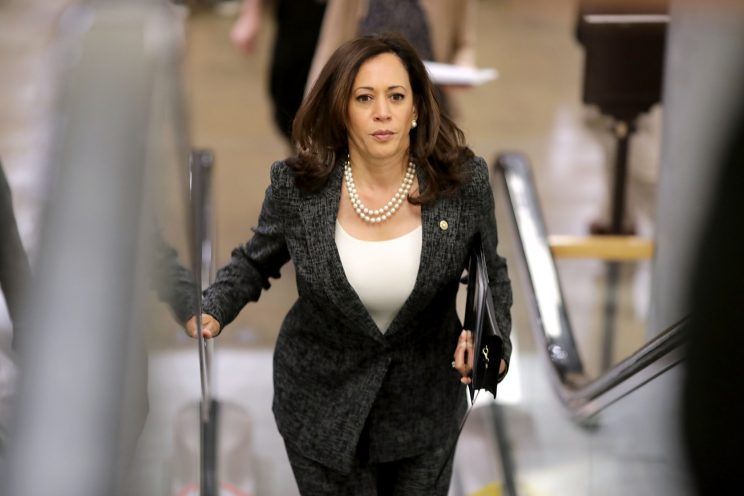
Chip Somodevilla/Getty Images

Harris also made truancy prosecution a priority, to the detriment of poorer Californians and communities of color. She even made this a key part of her campaign for Attorney General. Many progressive groups warned that this heavy-handed approach to truancy could lead to jail time for parents, which would in turn jeopardize employment. High fines compounded with a job loss would spell disaster for a family that is already struggling to survive. This policy effects lower income individuals and criminalizes parents that are already spread thin. This doesn’t reflect the many reasons that kids miss school, and spreading fear through families with the threat of huge fines and jail time doesn’t help children. The somewhat harsh course towards parents of truant children stands in contrast to her failing to prosecute Steve Mnuchin’s One West Bank. In response Harris said, “We went, and we followed the facts and the evidence, and it’s a decision my office made… We pursued it just like any other case. We go, and we take a case wherever the facts lead us.” An internal memo from the prosecutor’s office in California highlighted what they called ‘widespread misconduct’ and thousands of violations.

Perhaps the issue giving most on the left pause was the fact that during her tenure as San Francisco District Attorney she fought to uphold wrongful convictions obtained through very dubious methods. A lab technician in the San Francisco police department intentionally altered results and stole drugs from the lab. Internal memos showed that her office knew about this but failed to notify defense attorneys, causing a judge to condemn her offices actions. Hundreds of cases were dismissed. A recent piece in the New York Times by Lara Bazelon highlights numerous cases where Harris fought to uphold criminal cases tainted by false testimony, evidence tampering, and the suppression of evidence.

Analyzing Harris’ time as a prosecutor in California takes nuance and thoughtful consideration. While there are some things about her record that she should have to explain, there are some very good things to point out. She started a very successful program for first-time nonviolent offenders, giving them a chance to have their convictions dismissed if they complete rigorous vocational training. Harris also mandated bias training in the DA office and the police department. Women’s groups have praised her work in fixing the back log of rape test kits in the state. We must also remember that society places a double standard on women in positions of power – especially women of color. Oftentimes women in power are held to a higher standard, feeling a need to be tough – to show the world, and their male counterparts, that they deserve to have a seat at the table. This pull is even stronger for people of color in a world that is always ready to tear them down or paint them as something that they are not. Any discussion about Harris’ past must also include this fact as well.

Since this time, Harris has tried to move away from these decisions and brand herself as a progressive prosecutor – this is debatable in the least. Harris has said during her time as DA and Attorney General, she refused to voice support for many of the policies that progressive groups wanted her to support because in her capacity, it would not have been wise to appear to tip the scales. While there is validity in this, the District Attorney and Attorney General of a state has sway and power, and taking principled progressive stands would have a powerful impact, to show a desire to fundamentally change a corrupt system. That is how a progressive prosecutor uses his or her given power.

Seeing the momentum behind Medicare for All, she has cosponsored Bernie Sanders legislation for universal healthcare and gave as full-throated defense of the policy in her CNN Town Hall – to the dismay of some progressives, her advisers have since walked that statement back just a bit saying she is open to more moderate plans. Economically, she opposed the Trump tax cuts for the wealthiest Americans and vows to replace them with a tax cut for the middle class. She also says she will not accept any corporate PAC money in her presidential campaign. While hopefully this is true, it is troubling that it was reported in the New York Times that her and several other potential candidates have had talks with executives on Wall Street gauging their support. If this is true than this will be a disqualifier for some parts of the left.

Decades after Shirley Chisholm, Harris paid homage to the first woman and the first African-American to run for president. She used similar lettering and a similar color scheme that Chisholm used. Her campaign slogan is, We the People, very different than the, I’m with Her, of the Hillary Clinton campaign. This shows that she learned from the mistakes of the Clinton campaign and is trying to center her campaign around people instead of herself. This at least, shows good messaging. In her campaign announcement video and CNN Town Hall, she appeared poised, studied, and smart. She will be a formidable opponent for a blundering Trump, with his intellectual capacity of a petulant child. What is a bit worrisome is that her answers to questions at times seem like standard focus grouped political messaging, just vague enough to appeal to progressives while not fully offending corporate actors. In a time when billionaires are literally running the government within the Trump administration and people are still struggling to meet the needs of their families, this just simply isn’t enough. We need someone to stand up and say the hard things, rock the boat and start the process of fundamentally changing a rigged system. One thing is true – Harris is a brilliant woman and a talented politician. What remains uncertain is, can Kamala Harris coalesce the different wings of the Democratic party to take on President Trump?

Dale Seufert-Navarro

2020 Spotlight: Kirsten Gillibrand

kirsten

Another powerhouse in the Democratic party has announced a bid for the White House, Kirsten Gillibrand. The Junior Senator from New York state has long been rumored to be planning a Democratic primary challenge and has become a polarizing figure in the party. A centrist Democrat with past conservative views, she has been criticized by the progressive left and adored by establishment donors. More recently though, she angered the party establishment and donor base by criticizing Bill Clinton and calling for the resignation of Senator Al Franken because of sexual misconduct. In a time when the Democratic party is shifting back towards a more progressive and populist message can a centrist Senator, that literally represents the territory of Wall Street, win the nomination of a party yearning for real change and beat an incompetent and floundering Donald Trump.

Kirsten Gillibrand is a graduate of Dartmouth College and the UCLA School of Law. After graduating in the 90s she worked for a private law firm in Manhattan and clerked for Judge Roger Miner of the U.S. Court of Appeals in New York. Working for a private law firm in New York she served as a defense attorney for the tobacco company, Phillip Morris. She helped to defend the company when they were charged with lying to Congress about their previous knowledge about the link between cigarettes and cancer. She has claimed that she had no choice in the types of cases she was handed, but the law firm has stated that all lawyers were given a choice not to work on the case for moral reason, she chose to work for them regardless. Also, during her time she took on pro-bono cases involving tenants’ rights and battered women. It is during this time in the late 1990s that Gillibrand began working on Hillary Clinton’s Senate campaign. The two became close, with Gillibrand seeing the former First Lady as a mentor. In 2006 she successfully ran for Congress in New York’s 20th congressional district.

Her time in the House is becoming somewhat of a liability for the Senator. Upon entering Congress, she joined the Blue Dog coalition in the House, a conservative Democratic caucus. The seat she represented is a traditional conservative district, with her campaigning and voting in Congress that way. Since announcing her run for president she has come under fire for the way she campaigned in that election. Most notably her positions on immigration have come to haunt her, running to the right of her Republican opponent. In a 2007 interview she said that securing the border was a national security issue and closing the border was the first step in this direction. Even as soon as 2008, she claimed the need to expedite ‘illegal alien’ detention and deportation. Gillibrand has since said she is ashamed of this and regrets these positions, calling them unkind and not ‘empathetic’.  She said her views were because she lived in and represented a more rural district and did not take the time to put herself in the shoes of immigrant families, crediting her travels as Senator to New York City to talk to these immigrant families as helping to change her views. Before her time in Congress, Gillibrand worked at two law firms based out of Manhattan so one must wonder why she was not able to understand this issue during her time living in a city filled with many immigrants and cultural backgrounds. During her time in the House she also was to the right on guns and received a ‘A’ plus rating from the NRA, voting for a bill that limited information sharing on firearm purchases between government agencies.

In 2008, the then Senator, Hillary Clinton was nominated as Secretary of State by President Obama. Gillibrand campaigned hard for the Governor of New York to appoint her to the vacant seat, ultimately coming out on top. Her time in the Senate has seen her move towards more liberal positions. She has made sexual assault a key part of her agenda, introducing legislation that would remove allegations of cases of sexual assault in the armed forces from official military chain of command and place them in the civilian criminal system. She was also very vocal about calling for the resignation of Senator Al Franken amid his sexual misconduct. Gillibrand even said that President Clinton should have resigned during his Monica Lewinsky scandal. Her views on immigration and guns have also swung leftward during her Senate tenure. She was the first sitting Senator to call for the abolition of ICE and now receives an ‘F’ rating from the NRA. On social issues Gillibrand supports abortion rights and the rights of the LGBTQ community. Economically, she has even come out in favor of Bernie Sanders’ legislation for Medicare for All. In the House she voted in favor of the Bush Tax cuts, but now says she is in favor of raising taxes on high income earners. Once one of the highest receivers of corporate campaign funds, she now says she opposes PAC and other corporate donations.

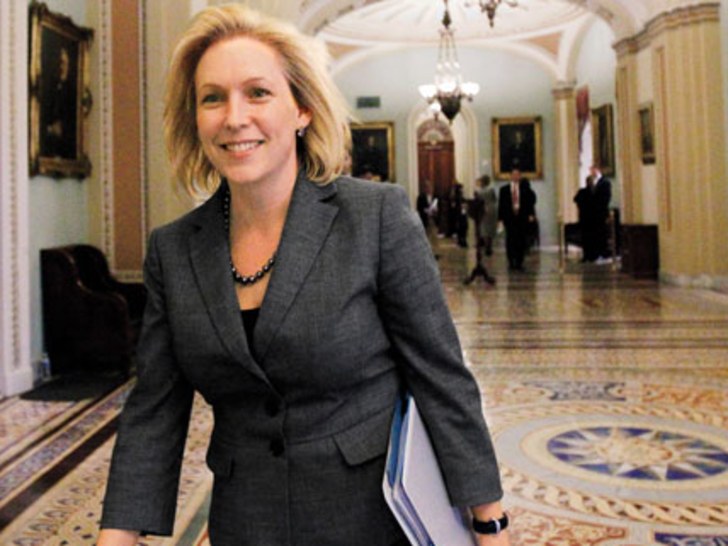
senator-kirsten-gillibrand-01-hess431

While in the Senate, Gillibrand seems to be doing everything right – saying all of the right things and voting in all of the right ways. Recently, she has come out in favor of many progressive policies like Medicare for All, raising the minimum wage, and a federal jobs guarantee to name a few. But do these reflect her true intentions or are they platitudes to a party that she sees moving to the left. In 2018, while speaking on a panel about the financial crisis of 2008, she was quoted as saying, “…if it wasn’t Lehman brothers, but Lehman sisters, we might not have had the financial collapse.” This is intellectually lazy at best, disingenuous at worst. This shows a very shallow understanding of the dynamic that unfettered capitalism is playing on society and the economy. This feminist capitalism doesn’t solve the ills of a cruel and heartless system. As a feminist myself I want women to be visible in every aspect of society, but this should not be the goal of feminism. Simply putting a female face on capitalism will not fundamentally change the system, especially for women of the working class or working poor.

These new found views stand in contrast to her tenure in the House of Representatives. Progressives and the left wing of the party worry about the genuineness of Gillibrand and her sudden change in views. While evolution and moving on issues is good and needed, does that mean that you get chosen from a crowded field of people to now represent these issues – to be our champion versus other people who have been right on certain issues from the beginning or longer. To some these changing views show a lack of a moral compass, with a goal of winning elections and advancing a career. Her past views on immigration will be hard for some to get past, especially in today’s climate. Too often the Democratic party is willing to throw marginalized groups under the bus for political expedience and expect them to continue to support the party.

At the current moment the Democratic party is going through a much-needed cleansing, a fight for its very soul. To some on the left Gillibrand represents the neoliberal policy of triangulation adopted by the New Democrats of the 1980s – shifting away from the progressive and populist roots of the Democratic party. We, as a party, need to break away from this thinking, and yes burn some bridges. What I worry about is that the party, and the corporate powers that have gained control over it, will use this time to simply revert back to the pre-Trump status quo – epitomized by seemingly ‘woke’ politicians offering platitudes to working Americans but doing little to actually push real change in people’s lives. This very situation is the reason that the Democratic party has lost its reputation for being the party of the working class, and an unprecedented number of state and federal seats. This, among other factors, is what created the perfect situation for an opportunistic leech like President Trump. The election of Donald Trump is a symptom of this. Thankfully the Democratic party is indeed changing, and for the better. Will Kirsten Gillibrand be able to convince Democratic voters that she is the right person to lead a new and more progressive party?

Dale Seufert-Navarro

2020 Spotlight: Tulsi Gabbard

marco garcia:ap
Tulsi Gabbard – Marco Garcia/AP

In a recent CNN interview, Tulsi Gabbard announced that she would be running for president in 2020. The young Congresswoman is somewhat of an enigma in the Democratic party, with her policies seeming to be a mix of the left and centrist wings of the party. Most notably, her announcement has stirred up some fierce opposition, with others clamoring to defend her.

Tulsi Gabbard was born in Leloaloa, Samoa, to a Samoan-European father and a mainland American born mother. She grew up in a mixed-religion household, her father catholic and her mother a practicing Hindu. As a teen she chose Hinduism as her faith. She went to Hawaii Pacific University, receiving a Bachelor of Science in Business Administration in 2009. She is a member of the Hawaii State National Guard and has been deployed to Iraq and Kuwait. In 2002, at age 21, she became the youngest state legislator in Hawaiian history and the youngest female legislator in U.S. history, representing Hawaii’s 42nd state district. She decided not to run for reelection after being ordered to deploy for the National Guard. In 2011 she won a seat on the Honolulu city council. Then when Hawaii’s 2nd congressional seat became available in 2012, she successfully ran and won, becoming the first Samoan-American and the first Hindu elected to the U.S. House of Representatives.

In the House, most of her work and legislation had been focused on military and environmental issues. She has proposed bills to assist wounded veterans and military victims of sexual trauma. The Congresswoman holds many economically progressive views as well. She fought very hard against the passage of the Trans Pacific Partnership, which became a focal point of the 2016 Sanders presidential campaign and the greater American left. She supports the reinstatement of the Glass-Steagall Act, which separates commercial and investment banking, and raising the minimum wage to $15. She is equally as vigilant on the environment. She is continually endorsed by the Sierra Club and in 2017 she introduced legislation that would transition the United States to 100% renewable energies by the year 2035. In 2016 she, along with many other veterans, traveled to North Dakota to protest against the construction of the Dakota Access Pipeline near the Standing Rock Indian Reservation.

saul loeb:afp:getty images
Gabbard at the DNC – Saul Loab/AFP/Getty Images

On social issues, Gabbards positions become a bit more nuanced. Early in her life and career she held many openly conservative views on abortion and LGBTQ rights, most likely due to her conservative catholic fathers influence. She previously opposed same-sex civil unions and marriage, working with her father and his various organizations to promote ‘traditional marriage’ and conversion therapy. When her mother ran for office in Hawaii she gave this alarming quote, “This war of deception and hatred against my mom is being waged by homosexual activists because they know, that if elected, she will not allow them to force their values down the throats of the children in our schools.” She now has said she regrets those views and fully supports the rights of the gay community to marry and their full equal inclusion in society. She credits her tours in the Middle East for her change in views. To her credit, she has supported every pro-LGBTQ legislation since her time in the House, actively speaking out against measures aimed at restricting gay rights. She has also reversed her position on abortion and has received two 100% lifetime ratings from Planned Parenthood and NARAL America.

Her foreign policy positions also need some defining and clarification. She has been an outspoken critique of American military intervention with regards to regime change, opposing the invasion of Iraq, Libya, and the intervention in Syria. She calls these measures counterproductive to American security. Gabbard has also voiced opposition to our relationship and arms sales to Saudi Arabia. While she has spoken out against much of the U.S. governments policies in the Middle East, she is a bit more hawkish when it comes to the so-called ‘War on Terror’. She most likely would continue the use of drone strikes in the region, which has been a driving force of animosity towards the U.S. in the area. Gabbard commended the Obama administration for clarifying that the use of drones would not be authorized for non-combatant U.S. citizens, but has not spoken out against the use of drones on civilians in the Middle East. The U.S. currently carries out drone strikes in 5 known countries. These so-called ‘targeted killings’ are anything but, with excessive civilian collateral damage documented. The exact number of these causalities are nearly impossible to compile. Critics claim that the excessive amount of civilian casualties greatly outweigh the amount of combatants killed. Gabbard has also been criticized for her support of far-right Indian Prime Minister, Narendra Modi. Modi is a controversial figure domestically and internationally, criticized for Hindu nationalist policies and anti-Muslim sentiment.

Tulsi Gabbard is fairly new to the national consciousness but has quickly become a polarizing figure in the Democratic party. In 2016 she stepped down as Vice Chair of the Democratic National Committee to support Bernie Sanders in his presidential campaign. She criticized Debbie Wasserman-Shultz and the party for tipping the scales in favor of Hillary Clinton, through unfair media coverage towards Sanders and an anemic debate schedule. Much of the criticisms coming from the party’s establishment and loyalists are due to the fact that she refuses to toe the party’s corporate line. She bucked the party in 2016 and that is not acceptable to many in party leadership. She also represents a realignment of American foreign policy, one without a lust for regime change and constant military intervention that is short cited and reckless. For this she is unacceptable to the D.C. military establishment that is intertwined with the corporate world and both major parties.

The future of Tulsi Gabbards presidential campaign remains to be seen, but one thing for sure is she faces a steep uphill battle to win over some in the Democratic party. Will she be able to get past her old anti-gay comments and her pursuit in opposition to a key Democratic base? In the past, other Democrats have been able to show their evolution on this issue, Hillary Clinton and Barak Obama, and were embraced by the party. Bill Clinton was the president that signed the Defense of Marriage Act into law in the 1990s, throwing the gay community under the bus for political expedience. Some will argue that these Democrats did not go as far as Gabbard, but there is precedent to suggest that people can evolve and be forgiven. Gabbard is not what the leadership and establishment of the Democratic party wants in a candidate – that is evident from the relentlessly negative reporting from the media, right or wrong – but that doesn’t mean she isn’t good for the party. Centrist establishment candidates get glowing coverage from the corporate media, glosses over or conveniently omitting information, while hammering hard on progressive candidates that question corporate or established opinion. She questions the economic and militaristic direction of the Democratic party, and that is a good thing. She will further add a voice to the conversation that should have been had a long time ago – where is the heart and soul of the Democratic party?

Dale Seufert-Navarro

2020 Spotlight: Elizabeth Warren

cnbc.com
Elizabeth Warren – CNBC.com

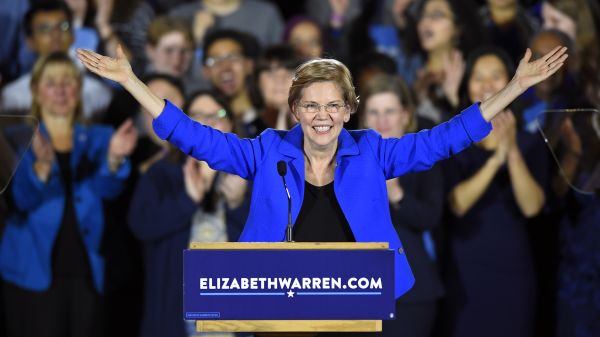
It’s official, the first major player from the Democratic party is running for president. On the eve of the new year, Elizabeth Warren announced that she would be forming an exploratory committee to run for president. While this is not an official announcement, she is all but telling us that she’s running. Along with her twitter announcement, she released a moving and very powerful video explaining her reasoning for wanting to become the next president of the United States. Many progressives have called on the Senator from Massachusetts to run for president since the 2016 primaries, and now we will see if Elizabeth Warren can pull it off.

Warren was born in Oklahoma City to modest middle-class parents. Her father worked at Montgomery Ward and as a maintenance man. After her father had a debilitating heart attack and was unable to work, her mother started working at Sears to help pay the bills. At 13 years old, Warren started waiting tables at her aunt’s restaurant to help with the family’s income. In 1968 she married her high school sweetheart, Jim Warren, and received a Bachelor of Science from the University of Houston two years later in 1970. After moving with her husband to New Jersey, she enrolled in Rutgers Law School at Rutgers University-Newark. After graduating in 1976, she wrote wills and real estate contracts for clients out of their home. The couple had two children but divorced in 1978. Soon after she remarried Bruce Mann but kept the name of her first husband.

cnn.com
Warren as a Special Advisor to President Obama – CNN.com

Elizabeth Warren has taught law at several universities including: Rutgers University, the University of Houston, Texas, Pennsylvania and most recently Harvard Law School. Warren quickly became an expert in bankruptcy and commercial law. In the 90s, she worked to protect consumers as an advocate on the National Bankruptcy Review Commission. In the aftermath of the recession of 2008, Harry Reid appointed Warren to a Congressional Oversight Panel to monitor the government’s handling of the financial crisis. Her work on the committee led her to advocate for the creation of the Consumer Financial Protection Bureau (CFPB), which she later helped to formally establish. In 2010, after the death of Senator Ted Kennedy, Warren was elected as the first female Senator from Massachusetts in a special election.

Although a former Republican, Warren has been a darling of the progressive wing of the Democratic party since her election to the Senate. While she advocates for many progressive issues, her main focus has been on banking and the financial sector. Videos of her relentless questioning of Wall Street executives have gone viral and have been shared by thousands. Following the crash of 2008, she has repeatedly called for the resignation and criminal investigation of banking executives. In October of 2017, during a Senate Banking Committee hearing, Warren called out Wells Fargo CEO, Tim Sloan, stating “At best you were incompetent, at worst you were complicit”.

The progressive and feminist battle cry, ‘Nevertheless she persisted’ has been attributed to Warren and other female leaders. It originated from the Senate confirmation process of Jeff Sessions to Attorney General of the United States by President Donald Trump. During debate on the Senate floor, Warren objected to his appointment and began to read a letter written by Coretta Scott King in 1986 when she opposed the nomination of Sessions to be a federal court judge. A Republican Senator interrupted her and reminded her of a Senate rule against attributing “to another senator or to other senators any conduct or motive unworthy or unbecoming a senator.” Warren was unfazed and continued to read, but Majority Leader McConnell instructed the Senator to cease and have a seat. A vote along party lines silenced Warren for the rest of the hearing. McConnell’s own words were used as a rallying cry — “Senator Warren was giving a lengthy speech. She had appeared to violate the rule. She was warned. She was given an explanation. Nevertheless, she persisted.

Two important pieces of legislation put forth by Senator Warren are the Anti-Corruption and Public Integrity Act and the sweeping Accountable Capitalism Act. The Anti-Corruption bill is aimed at curbing corrupt campaign spending and getting money out of politics in all three branches of the federal government. The bill would place a lifetime ban on lobbying for presidents, vice presidents, federal judges, members of Congress, and cabinet members and a multi-year ban for federal employees. It would force presidents to place all assets in a blind trust and require candidates to release a certain amount of tax returns in an effort to prevent conflicts of interests. The bill would also change the rule-making process to restrict corporate influence on law-making. Most importantly, the bill would create a new independent office that would investigate and enforce rules of ethics.

The Accountable Capitalism Act is far more important in that it is one of the most sweeping bills to combat corporate power in decades. The basic premise of the bill is that if corporations claim the legal rights of personhood, following the disastrous Citizens United Supreme Court Case, then they should also accept the moral obligations as well. Currently, corporations have prioritized shareholders and enriching their bottom lines over the very workers that make those profits possible. Her bill puts more power in the hands of those very workers and ensure they have a voice in business decisions, not just shareholders. The law would require businesses with profits over $1 billion – a small group, but with a large share of economic activity and employment – to allow workers to elect 40 percent of the membership of their board of directors. The bill also requires executives to wait at least five years to sell stocks that are received as pay compensation in an effort to disincentivize stock buybacks as a way to enrich their own pay instead of investing in workers and the business.

politico
Elizabeth Warren and family – Politico

Elizabeth Warren is better known for her progressive populism, but she also supports many other ideas that will excite Democratic voters. The Senator has said she supports new hot topic policies like Medicare for All and a Green New Deal. She is pro-choice and a strong supporter of reproductive rights. Warren is equally as supportive of the LGBTQ community, supporting same-sex marriage and passage of the Employment Non-Discrimination Act. In 2015, she was one of several Senators to write a letter to the FDA asking them to lift the ban on gay men from donating blood saying it perpetuates the stereotype that all gay men pose a health risk to the rest of society. She supports an overhaul of the criminal justice system, calling it a racist and prejudiced against black and brown Americans. Warren has also advocated for the rights of states to legalize marijuana.

While there are many things for progressives to love Elizabeth Warren for, there are a few things that have made the left stop and question. The Senator from Massachusetts was noticeably silent when water protectors from the Sioux Tribe were protesting the construction of the Dakota Access Pipeline near Standing Rock Indian Reservation. Members from the tribe and protesters from around the country were brutally assaulted by local police using extreme force and fire hoses during below freezing weather. Future Congresswoman, Alexandria Ocasio-Cortez attended some of these protests. She did eventually release a statement in support of the water protectors, but many said it was a little too late, waiting until President Obama halted construction. Many on the left were also disappointed that the Senator didn’t endorse and support Bernie Sanders during the 2016 primary season, waiting to endorse Clinton until she had all but wrapped up the nomination. With Sanders losing Massachusetts by only 1.2 percent, many claimed the endorsement from one of the most loved members of the progressive wing of the party could have pushed Sanders to victory. People on the left also worry about Warrens foreign policy. In 2017 she voted for a whopping $700 billion budget for the military, way more than the Pentagon or even President Trump asked for. When it comes to Israel and Palestine she says she supports a two-state solution but adds that Palestinian application to the UN doesn’t help the peace process. If I may add, nothing but a clear and adamant condemnation of the treatment of the Palestinian people by the Israeli state is short of moral and just.

The announcement of Warren for president has been met with cheers and relief from Democrats of all shades. Warrens voice will be sure to add a needed momentum and continued economic push leftward of the Democratic party. For too long the Democratic party has lost sight of what really matters, creating a society in which every voice is valued. The New Democrats of the 80s and 90s traded corporate power and money, tossing the interests of the working class to the wayside. The prospect of the first woman president is also sure to bring voters to the polls. With a few other female candidates rumored to run as well, Elizabeth Warren will have to find a way to make herself stand out. Her relentless pressure on corporate power will motivate and excite Democratic voters, but will it be enough to set herself apart in a crowded field of candidates. Only time will tell, but as it stands right now Elizabeth Warren will quickly become a frontrunner.

Dale Seufert-Navarro

2018, Kick Rocks…

2019

Personally, 2018 was a whirlwind year that brought amazing moments and adventures with family and friends. On the other hand, 2018 was politically very stressful. With an endless news cycle and an even more endless amount of scandal and idiocy coming from a flailing and disjointed White House, there was no shortage of headaches to be had in 2018. Looking back this was truly the never-ending year. We saw a fiercely fought midterm election that gave Democrats control over the House of Representatives. New and exciting names emerged, from Alexandria Ocasio-Cortez to Ayanna Pressley, to name a couple.

cnn.com:brett
Brett Kavanaugh & Christine Blasey Ford – CNN.com

The Supreme Court nomination of Brett Kavanaugh became a media spectacle when Christine Blasey Ford stepped forward with allegations of sexual abuse years prior. A process that is usually only followed by politically minded citizens, the hearings that ensued entranced the nation with everyone voicing their support or condemnation of both parties. The incident added fuel to the #MeToo movement and sparked continued debate on the insidious way that sexual violence permeates our society.

cnn.com:emma
Emma Gonzalez – CNN.com

In February of 2018 the Parkland School shooting set in motion one of the biggest grassroots movements of the year. With Emma Gonzalez leading the way, students of Stoneman Douglas High School stood up to a powerful gun lobby and demanded real legislative change to a issue that seems to be a uniquely American problem and threatens our nation’s children.

politico.com:trump
Trump Administration Cabinet CNN.com

The year in review for the Trump administration was one epic eye roll. An obviously incompetent and corrupt president acts more like a cornered animal lashing out then a steadfast leader. Trumps tweets and press conferences reveal himself to be nothing more than a petulant child with only selfish self-interests. The president’s cabinet has been ripe with scandal and has seen numerous resignations.

jamesgmartin.center:feminist
jamesgmartin.center

Given all of the unsavoriness of the past year, one glimmer of hope is the new feminist revolution. 2018 was truly the ‘year of the woman’. Bad-ass women everywhere stood up and demanded their voices be heard. When the new Congress is sworn in this month, it will have the most female representation in U.S. history.

2019 will be a very crucial and exciting year. With Elizabeth Warren announcing that she is throwing her hat in the ring for the Democratic party’s candidacy for the president in 2020, the primary battles on the left will start heating up. The primary challenge in the Democratic party will be nothing short of a battle for the soul of the party and of the nation itself. The new Democratic majority in the House of Representatives will have an opportunity to legislate in a way that will have real significant benefits to American family’s. The American public and progressive activists will need to hold the Democratic party and members of Congress accountable. It is time to put words into action.

Please join me at ‘to the LEFT’ in the year to come for a critical discussion of key factors affecting our nation and politics. New content and features will be added to the site to shine a light on important information. For the new year I would like to wish everyone a blessed and successful 2019!

Dale Seufert-Navarro