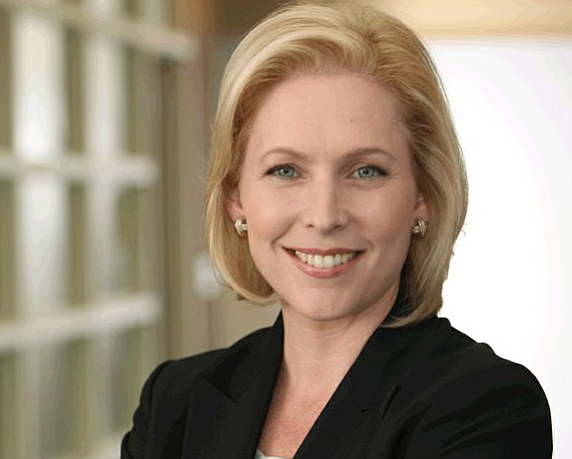
Another powerhouse in the Democratic party has announced a bid for the White House, Kirsten Gillibrand. The Junior Senator from New York state has long been rumored to be planning a Democratic primary challenge and has become a polarizing figure in the party. A centrist Democrat with past conservative views, she has been criticized by the progressive left and adored by establishment donors. More recently though, she angered the party establishment and donor base by criticizing Bill Clinton and calling for the resignation of Senator Al Franken because of sexual misconduct. In a time when the Democratic party is shifting back towards a more progressive and populist message can a centrist Senator, that literally represents the territory of Wall Street, win the nomination of a party yearning for real change and beat an incompetent and floundering Donald Trump.
Kirsten Gillibrand is a graduate of Dartmouth College and the UCLA School of Law. After graduating in the 90s she worked for a private law firm in Manhattan and clerked for Judge Roger Miner of the U.S. Court of Appeals in New York. Working for a private law firm in New York she served as a defense attorney for the tobacco company, Phillip Morris. She helped to defend the company when they were charged with lying to Congress about their previous knowledge about the link between cigarettes and cancer. She has claimed that she had no choice in the types of cases she was handed, but the law firm has stated that all lawyers were given a choice not to work on the case for moral reason, she chose to work for them regardless. Also, during her time she took on pro-bono cases involving tenants’ rights and battered women. It is during this time in the late 1990s that Gillibrand began working on Hillary Clinton’s Senate campaign. The two became close, with Gillibrand seeing the former First Lady as a mentor. In 2006 she successfully ran for Congress in New York’s 20th congressional district.
Her time in the House is becoming somewhat of a liability for the Senator. Upon entering Congress, she joined the Blue Dog coalition in the House, a conservative Democratic caucus. The seat she represented is a traditional conservative district, with her campaigning and voting in Congress that way. Since announcing her run for president she has come under fire for the way she campaigned in that election. Most notably her positions on immigration have come to haunt her, running to the right of her Republican opponent. In a 2007 interview she said that securing the border was a national security issue and closing the border was the first step in this direction. Even as soon as 2008, she claimed the need to expedite ‘illegal alien’ detention and deportation. Gillibrand has since said she is ashamed of this and regrets these positions, calling them unkind and not ‘empathetic’. She said her views were because she lived in and represented a more rural district and did not take the time to put herself in the shoes of immigrant families, crediting her travels as Senator to New York City to talk to these immigrant families as helping to change her views. Before her time in Congress, Gillibrand worked at two law firms based out of Manhattan so one must wonder why she was not able to understand this issue during her time living in a city filled with many immigrants and cultural backgrounds. During her time in the House she also was to the right on guns and received a ‘A’ plus rating from the NRA, voting for a bill that limited information sharing on firearm purchases between government agencies.
In 2008, the then Senator, Hillary Clinton was nominated as Secretary of State by President Obama. Gillibrand campaigned hard for the Governor of New York to appoint her to the vacant seat, ultimately coming out on top. Her time in the Senate has seen her move towards more liberal positions. She has made sexual assault a key part of her agenda, introducing legislation that would remove allegations of cases of sexual assault in the armed forces from official military chain of command and place them in the civilian criminal system. She was also very vocal about calling for the resignation of Senator Al Franken amid his sexual misconduct. Gillibrand even said that President Clinton should have resigned during his Monica Lewinsky scandal. Her views on immigration and guns have also swung leftward during her Senate tenure. She was the first sitting Senator to call for the abolition of ICE and now receives an ‘F’ rating from the NRA. On social issues Gillibrand supports abortion rights and the rights of the LGBTQ community. Economically, she has even come out in favor of Bernie Sanders’ legislation for Medicare for All. In the House she voted in favor of the Bush Tax cuts, but now says she is in favor of raising taxes on high income earners. Once one of the highest receivers of corporate campaign funds, she now says she opposes PAC and other corporate donations.
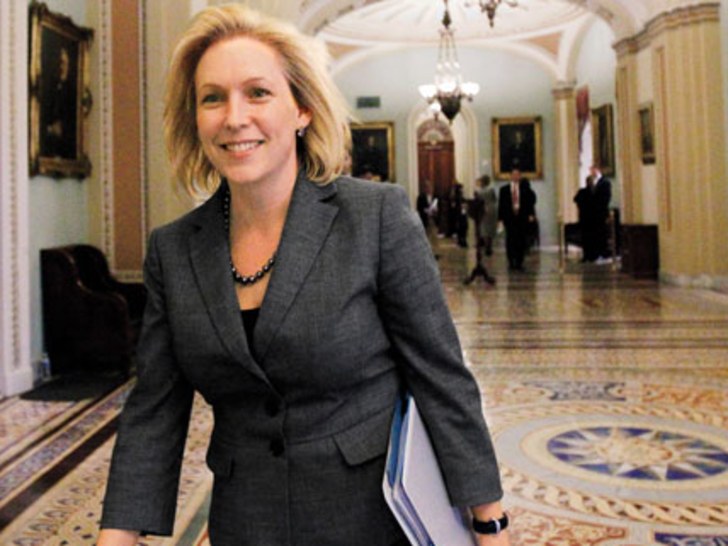
While in the Senate, Gillibrand seems to be doing everything right – saying all of the right things and voting in all of the right ways. Recently, she has come out in favor of many progressive policies like Medicare for All, raising the minimum wage, and a federal jobs guarantee to name a few. But do these reflect her true intentions or are they platitudes to a party that she sees moving to the left. In 2018, while speaking on a panel about the financial crisis of 2008, she was quoted as saying, “…if it wasn’t Lehman brothers, but Lehman sisters, we might not have had the financial collapse.” This is intellectually lazy at best, disingenuous at worst. This shows a very shallow understanding of the dynamic that unfettered capitalism is playing on society and the economy. This feminist capitalism doesn’t solve the ills of a cruel and heartless system. As a feminist myself I want women to be visible in every aspect of society, but this should not be the goal of feminism. Simply putting a female face on capitalism will not fundamentally change the system, especially for women of the working class or working poor.
These new found views stand in contrast to her tenure in the House of Representatives. Progressives and the left wing of the party worry about the genuineness of Gillibrand and her sudden change in views. While evolution and moving on issues is good and needed, does that mean that you get chosen from a crowded field of people to now represent these issues – to be our champion versus other people who have been right on certain issues from the beginning or longer. To some these changing views show a lack of a moral compass, with a goal of winning elections and advancing a career. Her past views on immigration will be hard for some to get past, especially in today’s climate. Too often the Democratic party is willing to throw marginalized groups under the bus for political expedience and expect them to continue to support the party.
At the current moment the Democratic party is going through a much-needed cleansing, a fight for its very soul. To some on the left Gillibrand represents the neoliberal policy of triangulation adopted by the New Democrats of the 1980s – shifting away from the progressive and populist roots of the Democratic party. We, as a party, need to break away from this thinking, and yes burn some bridges. What I worry about is that the party, and the corporate powers that have gained control over it, will use this time to simply revert back to the pre-Trump status quo – epitomized by seemingly ‘woke’ politicians offering platitudes to working Americans but doing little to actually push real change in people’s lives. This very situation is the reason that the Democratic party has lost its reputation for being the party of the working class, and an unprecedented number of state and federal seats. This, among other factors, is what created the perfect situation for an opportunistic leech like President Trump. The election of Donald Trump is a symptom of this. Thankfully the Democratic party is indeed changing, and for the better. Will Kirsten Gillibrand be able to convince Democratic voters that she is the right person to lead a new and more progressive party?
Dale Seufert-Navarro







 to the LEFT