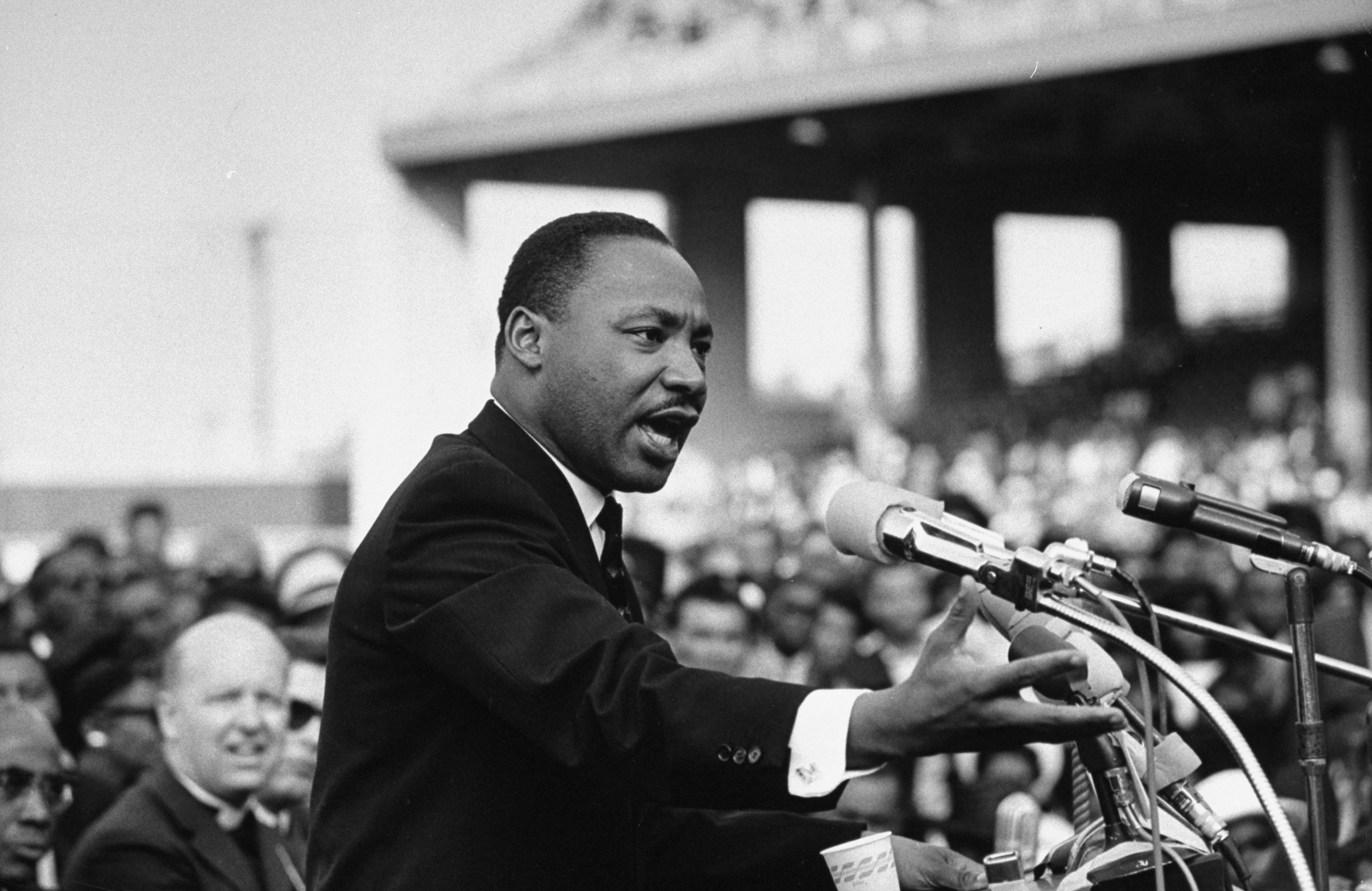
Martin Luther King may be one of the most well-known figures of the 20th Century, with an approval rating pushing over 90 percent. As children we learn, briefly, about his role in the civil rights movement. Almost everyone knows about his I Have a Dream speech, although most people do not really know the content of this speech aside from those four words. He has a federal holiday dedicated to him, and most major cities around the country have a street named after him. With that said, who is Dr. King? What is the true face of this iconic man?
King was a dynamic and complicated man like many of our leaders. The man that ‘mainstream’ accepted history has given us is a watered down and commercially friendly version of the truly revolutionary man that he was. His sermons on the intersectionality of race, gender, class, and imperialism are just as relevant now as they were in 1968 when he was killed. The story of Dr. King is a story of evolution. In a time of great unrest, he was able to connect all of the dots that make up our extremely rigged and unjust society.
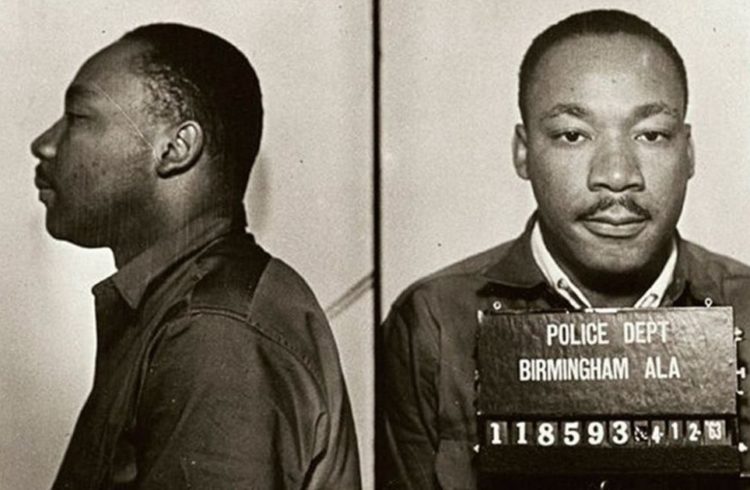
Most people are taught that Martin Luther King was the epitome of non-violent civil disobedience, the historical polar opposite of the militant Malcom X. While it is true that King advocated for nonviolence, his ideas were not so diametrically opposed to the likes of Malcom X. In fact, Dr. Kings ideas and political leanings grew very radical between the time he wrote his letter from a jail cell in Birmingham, Alabama and his death in 1968. Modern history has relegated King’s ideas to racial segregation and nothing more. His journey in the civil rights movement of the 1960s led King to an understanding that even some people can’t seem to grasp 50 years later – racial justice and economic justice are inherently connected.
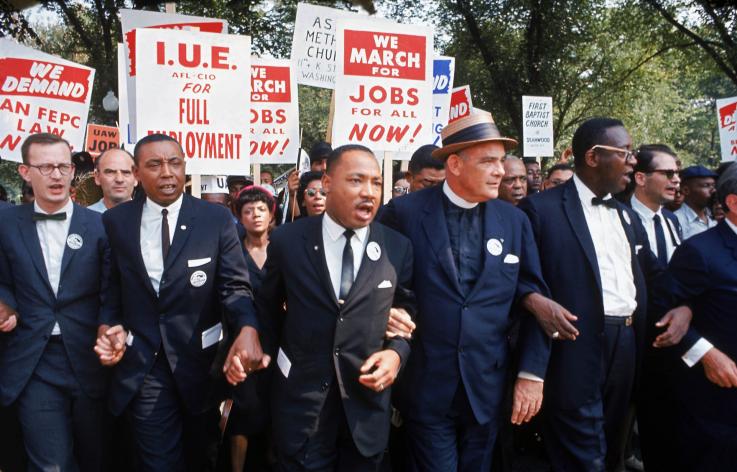
The March on Washington in 1963 where Dr. King delivered his I have a Dream speech is very well-known, but most forget that the full name of that march was, The March on Washington for Jobs and Freedom. The march was organized by civil rights leaders and labor organizations, uniting a call for the end of racial segregation and democratized economic opportunity. One of the last programs he was a part of before his death was the Poor Peoples Campaign. King lamented that even if segregation were abolished and black people were allowed in every establishment, they may not be able to afford anything in that establishment. He understood that integration would not solve all evils. The powers and inequities of capitalism would still need to be fiercely fought. King was even quoted as saying he was worried that the objective of the civil rights movement was to ‘integrate into a burning house’. Sadly, this is a blind spot for bourgeoisie elite liberals that fail to see how racism is deeply connected to class struggle. In 2016, during a Democratic primary debate between Hillary Clinton and Bernie Sanders, Clinton made the claim that breaking up the banks would not solve racism, a way for her to criticize Sanders for not focusing on issues facing minority communities. While this claim is technically true, economic reforms like breaking up the big banks is a step in the right direction. In fact, recently many of the top banking institutions were found guilty of using racist policies towards black Americans. In the spirit of Roosevelt’s New Deal, Dr. King called for an Economic Bill of Rights. He realized that economic mobility translated into political power, and that is what was most feared by the political establishment.
As Dr. King navigated through the civil rights movement he began to expand his message of racial and economic justice. He saw the struggles of marginalized people around the world as connected. His vision turned to the conflict in Vietnam as he vehemently opposed the war. In his powerful and controversial, Beyond Vietnam, speech King laid out his argument for opposing the war. He famously said,
“We were taking the black young men who had been crippled by our society and sending them eight thousand miles away to guarantee liberties in Southeast Asia which they had not found in southwest Georgia and East Harlem. So, we have been repeatedly faced with the cruel irony of watching Negro and white boys on TV screens as they kill and die together for a nation that has been unable to seat them together in the same schools. So, we watch them in brutal solidarity burning the huts of a poor village, but we realize that they would hardly live on the same block in Chicago. I could not be silent in the face of such cruel manipulation of the poor.”
Here he connects the ‘Three Evils’ as he called them – racism, poverty, and war – claiming they were the biggest threats to democracy. His vocal opposition to the war became the leading reason many people turned against him in his later years.
The way history is presented, and the way current politicians fawn over Dr. King, you would think that he was championed by nearly everyone in the 60s. Unfortunately, he became on outcast by many in the civil rights movement at the end of his life. As his message evolved into a more economic and anti-imperialist one, even many of his allies turned on him – Newspapers wouldn’t run his op-eds, black churches wouldn’t have him, and black politicians didn’t want to be seen with him. The last years of his life were some of the hardest and most isolating years of his life. As King railed against the U.S. involvement around the world and the capitalist system, the political establishment grew worried about his message. He was painted as a communist and anti-American. He was heavily surveilled and blackmailed by the FBI, with the bureau even sending a letter to his wife demanding King commit suicide.
Dr. Martin Luther King Jr may be one of the most recognized and admired figures in the world, but the true face of this icon has been hidden, distilled into a neutered version that he wouldn’t recognize, nor even find acceptable. The writers of history have turned him into something that doesn’t offend conservative minded bigots and makes affluent white liberals feel good about themselves. This is why we as a society celebrate Dr. King but feel uncomfortable by Malcom X. King has been narrowed down into short slogans used for capitalist advertising, when he himself said that slogans are not solutions. Living in this deeply corrupt and fractured society it is evident to see why this historical revisionism has occurred. Dr. King had to fit into the prevailing capitalist and imperialist narrative. The true King – the one that railed against American Imperialism – cannot be glorified by an imperialist nation. The true King – the one that advocated for economic justice – cannot be honored by a greedy corporate capitalist system. This is why his message has been forgotten.
“Only in the darkness can you see the stars.” – Martin Luther King Jr
Dr. King was a brilliant and fearless individual. In philosophical study, the ideas of black thinkers are not given equitable placement at the table as are their white counterparts. The philosophies of King deserve to be studied and treasured, and not just for his calls for racial equality. In his emotional last speech before he died, King knew that his days were numbered. He knew that the world was against him, but the trajectory of history would continue forward. Dr. King was truly a man ahead of his time. He was able, in the midst of unrest and oppression, to connect the dots of global and domestic solidarity. To remember Martin Luther King Jr is to remember the whole King; all of him. To honor the legacy of Dr. King is to see the solidarity between the Trayvon Martins of the world, the countless imprisoned and disenfranchised people in a corrupt criminal justice system, the thousands of striking teachers around the country, the struggling mother working two jobs trying to put food on the table, the poor communities from east Harlem to the oppressed people of Palestine, and to the dying children in Yemen. The story and legacy of Martin Luther King Jr is one about power. He understood the powers that hold our society hostage, preventing us from creating a world of justice and equality in all meaning of the word. But he also understood the power that we hold, and he refused to give up that power even as the snakes of this world threatened his very life. He was a fighter until the very end and we should honor the message that he preached, the true message.
“Well, I don’t know what will happen now; we’ve got some difficult days ahead. But it really doesn’t matter to with me now, because I’ve been to the mountaintop. And I don’t mind. Like anybody, I would like to live a long life — longevity has its place. But I’m not concerned about that now. I just want to do God’s will. … I’ve seen the Promised Land. I may not get there with you. But I want you to know tonight, that we, as a people, will get to the Promised Land.” – Martin Luther King Jr
Dale Seufert-Navarro
 to the LEFT