Growing up in a lower middle-class family, in a small conservative city in central Virginia dominated by the Evangelical Church and Liberty University, I was always a bit different. To say that I was left of center would be an understatement. I was a gay, vegetarian, non-Christian, outspoken progressive, and that just wasn’t the norm for my little town. When most kids were outside playing, I was reading books on Kabbalah, Buddhism, Islam, Hinduism, and anything spiritual in nature. When most teens were out partying, I was reading about economic and political theories. Now, don’t get me wrong, I stubbed my toes riding my bike and had my fair share of drunken teen parties – just ask my grandmother – but I was still different.
It’s not hard to see why I was pretty odd to many people, my family included. I didn’t fit into that little box that the world had created for me. I was a radical queer teen living in the shadow of Jerry Falwell and the conservative politics that came along with that. It was the late 90s and the early 2000s, and while I didn’t have it as bad as generations before me, there was still this feeling of being an outsider – an ‘other’.
I was hard to understand, especially by my parents, and that’s okay, I get it. We had our struggles like all parent-child dynamics, with a bit more given the gay factor, but they and I did the best we could. In fact, I am very lucky that I grew up in the time that I did. It was the cusp of cultural queer acceptance, and I give thanks to the radical brothers and sisters that paved the way for present generations.

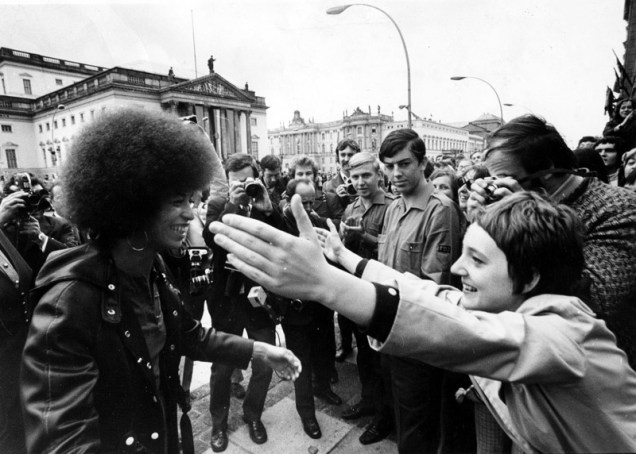
In my life I stumbled upon many important and influential figures to look up to and shape my political worldview, from the historical and intellectual to the ordinary yet profound people in my personal life. The towering icons of my cerebral landscape included such important thinkers as Angela Davis, Noam Chomsky, Dr. Cornel West, Howard Zinn, Eugene Debs, W.E.B. Du Bois, Saul Alinsky, and of course Karl Marx – among MANY. In my personal life, like most people, my parents and my maternal grandmother had an immense effect on my life and understanding of the world.
While I love all of my family equally, my father had the most important influence on my life and political trajectory. Like many father figures, my dad was always sort of an enigma to me. Always a quiet and reserved person, he was a bit shy. That is until the discussion turns to politics and current events. The passion that he holds for politics is the same passion that runs through my very veins today, well sort of. You see, as unapologetically progressive as I am, my father is definitely not. My dad is a conservative, of the Ayn Rand libertarian school of thought. Over the years, there were many political discussions between the two of us, some small through laughter with others escalating to raised voices ending in storming off to our respective corners of the boxing ring. But through it all, it was my most important education. He has always been my greatest advisory; my greatest opponent. Unlike a lot of ‘conservatives’, he is informed and his ideas come from an intellectual pursuit, although I disagree with mostly all of it.
When he called me a socialist, I accepted it. When he called me a radical, I reveled in it.
His and my family’s past, along with our life as I grew up shaped my political views and overall worldview. My father had an especially hard upbringing, and he devoted every moment of his adult life – along with my mother – to ensure that my brother and I had the opportunities that they did not have. We weren’t rich by any standards of the definition, but we had it better than so many other people in this world. Like a lot of families, we had hard times, even more that I never knew about, but we made it through the best we could. I saw my parents work long hours in fields that were oftentimes difficult and demanding, my father a welder and my mother working in a manufacturing plant. They sacrificed and struggled. In a sense, it was the knowledge of my parents past and where they had come from, and the lived experience of my childhood that ‘radicalized’ me. This was the fuel that ignited my commitment to social and economic justice.
Radical; turn on the television and I guarantee that you will hear that word eventually, and fairly frequent I imagine. From FOX News to CNN, certain politicians, ideas, and policies are branded with the label.
FOX News Headline: “‘Radical’ Dems Alexandria Ocasio-Cortez, Rhasida Tlaib embrace their reputations, slam President Trump.”
The Atlantic: “The Democratic Party is Radicalizing.”
The National Review: “Radicalism is on the Rise among Democrats.”
Washington Times: “Bernie reveals his radical Inclinations Over and Over Again.”
So radical, what does the word mean? Well, the definition of radical is – A. very different from the usual or traditional. B. favoring extreme changes in existing views, habits, conditions, or institutions. C. associated with political views, practices, and polices of extreme change.
Given this definition and the way that the media frames the use and debate of the word, it would appear that the people and ideas associated with radical are out of the mainstream of normal political discourse. The ideas that they advocate for, and even they themselves, are just too extreme. But is there any evidence for that? Are they really that extreme? Some of the ideas that are framed as radical are: Medicare for All, tuition-free higher education, the Green New Deal, abolishing ICE, and certain tax policies among other things. Not surprisingly, most of the policies and politicians labeled this way are on the left end of the political spectrum.
But how radical or extreme are some of these policies? Medicare for All polls fairly well for a policy that is still considered fringe politics by some, polling around 56% to 74%. Some polls even show around 47% of Republicans supporting some form of government-administered health care system. Tuition-free higher education even polls well, with around 60% of the public saying they like the idea. And that poll shows 41% of Republicans holding that view. A newer idea, the Green New Deal, is also very favorable with the American people. One poll finds 81% of respondents saying they support some form of sweeping government intervention to combat the effects of climate change.
Now, of course, polling has its limitations and even its inaccuracies. The way polls are conducted, and the way questions are asked can affect the way people respond. But what this shows us is that these policies aren’t crazy ideas from the darkest corners of the internet. Instead, they are serious and worthy of debate. Furthermore, most of these ideas aren’t just ideas in most of the developed world. They are actual policies that have existed for many years in other countries.
I will concede that in our current political situation, some of these ideas are vastly different than the space we occupy. But I ask you to look at history. Look at all the major social and economic achievements that were accomplished. Were they radical for their time? Were the methods used to achieve them radical? Indeed, they were. Throughout history, it is only by the intense struggle of radical thinkers that society has been pushed forward. In contrast, it has always been the centrist moderate that has stood in the way, seeking to preserve – consciously or unconsciously – a repressive status quo. People on the right, and from the center, hurl these designations to the left in hopes of marginalizing them. Currently, and the in the past, terms like radical are used to stifle debate, scare and intimidate.
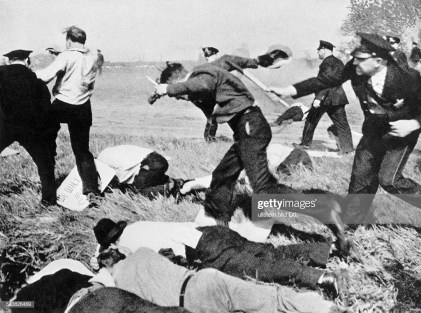 Youngstown Steel Mill Strike –Photo by Archiv Gerstenberg/ullstein bild via Getty Images
The ‘radical’ perspective has always been about the democratization of society. The labor movement was considered radical and was responsible for all of the current worker protections we take for granted – the 40-hour work week, ending child labor, and various other benefits. The civil rights movement, also radical for its time, was responsible for the progress on racial justice that we see. At the time, people in power threw the term ‘radical’ at leaders like Martin Luther King and leaders of the labor movement. They called them anti-American and communists in an effort to intimidate them and scare the American public. In fact, people that belie radicals forget about the most significant expression of radicalism that this country has ever seen, the American Revolution.
When people try to label an idea or a person as radical and extreme, ask what they are implying? What is more extreme, wanting people to have the ability to live and support their families in a real and meaningful way or an economic situation that enriches the already rich and powerful while leaving millions of Americans behind, amounting to modern feudalism and corporate servitude? What is more extreme than an imperialist foreign policy that creates more terror and destabilizes regions? Is regulating a woman’s body over her and her doctors advice and concerns extreme? Is dictating the private consensual sexual relationships of adults extreme? Is careening toward annihilation while doing absolutely nothing about the most dangerous situation facing human existence today-climate change, extreme?
People in the so-called middle say that radicals are rigid purists, putting ideology above compromise. Former President Barack Obama even recently warned progressives about infighting and what he called a ‘circular firing squad’. But the ‘centrist middle’ has never been above ideology. They will say that they are pragmatic and focused on ‘what works’, unlike the purist radical. Well if you look at the current state of the world, the work of this class is failing. The centrists are just as radically ideological as the ‘radicals’ they decry. Theirs is a worship of the status quo.
Progressives should not be scared of the label of radical. Instead, we should embrace it. Embrace the historical significance and success of our radical revolutionary brothers and sisters. The way that people try to use the term in such a dismissive way, ignore the important role of radicals in pushing this country forward, with much of that work unfinished. There is much more work to be done and we should fight in their honor and their spirit. Being a radical means not just accepting the world for what it is today – undemocratic in every sphere, broken and rigged in favor of a small portion of the world’s population – but fighting like hell to change that. Radicals don’t just see the ills of society and want to change them, they do change them. With this, I gladly accept the label as radical in every meaning of the word.
Dale Seufert-Navarro
 to the LEFT