Henry Wallace: ‘The Dangers of American Fascism’

fascism boots
Photo Illustration by Slate. Photo via Corbis/Getty Images 

Everywhere you turn, you hear the word fascism. With Donald Trump’s affinity for violence and a superficial toxic masculine world view, the comparisons between him and historical fascist strongmen are not hard to connect. Because of all of this renewed discussion about fascism, I decided to explore the topic and its historical roots in America.

In 1944, at the height of World War II and the rise of the European fascists – Hitler, Mussolini, and Franco – the Vice President of the Unites States, Henry Wallace, wrote an op-ed in the New York Times warning about the influence and threats of fascist ideology taking root in America. While some of the content of his piece is distinct to the situation and time in which he wrote it, wartime 1940’s, it is still shockingly relevant to our modern era.

Before I posted my own piece on fascist ideology in American politics, I wanted to present Henry Wallace’s entire NYT op-ed article to highlight him in his own words. As you read his piece, imagine the world he faced and the circumstances that created that world. Now look around at the world us today. What are its warnings? What are its parallels?

Dale Seufert-Navarro


*************************************************************************************

An article from the New York Times, April 9, 1944.

From Henry A. Wallace, Democracy Reborn (New York, 1944), edited by Russell Lord, p. 259
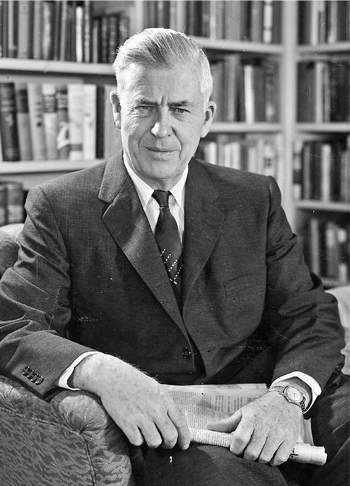
henry wallace
Henry Wallace

On returning from my trip to the West in February, I received a request from The New York Times to write a piece answering the following questions:

  1. What is a fascist?
  2. How many fascists have we?
  3. How dangerous are they?

A fascist is one whose lust for money or power is combined with such an intensity of intolerance toward those of other races, parties, classes, religions, cultures, regions, or nations as to make him ruthless in his use of deceit or violence to attain his ends. The supreme god of a fascist, to which his ends are directed, may be money or power; may be a race or a class; may be a military, clique or an economic group; may be a culture, religion, or a political party.

The perfect type of fascist throughout recent centuries has been the Prussian Junker, who developed such hatred for other races and such allegiance to a military clique as to make him willing at all times to engage in any degree of deceit and violence necessary to place his culture and race astride the world. In every big nation of the world are at least a few people who have the fascist temperament. Every Jew-baiter, every Catholic hater, is a fascist at heart. The hoodlums who have been desecrating churches, cathedrals, and synagogues in some of our larger cities are ripe material for fascist leadership.

The obvious types of American fascists are dealt with on the air and in the press. These demagogues and stooges are fronts for others. Dangerous as these people may be, they are not so significant as thousands of other people who have never been mentioned. The really dangerous American fascists are not those who are hooked up directly or indirectly with the Axis. The FBI has its finger on those. The dangerous American fascist is the man who wants to do in the United States in an American way what Hitler did in Germany in a Prussian way. The American fascist would prefer not to use violence. His method is to poison the channels of public information. With a fascist the problem is never how best to present the truth to the public but how best to use the news to deceive the public into giving the fascist and his group more money or more power.

If we define an American fascist as one who in case of conflict puts money and power ahead of human beings, then there are undoubtedly several million fascists in the United States. There are probably several hundred thousand if we narrow the definition to include only those who in their search for money and power are ruthless and deceitful. Most American fascists are enthusiastically supporting the war effort. They are doing this even in those cases where they hope to have profitable connections with German chemical firms after the war ends. They are patriotic in time of war because it is to their interest to be so, but in time of peace they follow power and the dollar wherever they may lead.

American fascism will not be really dangerous until there is a purposeful coalition among the cartelists, the deliberate poisoners of public information, and those who stand for the K.K.K. type of demagoguery.

The European brand of fascism will probably present its most serious postwar threat to us via Latin America. The effect of the war has been to raise the cost of living in most Latin American countries much faster than wages of labor. The fascists in most Latin American countries tell the people that the reason their wages will not buy as much in the way of goods is because of Yankee imperialism. The fascists in Latin America learn to speak and act like natives. Our chemical and other manufacturing concerns are all too often ready to let the Germans have Latin American markets, provided the American companies can work out an arrangement which will enable them to charge high prices to the consumer inside the United States. Following this war, technology will have reached such a point that it will be possible for Germans, using South America as a base, to cause us much more difficulty in World War III than they did in World War II. The military and landowning cliques in many South American countries will find it attractive financially to work with German fascist concerns as well as expedient from the standpoint of temporary power politics.

Fascism is a worldwide disease. Its greatest threat to the United States will come after the war, either via Latin America or within the United States itself.

Still another danger is represented by those paying lip service to democracy and the common welfare, in their insatiable greed for money and the power which money gives, do not hesitate surreptitiously to evade the laws designed to safeguard the public from monopolistic extortion. American fascists of this stamp were clandestinely before the war, and are even now preparing to resume where they left off, after “the present unpleasantness” ceases.

The symptoms of fascist thinking are colored by environment and adapted to immediate circumstances. But always and everywhere they can be identified by their appeal to prejudice and by the desire to play upon the fears and vanities of different groups in order to gain power. It is no coincidence that the growth of modern tyrants has in every case been heralded by the growth of prejudice. It may be shocking to some people in this country to realize that, without meaning to do so, they hold views in common with Hitler when they preach discrimination against other religious, racial or economic groups. Likewise, many people whose patriotism is their proudest boast play Hitler’s game by retailing distrust of our Allies and by giving currency to snide suspicions without foundation in fact.

The American fascists are most easily recognized by their deliberate perversion of truth and fact. Their newspapers and propaganda carefully cultivate every fissure of disunity, every crack in the common front against fascism. They use every opportunity to impugn democracy. They use isolationism as a slogan to conceal their own selfish imperialism. They cultivate hate and distrust of both Britain and Russia. They claim to be super-patriots, but they would destroy every liberty guaranteed by the Constitution. They demand free enterprise but are the spokesmen for monopoly and vested interest. Their final objective toward which all their deceit is directed is to capture political power so that, using the power of the state and the power of the market simultaneously, they may keep the common man in eternal subjection.

Several leaders of industry in this country who have gained a new vision of the meaning of opportunity through cooperation with government have warned the public openly that there are some selfish groups in industry who are willing to jeopardize the structure of American liberty to gain some temporary advantage. We all know the part that the cartels played in bringing Hitler to power, and the rule the giant German trusts have played in Nazi conquests. Monopolists who fear competition and who distrust democracy because it stands for equal opportunity would like to secure their position against small and energetic enterprise. In an effort to eliminate the possibility of any rival growing up, some monopolists would sacrifice democracy itself.

It has been claimed at times that our modern age of technology facilities dictatorship. What we must understand is that the industries, processes, and inventions created by modern science can be used either to subjugate or liberate. The choice is up to us. The myth of fascist efficiency has deluded many people. It was Mussolini’s vaunted claim that he “made the trains run on time.” In the end, however, he brought to the Italian people impoverishment and defeat. It was Hitler’s claim that he eliminated all unemployment in Germany. Neither is there unemployment in a prison camp.

Democracy to crush fascism internally must demonstrate its capacity to “make the trains run on time.” It must develop the ability to keep people fully employed and at the same time balance the budget. It must put human beings first and dollars second. It must appeal to reason and decency and not to violence and deceit. We must not tolerate oppressive government or industrial oligarchy in the form of monopolies and cartels. As long as scientific research and inventive ingenuity outran our ability to devise social mechanisms to raise the living standards of the people, we may expect the liberal potential of the United States to increase. If this liberal potential is properly channeled, we may expect the area of freedom of the United States to increase. The problem is to spend up our rate of social invention in the service of the welfare of all the people.

The worldwide, agelong struggle between fascism and democracy will not stop when the fighting ends in Germany and Japan. Democracy can win the peace only if it does two things:

  1. Speeds up the rate of political and economic inventions so that both production and, especially, distribution can match in their power and practical effect on the daily life of the common man the immense and growing volume of scientific research, mechanical invention and management technique.
  2. Vivifies with the greatest intensity the spiritual processes which are both the foundation and the very essence of democracy.

The moral and spiritual aspects of both personal and international relationships have a practical bearing which so-called practical men deny. This dullness of vision regarding the importance of the general welfare to the individual is the measure of the failure of our schools and churches to teach the spiritual significance of genuine democracy. Until democracy in effective enthusiastic action fills the vacuum created by the power of modern inventions, we may expect the fascists to increase in power after the war both in the United States and in the world.

Fascism in the postwar inevitably will push steadily for Anglo-Saxon imperialism and eventually for war with Russia. Already American fascists are talking and writing about the conflict and using it as an excuse for their internal hatreds and intolerances toward certain races, creeds and classes.

It should also be evident that exhibitions of the native brand of fascism are not confined to any single section, class, or religion. Happily, it can be said that as yet fascism has not captured a predominate place in the outlook any American section, class, or religion. It may be encountered in Wall Street, Main Street or Tobacco Road. Some even suspect that they can detect incipient traces of it along the Potomac. It is an infectious disease, and we must all be on our guard against intolerance, bigotry, and the pretension of invidious distinction. But if we put our trust in the common sense of common men and “with malice toward none and charity for all” go forward on the great adventure of making political, economic and social democracy a practical reality, we shall not fail.

Henry Wallace
What it Means to be a ‘Radical’

emmanuel-Pierre Guittet
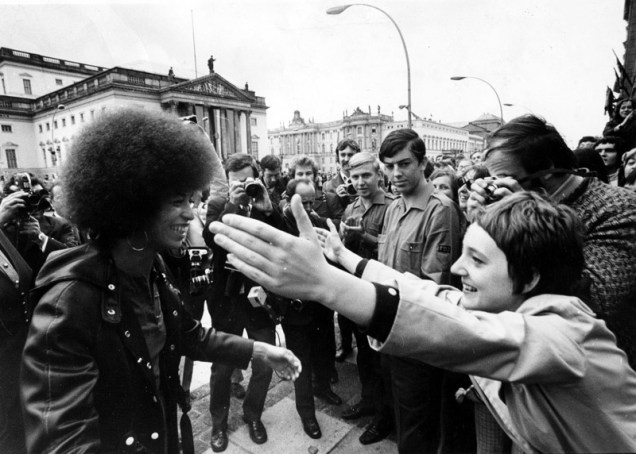
Angela Davis in West Germany – Emmanuel Pierre Guittet

Growing up in a lower middle-class family, in a small conservative city in central Virginia dominated by the Evangelical Church and Liberty University, I was always a bit different. To say that I was left of center would be an understatement. I was a gay, vegetarian, non-Christian, outspoken progressive, and that just wasn’t the norm for my little town. When most kids were outside playing, I was reading books on Kabbalah, Buddhism, Islam, Hinduism, and anything spiritual in nature. When most teens were out partying, I was reading about economic and political theories. Now, don’t get me wrong, I stubbed my toes riding my bike and had my fair share of drunken teen parties – just ask my grandmother – but I was still different.

It’s not hard to see why I was pretty odd to many people, my family included. I didn’t fit into that little box that the world had created for me. I was a radical queer teen living in the shadow of Jerry Falwell and the conservative politics that came along with that. It was the late 90s and the early 2000s, and while I didn’t have it as bad as generations before me, there was still this feeling of being an outsider – an ‘other’.

I was hard to understand, especially by my parents, and that’s okay, I get it. We had our struggles like all parent-child dynamics, with a bit more given the gay factor, but they and I did the best we could. In fact, I am very lucky that I grew up in the time that I did. It was the cusp of cultural queer acceptance, and I give thanks to the radical brothers and sisters that paved the way for present generations.

medium.com
Noam Chomsky – Medium.com

In my life I stumbled upon many important and influential figures to look up to and shape my political worldview, from the historical and intellectual to the ordinary yet profound people in my personal life. The towering icons of my cerebral landscape included such important thinkers as Angela Davis, Noam Chomsky, Dr. Cornel West, Howard Zinn, Eugene Debs, W.E.B. Du Bois, Saul Alinsky, and of course Karl Marx – among MANY. In my personal life, like most people, my parents and my maternal grandmother had an immense effect on my life and understanding of the world.

While I love all of my family equally, my father had the most important influence on my life and political trajectory. Like many father figures, my dad was always sort of an enigma to me. Always a quiet and reserved person, he was a bit shy. That is until the discussion turns to politics and current events. The passion that he holds for politics is the same passion that runs through my very veins today, well sort of. You see, as unapologetically progressive as I am, my father is definitely not. My dad is a conservative, of the Ayn Rand libertarian school of thought. Over the years, there were many political discussions between the two of us, some small through laughter with others escalating to raised voices ending in storming off to our respective corners of the boxing ring. But through it all, it was my most important education. He has always been my greatest advisory; my greatest opponent. Unlike a lot of ‘conservatives’, he is informed and his ideas come from an intellectual pursuit, although I disagree with mostly all of it.

When he called me a socialist, I accepted it. When he called me a radical, I reveled in it.

His and my family’s past, along with our life as I grew up shaped my political views and overall worldview. My father had an especially hard upbringing, and he devoted every moment of his adult life – along with my mother – to ensure that my brother and I had the opportunities that they did not have. We weren’t rich by any standards of the definition, but we had it better than so many other people in this world. Like a lot of families, we had hard times, even more that I never knew about, but we made it through the best we could. I saw my parents work long hours in fields that were oftentimes difficult and demanding, my father a welder and my mother working in a manufacturing plant. They sacrificed and struggled. In a sense, it was the knowledge of my parents past and where they had come from, and the lived experience of my childhood that ‘radicalized’ me. This was the fuel that ignited my commitment to social and economic justice.

Radical; turn on the television and I guarantee that you will hear that word eventually, and fairly frequent I imagine. From FOX News to CNN, certain politicians, ideas, and policies are branded with the label.

FOX News Headline: “‘Radical’ Dems Alexandria Ocasio-Cortez, Rhasida Tlaib embrace their reputations, slam President Trump.”

The Atlantic: “The Democratic Party is Radicalizing.”

The National Review: “Radicalism is on the Rise among Democrats.”

Washington Times: “Bernie reveals his radical Inclinations Over and Over Again.”

So radical, what does the word mean? Well, the definition of radical is – A. very different from the usual or traditional. B. favoring extreme changes in existing views, habits, conditions, or institutions. C. associated with political views, practices, and polices of extreme change.

Given this definition and the way that the media frames the use and debate of the word, it would appear that the people and ideas associated with radical are out of the mainstream of normal political discourse. The ideas that they advocate for, and even they themselves, are just too extreme. But is there any evidence for that? Are they really that extreme? Some of the ideas that are framed as radical are:  Medicare for All, tuition-free higher education, the Green New Deal, abolishing ICE, and certain tax policies among other things. Not surprisingly, most of the policies and politicians labeled this way are on the left end of the political spectrum.

But how radical or extreme are some of these policies? Medicare for All polls fairly well for a policy that is still considered fringe politics by some, polling around 56% to 74%. Some polls even show around 47% of Republicans supporting some form of government-administered health care system. Tuition-free higher education even polls well, with around 60% of the public saying they like the idea. And that poll shows 41% of Republicans holding that view. A newer idea, the Green New Deal, is also very favorable with the American people. One poll finds 81% of respondents saying they support some form of sweeping government intervention to combat the effects of climate change.

Now, of course, polling has its limitations and even its inaccuracies. The way polls are conducted, and the way questions are asked can affect the way people respond. But what this shows us is that these policies aren’t crazy ideas from the darkest corners of the internet. Instead, they are serious and worthy of debate. Furthermore, most of these ideas aren’t just ideas in most of the developed world. They are actual policies that have existed for many years in other countries.

I will concede that in our current political situation, some of these ideas are vastly different than the space we occupy. But I ask you to look at history. Look at all the major social and economic achievements that were accomplished. Were they radical for their time? Were the methods used to achieve them radical? Indeed, they were. Throughout history, it is only by the intense struggle of radical thinkers that society has been pushed forward. In contrast, it has always been the centrist moderate that has stood in the way, seeking to preserve – consciously or unconsciously – a repressive status quo. People on the right, and from the center, hurl these designations to the left in hopes of marginalizing them. Currently, and the in the past, terms like radical are used to stifle debate, scare and intimidate.

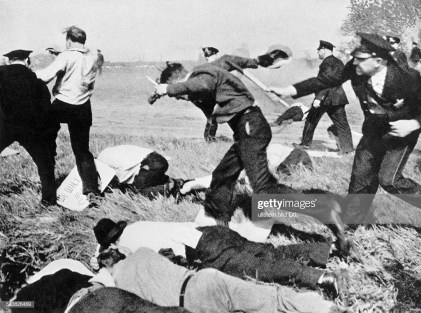
Photo by Archiv Gerstenberg:ullstein bild via Getty Images) Youngstown Steel Mill Strike –Photo by Archiv Gerstenberg/ullstein bild via Getty Images

The ‘radical’ perspective has always been about the democratization of society. The labor movement was considered radical and was responsible for all of the current worker protections we take for granted – the 40-hour work week, ending child labor, and various other benefits. The civil rights movement, also radical for its time, was responsible for the progress on racial justice that we see. At the time, people in power threw the term ‘radical’ at leaders like Martin Luther King and leaders of the labor movement. They called them anti-American and communists in an effort to intimidate them and scare the American public. In fact, people that belie radicals forget about the most significant expression of radicalism that this country has ever seen, the American Revolution.

When people try to label an idea or a person as radical and extreme, ask what they are implying? What is more extreme, wanting people to have the ability to live and support their families in a real and meaningful way or an economic situation that enriches the already rich and powerful while leaving millions of Americans behind, amounting to modern feudalism and corporate servitude? What is more extreme than an imperialist foreign policy that creates more terror and destabilizes regions? Is regulating a woman’s body over her and her doctors advice and concerns extreme? Is dictating the private consensual sexual relationships of adults extreme? Is careening toward annihilation while doing absolutely nothing about the most dangerous situation facing human existence today-climate change, extreme?

People in the so-called middle say that radicals are rigid purists, putting ideology above compromise. Former President Barack Obama even recently warned progressives about infighting and what he called a ‘circular firing squad’. But the ‘centrist middle’ has never been above ideology. They will say that they are pragmatic and focused on ‘what works’, unlike the purist radical. Well if you look at the current state of the world, the work of this class is failing. The centrists are just as radically ideological as the ‘radicals’ they decry. Theirs is a worship of the status quo.

Progressives should not be scared of the label of radical. Instead, we should embrace it. Embrace the historical significance and success of our radical revolutionary brothers and sisters. The way that people try to use the term in such a dismissive way, ignore the important role of radicals in pushing this country forward, with much of that work unfinished. There is much more work to be done and we should fight in their honor and their spirit. Being a radical means not just accepting the world for what it is today – undemocratic in every sphere, broken and rigged in favor of a small portion of the world’s population – but fighting like hell to change that. Radicals don’t just see the ills of society and want to change them, they do change them. With this, I gladly accept the label as radical in every meaning of the word.

Dale Seufert-Navarro

Priorities

voting

For the past few weeks, I have been writing profiles on the various candidates running in the 2020 Democratic presidential primary. As they announce, I have tried to look at their pasts and analyze what they bring to the discussion to the left and their chances at grasping the Democratic nomination and hopefully the White House.

As I laid out in my last post, I have not posted in quite some time. I needed to step back and focus on more personal things. This time gave me time to reflect on the direction of the blog, ‘to the LEFT.’ My goal in starting the blog was to focus on issues and policies that matter to me and that I believe have an impact on our country and world. My biggest critique of the media at large is that they often times do not focus on the issues that matter the most. Instead, they focus on shallow information for ratings and controversy. It makes perfect sense as to the reason for this. The media companies are a part of a very lucrative industry. Like everything else in our vain capitalist society, it is about money.

The time that I was away from working on the blog, I realized that I was falling into the same trap. Instead of focusing on policy and issues, I was only attending to the horse-race way that the media covers elections. They have become sports, with running and campaigning more important than governing.

With only so much time in a day to focus my energy on school, work, and my personal life, I have decided to not do anymore 2020 Spotlight profiles. I’m sure that the rest of the media will have that lane covered.

My energy, instead, is going to go back into the important issues that face our society and the policies that we need to champion in order to make that society flourish. I also plan on focusing more energy in local grassroots activism to push these policies and help elect the next president. I plan on writing a piece soon endorsing who I believe is the best option for championing progressive values and policies, while also defeating Donald Trump.

Life, and politics alike, is about priorities; the things that are most important in time and energy. Sometimes it takes a moment to step back to reevaluate those priorities. I am ready to jump in the trenches and help to create real sustainable change. I invite you all to join me in that fight. No man is an island unto himself, and our future depends on all of us.

Dale Seufert-Navarro


CALL TO ACTION: Stand with Ilhan Omar

Ilhan-Omar
AP Photo/Carolyn Kaster

One of Congress’ newest members has been facing harsh criticism – from Democrats and Republicans – over remarks some have referred to as anti-Semitic. I am here to say that she did nothing wrong, and we must stand with her.

Since entering Congress Omar and Representative Tlaib, have been outspoken critics of the nation of Israel and its treatment of the Palestinian people. The most recent controversy was due to Omar’s tweet related to AIPAC and a bill in the Senate. What was her grave sin? In a tweet responding to Republican Leader McCarthy calling her anti-Semitic for supporting the BDS – Boycott, Divestment, and Sanctions of Israel – movement, she said, “All about the Benjamin’s baby!” This was a reference to the money that AIPAC – the American Israel Public Affairs Committee – uses in Washington to influence American politics. In fact, their own website states its purpose is to influence Congress for the benefit of Israel. Why does Israel get the distinction of getting shielded from criticism? The media and Democratic party rightly call out the money and influence of the pro-Saudi Lobby, the NRA, Wall street, big Pharma, among others.

She was clearly trying to draw attention to the power that the lobbyist group AIPAC has in Washington, like any other lobby. She faced swift criticism from both parties, with Nancy Pelosi even calling for her to apologize. Omar has since released an apology.

Her apology on twitter:

“Anti-Semitism is real, and I am grateful for Jewish allies and colleagues who are educating me on the painful history of anti-Semitic tropes. My intention is never to offend my constituents or Jewish Americans as a whole. We have to always be willing to step back and think through criticism, just as I expect people to hear me when others attack me for my identity. This is why I unequivocally apologize. At the same time, I reaffirm the problematic role of lobbyists in our politics, whether it be AIPAC, the NRA or the fossil fuel industry. It’s gone on too long and we must be willing to address it.”

In her criticism of the State of Israel and support of BDS she is unequivocally right. The nation of Israel is an undemocratic apartheid nation that is perpetuating the oppression of the Palestinian people. In trying to highlight this injustice she is absolutely right. If she misspoke in her wording that she must acknowledge, but we cannot be more upset about semantic wording than actual physical injustice. Let me be abundantly clear, criticizing a secular nation – not a faith – is NOT anti-Semitic. Israel and its far-right proponents have used this claim to suppress debate and paint its critics in this light. No nation is above fair criticism.

Benjamin Netanyahu and his far-right government have continued and worsened the oppression of the Palestinian people. He will claim that there is no occupation, but the facts are very clear on this. International law and the UN, with countries around the world, have condemned many of Israel’s actions, from the forced removal of Palestinians and the building of illegal settlements to open air assassinations by snipers during protests. During its bombing campaigns over the past years, Israel has bombed schools, hospitals, and press buildings – all in direct violation of international law. The Palestinian infrastructure is heavily restricted. Israel controls their airspace, territorial waters, all crossings, telecommunications, and population registries – controlling who can leave or enter Gaza. This blockade even prevents some international aid from getting to the Palestinian people. Now I ask you, how is this not an occupation? Most recently Israel passed the ‘nation state law’ that essentially is a Jewish Supremacy law essentially making Arab citizens second class citizens.

All that being said, the nation of Israel has the right to defend itself but the disproportionate response by the government of Israel is horrendous. Also, anti-semitism is real, and Jews face a rise in violence. But we must divorce actual bigotry with valid criticism of a government not a religion. This cheapens real anti-semitism and muddies the waters when trying to have a valid discussion about policy.

All of this comes at a time when the status quo on Israel and Palestinian relations is rapidly changing. Progressives and young people are beginning to see the occupation of Palestine for what it is – a racial and ethnic apartheid state created by state violence. Young American Jews are some of the loudest critics of the state of Israel and even within the nation, its own citizens are questioning and protesting the actions by their government.

Ilhan Omar is an easy target for Republicans and the conservative media, she is a hijab wearing woman of color and she is strong in her convictions. As progressives and lovers of justice and equality we must stand with our sister in Congress and the Palestinian people.

I urge you to call, write, or email the Congresswoman and voice your support. Let her know that she is not alone, and we are all standing behind her.

Washington D.C. Office Information

1517 Longworth HOB
Washington, DC20515

Phone: (202) 225-4755

Minneapolis Office Information

404 3rd Avenue North
Suite 203
Minneapolis, MN55401

Phone: (612) 333-1272

Dale Seufert-Navarro

2020 Spotlight: Cory Booker


cory1
Cory Booker – CNN.com

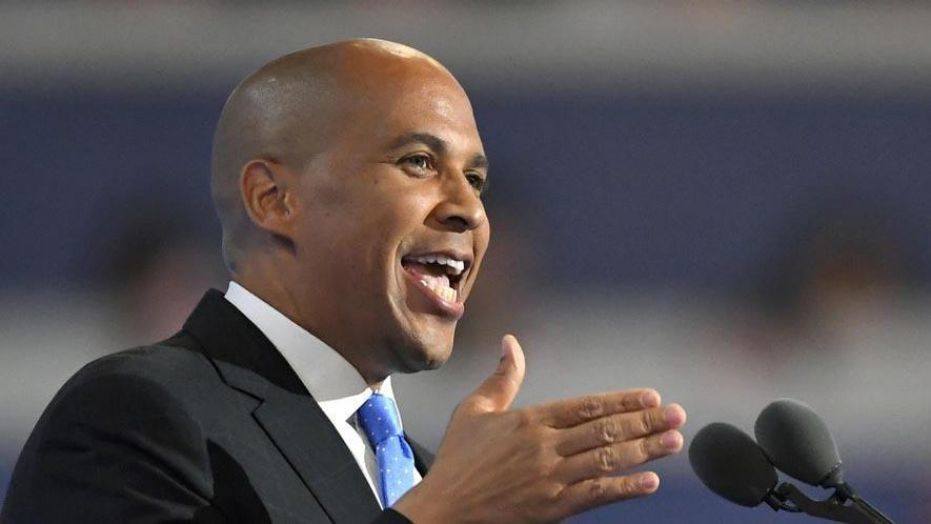
On February 1st, Cory Booker joined a quickly growing list of Democratic candidates running for the presidency. His announcement video draws on his time as mayor of Newark, New Jersey and calls for a return of ‘civic grace.’ Booker points to his unique path in politics, claiming that it is just what our country needs at this rough moment in history. He is a gifted orator and certainly knows how to use a media platform to his advantage. Some parts of his political past are quite interesting, but some on the left remain skeptical of his progressive intentions.

Cory Booker was born in Washington D.C., but grew up in Harrington Park, New Jersey. Booker received a degree in Political Science and a Masters in Sociology from Stanford University. He also attended the University of Oxford, studying American History, and Yale Law School, receiving his Juris Doctor.

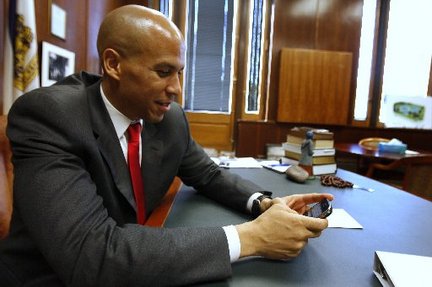
His political career started in 1988, when he successfully won a seat on the Municipal Council of Newark. It was during this time that he tried to highlight problems facing urban development. Booker went on a 10-day hunger strike, lived in a tent in the inner city of Newark, and began a week-long challenge to live on $30 food budget – the amount of SNAP benefits recipients receive. The new councilman’s proposals – initiatives to help young people, people of color, affordable housing, and transparency of local government – were routinely outvoted by his fellow members. In 2006, Cory Booker won his race for mayor of Newark, bringing with him a bench of council candidates that became known as the ‘Booker Team’. This gave the new mayor a strong mandate to govern. A central focus of his time as mayor was crime reduction, increasing police forces and working hard to get illegal guns off the streets of Newark. His tenure saw the increase in the amount of affordable housing, increased wages of city workers – while simultaneously reducing his own salary, and the institution of open office hours where residents could regularly meet the mayor to discuss concerns.

Booker gained lots of national media attention during his time as mayor. He once shoveled snow from an elderly resident’s drive way, rescued a woman from a burning building – receiving mild burns and smoke inhalation, and invited displaced residents into his home after Hurricane Sandy destroyed much of the shoreline. Many have claimed that Booker is a master of social media and the attention it brings, using these platforms to elevate his profile. While this may be true, that he seeks out ways to enhance his brand for opportunistic personal reasons, these incidents are noble nonetheless and should be praised and acknowledged.

In 2013, Cory Booker became the first African-American Senator from the state of New Jersey. His time in the Senate has been a mixed bag with the Junior Senator voting for some very good legislation yet, he has drawn criticism from progressives for other votes and campaign fundraising.

On a positive note, Booker co-sponsored and voted for the Employment Non-Discrimination Act and the Respect for Marriage Act – repealing DOMA and requiring the federal government to recognize same-sex marriages. He has been relentless in his opposition to the Trump administration, voting overwhelmingly against the presidents’ nominees and even testifying against fellow Senator Sessions when he was nominated to U.S. Attorney General. Perhaps his most notable achievement recently was his work in getting the First Step Act, an important bipartisan criminal justice reform bill, passed and signed by President Trump. Booker is a proponent of ending the failed ‘War on Drugs’ and supports medical marijuana research as well as decriminalization. The Humane Society has called the Senators voting record the most pro-animal in Congress. Interestingly the Senator has been a vegan since 2014, and a vegetarian for over 20 years.

booker2
Booker during his time as mayor of Newark, NJ – NJ.com/Robert Sciarrino

Most of Cory Bookers criticism from the left is not about his views on social issues but his fundraising and close ties to the financial and pharmaceutical industries. In 2017, Booker, along with 12 other Democrats, voted against a bill allowing Americans to buy prescription drugs from Canada – where the exact same drugs are significantly cheaper. Walter Bragman at Paste Magazine stated, “This is classic Booker – stand out front on feel-good social issues… and align with big money everywhere else.” It is interesting that Bookers home state of New Jersey is home to many pharma headquarters, and the Senator received about $57,000 from pharmaceutical PACs in 2016. But in 2014, an election year that he actually ran in, he received $160,000 from the industry. To Bookers credit, the Senator has recently come out in favor of a Medicare for All system, cosigning Bernie Sanders’ legislation. Many ask why the sudden support, when the Senator has been arguing for a single payer system for years now, questioning his sincerity.

Many have characterized Booker as Wall Street’s favorite Senator. In fact, the Senator received more money from the financial industry than any other member of Congress, with Mitch McConnell in a close second. The past election cycle he received about $1.8 million from securities and investment firms. He even publicly defended Bain Capital in the 2012 election when President Obama criticized Mitt Romney for his work with the company. On Meet the Press, Booker said the Obama campaigns attacks on Romneys career at Bain Capital was “nauseating” and Democrats should “stop attacking private capital”. In Esquire Charlie Pierce wrote, “When the predatory nature of America’s business elites threatened to become a political issue, Cory Booker leaped to salve the wounded fee-fees of the crooks…”.

Booker has also been a supporter of charter schools; which most progressives reject as they see them as a means to privatize education. In 2012, Booker spoke at the School Choice Policy Summit. There he said the traditional public-school system, “still chokes out the potential of millions of children…your destiny is determined by the zip code you’re born into.” While this is indeed true in some respect and the education system needs to be reformed, better funded, and funded differently, the answer is not to privatize education or take more money out of the public system. The group that organized this event was the American Federation of Children, chaired by Betsy DeVos.

There are indeed some positive parts of Booker’s record and some very admirable actions in his past. Every politician is just that – a politician. Their pasts and voting records must be analyzed with nuance and contextualized attention to specific times in history and politics. That being said, it seems unclear if Cory Booker will be able to convince progressives and Democrats that he is the best option to lead an evolving party. The left is finally beginning to understand that the Democratic party has become too close to certain industries and is out of touch with the larger party base, choosing to surround themselves with wealthy donors at fundraisers. Progressives have been skeptical of Booker’s fundraising and apparent ties to financial industries. These issues will undoubtedly come out in the primaries and debates. The Senator will have to find a way to reconcile his past with his current positions.

Dale Seufert-Navarro

2020 Spotlight: Kirsten Gillibrand

kirsten

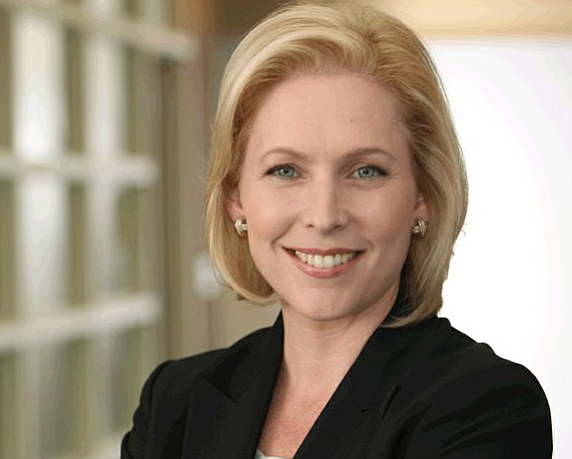
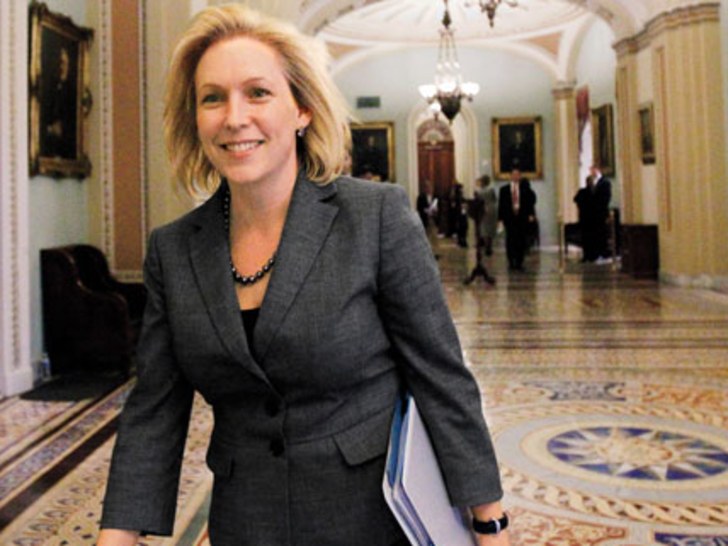
Another powerhouse in the Democratic party has announced a bid for the White House, Kirsten Gillibrand. The Junior Senator from New York state has long been rumored to be planning a Democratic primary challenge and has become a polarizing figure in the party. A centrist Democrat with past conservative views, she has been criticized by the progressive left and adored by establishment donors. More recently though, she angered the party establishment and donor base by criticizing Bill Clinton and calling for the resignation of Senator Al Franken because of sexual misconduct. In a time when the Democratic party is shifting back towards a more progressive and populist message can a centrist Senator, that literally represents the territory of Wall Street, win the nomination of a party yearning for real change and beat an incompetent and floundering Donald Trump.

Kirsten Gillibrand is a graduate of Dartmouth College and the UCLA School of Law. After graduating in the 90s she worked for a private law firm in Manhattan and clerked for Judge Roger Miner of the U.S. Court of Appeals in New York. Working for a private law firm in New York she served as a defense attorney for the tobacco company, Phillip Morris. She helped to defend the company when they were charged with lying to Congress about their previous knowledge about the link between cigarettes and cancer. She has claimed that she had no choice in the types of cases she was handed, but the law firm has stated that all lawyers were given a choice not to work on the case for moral reason, she chose to work for them regardless. Also, during her time she took on pro-bono cases involving tenants’ rights and battered women. It is during this time in the late 1990s that Gillibrand began working on Hillary Clinton’s Senate campaign. The two became close, with Gillibrand seeing the former First Lady as a mentor. In 2006 she successfully ran for Congress in New York’s 20th congressional district.

Her time in the House is becoming somewhat of a liability for the Senator. Upon entering Congress, she joined the Blue Dog coalition in the House, a conservative Democratic caucus. The seat she represented is a traditional conservative district, with her campaigning and voting in Congress that way. Since announcing her run for president she has come under fire for the way she campaigned in that election. Most notably her positions on immigration have come to haunt her, running to the right of her Republican opponent. In a 2007 interview she said that securing the border was a national security issue and closing the border was the first step in this direction. Even as soon as 2008, she claimed the need to expedite ‘illegal alien’ detention and deportation. Gillibrand has since said she is ashamed of this and regrets these positions, calling them unkind and not ‘empathetic’.  She said her views were because she lived in and represented a more rural district and did not take the time to put herself in the shoes of immigrant families, crediting her travels as Senator to New York City to talk to these immigrant families as helping to change her views. Before her time in Congress, Gillibrand worked at two law firms based out of Manhattan so one must wonder why she was not able to understand this issue during her time living in a city filled with many immigrants and cultural backgrounds. During her time in the House she also was to the right on guns and received a ‘A’ plus rating from the NRA, voting for a bill that limited information sharing on firearm purchases between government agencies.

In 2008, the then Senator, Hillary Clinton was nominated as Secretary of State by President Obama. Gillibrand campaigned hard for the Governor of New York to appoint her to the vacant seat, ultimately coming out on top. Her time in the Senate has seen her move towards more liberal positions. She has made sexual assault a key part of her agenda, introducing legislation that would remove allegations of cases of sexual assault in the armed forces from official military chain of command and place them in the civilian criminal system. She was also very vocal about calling for the resignation of Senator Al Franken amid his sexual misconduct. Gillibrand even said that President Clinton should have resigned during his Monica Lewinsky scandal. Her views on immigration and guns have also swung leftward during her Senate tenure. She was the first sitting Senator to call for the abolition of ICE and now receives an ‘F’ rating from the NRA. On social issues Gillibrand supports abortion rights and the rights of the LGBTQ community. Economically, she has even come out in favor of Bernie Sanders’ legislation for Medicare for All. In the House she voted in favor of the Bush Tax cuts, but now says she is in favor of raising taxes on high income earners. Once one of the highest receivers of corporate campaign funds, she now says she opposes PAC and other corporate donations.

senator-kirsten-gillibrand-01-hess431

While in the Senate, Gillibrand seems to be doing everything right – saying all of the right things and voting in all of the right ways. Recently, she has come out in favor of many progressive policies like Medicare for All, raising the minimum wage, and a federal jobs guarantee to name a few. But do these reflect her true intentions or are they platitudes to a party that she sees moving to the left. In 2018, while speaking on a panel about the financial crisis of 2008, she was quoted as saying, “…if it wasn’t Lehman brothers, but Lehman sisters, we might not have had the financial collapse.” This is intellectually lazy at best, disingenuous at worst. This shows a very shallow understanding of the dynamic that unfettered capitalism is playing on society and the economy. This feminist capitalism doesn’t solve the ills of a cruel and heartless system. As a feminist myself I want women to be visible in every aspect of society, but this should not be the goal of feminism. Simply putting a female face on capitalism will not fundamentally change the system, especially for women of the working class or working poor.

These new found views stand in contrast to her tenure in the House of Representatives. Progressives and the left wing of the party worry about the genuineness of Gillibrand and her sudden change in views. While evolution and moving on issues is good and needed, does that mean that you get chosen from a crowded field of people to now represent these issues – to be our champion versus other people who have been right on certain issues from the beginning or longer. To some these changing views show a lack of a moral compass, with a goal of winning elections and advancing a career. Her past views on immigration will be hard for some to get past, especially in today’s climate. Too often the Democratic party is willing to throw marginalized groups under the bus for political expedience and expect them to continue to support the party.

At the current moment the Democratic party is going through a much-needed cleansing, a fight for its very soul. To some on the left Gillibrand represents the neoliberal policy of triangulation adopted by the New Democrats of the 1980s – shifting away from the progressive and populist roots of the Democratic party. We, as a party, need to break away from this thinking, and yes burn some bridges. What I worry about is that the party, and the corporate powers that have gained control over it, will use this time to simply revert back to the pre-Trump status quo – epitomized by seemingly ‘woke’ politicians offering platitudes to working Americans but doing little to actually push real change in people’s lives. This very situation is the reason that the Democratic party has lost its reputation for being the party of the working class, and an unprecedented number of state and federal seats. This, among other factors, is what created the perfect situation for an opportunistic leech like President Trump. The election of Donald Trump is a symptom of this. Thankfully the Democratic party is indeed changing, and for the better. Will Kirsten Gillibrand be able to convince Democratic voters that she is the right person to lead a new and more progressive party?

Dale Seufert-Navarro

Supreme Court fails to Protect Transgendered Service Members

supreme court

In a victory for the Trump administration and discrimination, on Tuesday the Supreme Court refused to hear a case disputing the ban on transgendered men and women serving in the military. In a 5-4 decision – with the four liberal justices voting to hear the case and continuing to block the ban and the 5 conservative justices opposing – the case will continue to be heard in the lower courts. The Pentagon praised the decision and has long claimed that the policy is not a complete ban on transgendered service members, saying that the policy only applies to people actively seeking transition.

All hope is not lost, there is still a chance that the issue will be solved in the lower courts in a favorable way. Until then, the policy continues to take effect. On this issue, the Supreme Court has relinquished its duty to the American people and the constitution of the United States. There is no reason that the court should not have taken up this case, except for cowardice and malice – or both. Four lower district courts have rejected and blocked the administration’s policy and one recent appeals court has reversed and upheld the case. The court has jurisdiction and power to weigh in when there are conflicting lower court rulings. It is the job of the high court to set a clear precedent of the law. There is also the matter of the Equal Protection Clause of the 14th amendment, which allows all citizens equal protection under the law. This is another consequence of the Democratic party not being as vigilant about the Judiciary as the Republican party. Decades ago the Republican party set out upon a successful effort to remake the courts in a more conservative image. The federal judiciary and the Supreme Court have been on a rightward lurch ever since.

Once again, the Supreme Court proves to be a tool of oppression, with historical precedent rampant. Time and time again marginalized groups are thrown under the bus, used as political pawns for political games. Donald Trump is using the trans community as another scapegoat and political distraction. As his administration continues to drown in scandal and incompetence, he throws scraps to his rabid base, this being another example. The irony that trans men and women would freely join the military with the goal of protecting our country, while their own government will not protect them is bewildering, but not surprising. The irony is also not lost in the fact that a spineless man escaped military duty, by claiming bone spurs in his feet, is objecting to anyone wanting to serve in the military. For all of Trumps false claims that the military is in a decline, it is idiotic why he would limit the amount of people eligible to join.

marshapjohnson
Marsha P Johnson –

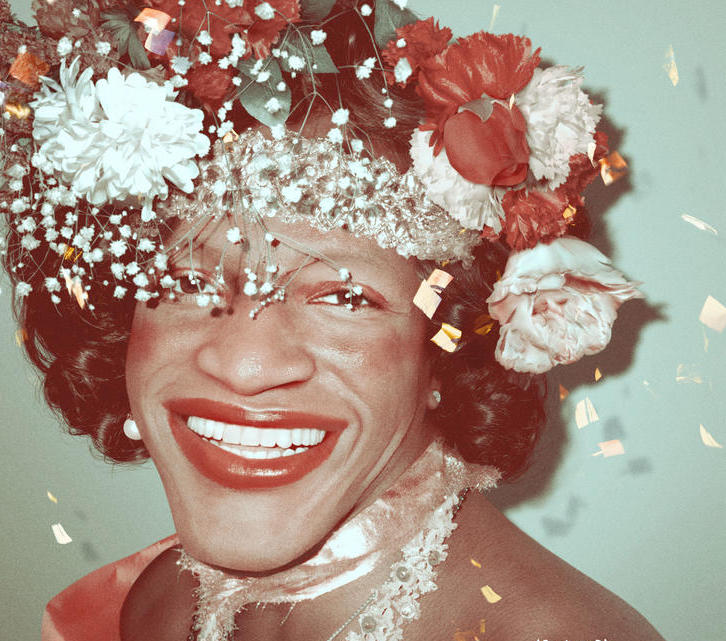
The decision by the Supreme Court to not affirm the equal protection of trans people in this country comes at a time when violence against the trans community is on the rise. When the government does not show a willingness to stand behind the oppressed it, emboldens prejudice. Over the past couple of years, a number of states have tried to pass so-called Transgender Bathroom laws, including my home state of Virginia and my adopted state of North Carolina. These types of policies are not rooted in logic or public safety, instead they are rooted in a malicious effort to sow discord and division. Just recently, a trans woman was harassed and sexually abused in a Raleigh, North Carolina bathroom. Two women have been charged with second-degree kidnapping and sexual battery. Often, the less visible members of society are the least protected. The trans community is but one example. The gay community must stand with our trans brothers and sisters and fight injustice in all of its forms. Remember, that it was a trans woman of color, Marsha Johnson, that helped to initiate the Stonewall Riots in response to police harassment. The trans community has always been on the front lines of the gay rights movement, and we should be just as vocal for them as well.

Dale Seufert-Navarro

The Sanitation and Revisionism of Dr. King

Martin Luther King Jr.
Julian Wasser – The LIFE Images Collection/Getty Images

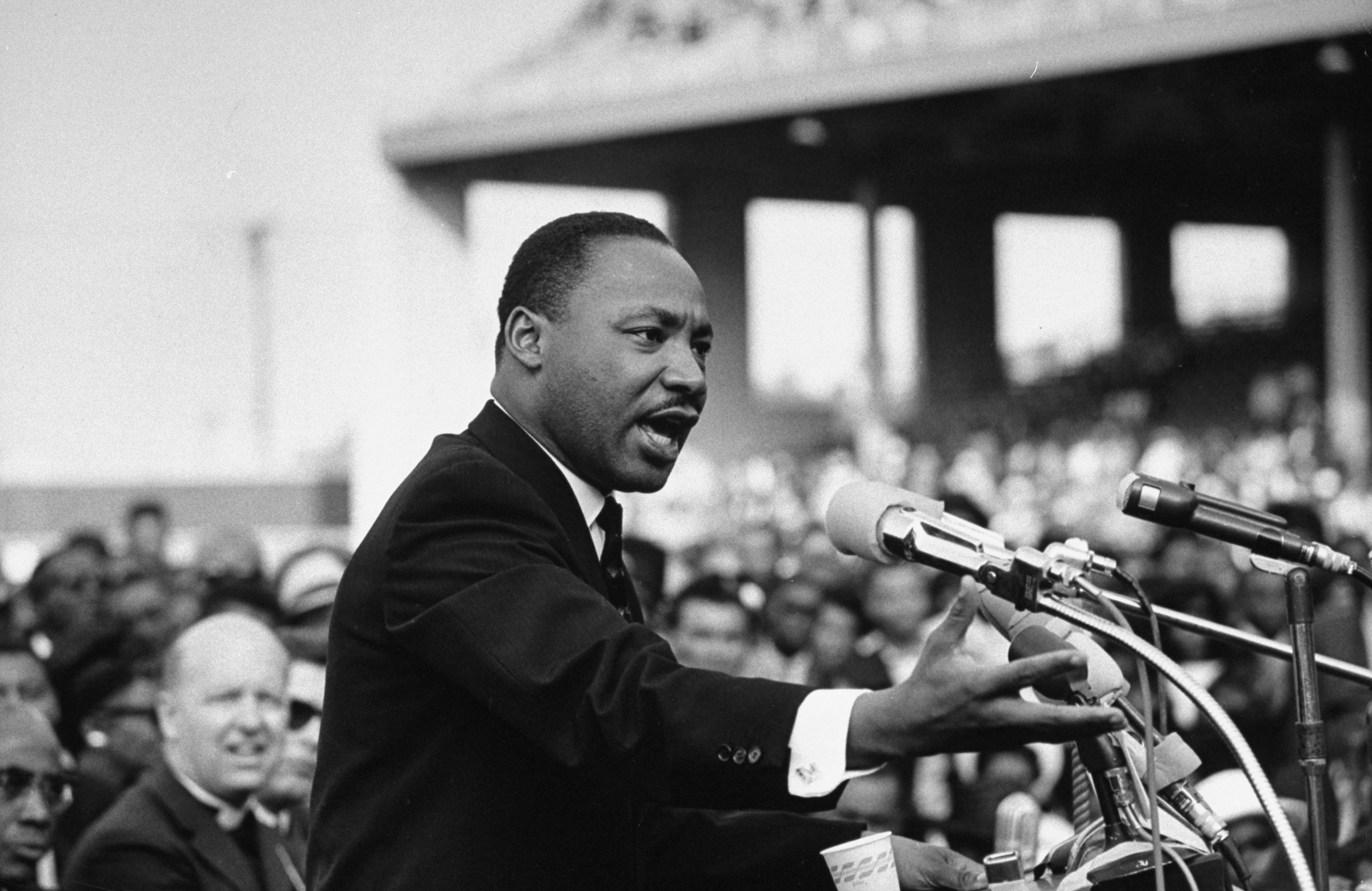
Martin Luther King may be one of the most well-known figures of the 20th Century, with an approval rating pushing over 90 percent. As children we learn, briefly, about his role in the civil rights movement. Almost everyone knows about his I Have a Dream speech, although most people do not really know the content of this speech aside from those four words. He has a federal holiday dedicated to him, and most major cities around the country have a street named after him. With that said, who is Dr. King? What is the true face of this iconic man?

King was a dynamic and complicated man like many of our leaders. The man that ‘mainstream’ accepted history has given us is a watered down and commercially friendly version of the truly revolutionary man that he was. His sermons on the intersectionality of race, gender, class, and imperialism are just as relevant now as they were in 1968 when he was killed. The story of Dr. King is a story of evolution. In a time of great unrest, he was able to connect all of the dots that make up our extremely rigged and unjust society.

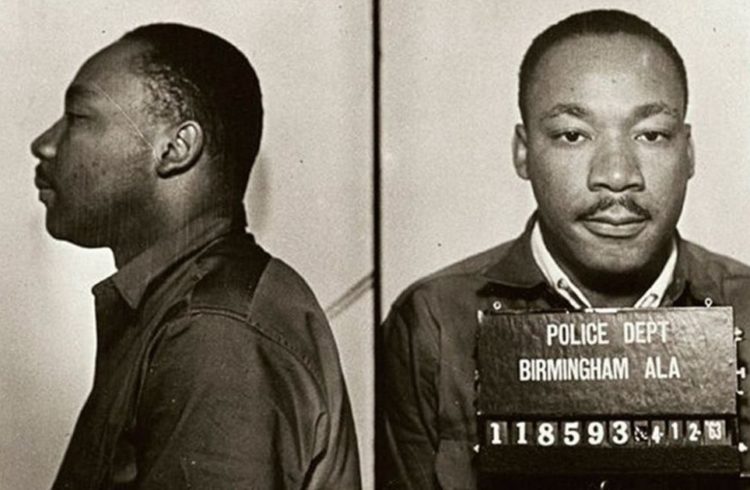
Most people are taught that Martin Luther King was the epitome of non-violent civil disobedience, the historical polar opposite of the militant Malcom X. While it is true that King advocated for nonviolence, his ideas were not so diametrically opposed to the likes of Malcom X.  In fact, Dr. Kings ideas and political leanings grew very radical between the time he wrote his letter from a jail cell in Birmingham, Alabama and his death in 1968. Modern history has relegated King’s ideas to racial segregation and nothing more. His journey in the civil rights movement of the 1960s led King to an understanding that even some people can’t seem to grasp 50 years later – racial justice and economic justice are inherently connected.

king
An imprisoned Dr. King – Missioalliance.org

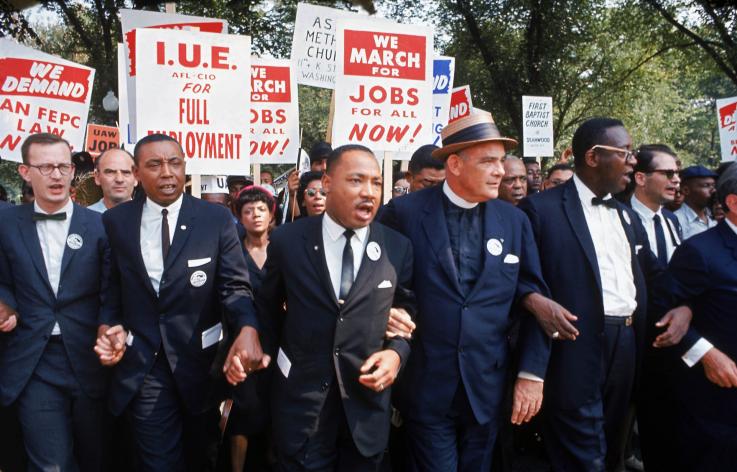
The March on Washington in 1963 where Dr. King delivered his I have a Dream speech is very well-known, but most forget that the full name of that march was, The March on Washington for Jobs and Freedom. The march was organized by civil rights leaders and labor organizations, uniting a call for the end of racial segregation and democratized economic opportunity. One of the last programs he was a part of before his death was the Poor Peoples Campaign. King lamented that even if segregation were abolished and black people were allowed in every establishment, they may not be able to afford anything in that establishment. He understood that integration would not solve all evils. The powers and inequities of capitalism would still need to be fiercely fought. King was even quoted as saying he was worried that the objective of the civil rights movement was to ‘integrate into a burning house’. Sadly, this is a blind spot for bourgeoisie elite liberals that fail to see how racism is deeply connected to class struggle. In 2016, during a Democratic primary debate between Hillary Clinton and Bernie Sanders, Clinton made the claim that breaking up the banks would not solve racism, a way for her to criticize Sanders for not focusing on issues facing minority communities. While this claim is technically true, economic reforms like breaking up the big banks is a step in the right direction. In fact, recently many of the top banking institutions were found guilty of using racist policies towards black Americans. In the spirit of Roosevelt’s New Deal, Dr. King called for an Economic Bill of Rights. He realized that economic mobility translated into political power, and that is what was most feared by the political establishment.

As Dr. King navigated through the civil rights movement he began to expand his message of racial and economic justice. He saw the struggles of marginalized people around the world as connected. His vision turned to the conflict in Vietnam as he vehemently opposed the war. In his powerful and controversial, Beyond Vietnam, speech King laid out his argument for opposing the war. He famously said,

“We were taking the black young men who had been crippled by our society and sending them eight thousand miles away to guarantee liberties in Southeast Asia which they had not found in southwest Georgia and East Harlem. So, we have been repeatedly faced with the cruel irony of watching Negro and white boys on TV screens as they kill and die together for a nation that has been unable to seat them together in the same schools. So, we watch them in brutal solidarity burning the huts of a poor village, but we realize that they would hardly live on the same block in Chicago. I could not be silent in the face of such cruel manipulation of the poor.”

Here he connects the ‘Three Evils’ as he called them – racism, poverty, and war – claiming they were the biggest threats to democracy. His vocal opposition to the war became the leading reason many people turned against him in his later years.

The way history is presented, and the way current politicians fawn over Dr. King, you would think that he was championed by nearly everyone in the 60s. Unfortunately, he became on outcast by many in the civil rights movement at the end of his life. As his message evolved into a more economic and anti-imperialist one, even many of his allies turned on him – Newspapers wouldn’t run his op-eds, black churches wouldn’t have him, and black politicians didn’t want to be seen with him. The last years of his life were some of the hardest and most isolating years of his life.  As King railed against the U.S. involvement around the world and the capitalist system, the political establishment grew worried about his message. He was painted as a communist and anti-American. He was heavily surveilled and blackmailed by the FBI, with the bureau even sending a letter to his wife demanding King commit suicide.

martin king
ROBERT W. KELLEY/THE LIFE PICTURE COLLECTION/GETTY

Dr. Martin Luther King Jr may be one of the most recognized and admired figures in the world, but the true face of this icon has been hidden, distilled into a neutered version that he wouldn’t recognize, nor even find acceptable. The writers of history have turned him into something that doesn’t offend conservative minded bigots and makes affluent white liberals feel good about themselves. This is why we as a society celebrate Dr. King but feel uncomfortable by Malcom X. King has been narrowed down into short slogans used for capitalist advertising, when he himself said that slogans are not solutions. Living in this deeply corrupt and fractured society it is evident to see why this historical revisionism has occurred. Dr. King had to fit into the prevailing capitalist and imperialist narrative. The true King – the one that railed against American Imperialism – cannot be glorified by an imperialist nation. The true King – the one that advocated for economic justice – cannot be honored by a greedy corporate capitalist system. This is why his message has been forgotten.

“Only in the darkness can you see the stars.” – Martin Luther King Jr

Dr. King was a brilliant and fearless individual. In philosophical study, the ideas of black thinkers are not given equitable placement at the table as are their white counterparts. The philosophies of King deserve to be studied and treasured, and not just for his calls for racial equality. In his emotional last speech before he died, King knew that his days were numbered. He knew that the world was against him, but the trajectory of history would continue forward. Dr. King was truly a man ahead of his time. He was able, in the midst of unrest and oppression, to connect the dots of global and domestic solidarity. To remember Martin Luther King Jr is to remember the whole King; all of him. To honor the legacy of Dr. King is to see the solidarity between the Trayvon Martins of the world, the countless imprisoned and disenfranchised people in a corrupt criminal justice system, the thousands of striking teachers around the country, the struggling mother working two jobs trying to put food on the table, the poor communities from east Harlem to the oppressed people of Palestine, and to the dying children in Yemen. The story and legacy of Martin Luther King Jr is one about power. He understood the powers that hold our society hostage, preventing us from creating a world of justice and equality in all meaning of the word. But he also understood the power that we hold, and he refused to give up that power even as the snakes of this world threatened his very life. He was a fighter until the very end and we should honor the message that he preached, the true message.

“Well, I don’t know what will happen now; we’ve got some difficult days ahead. But it really doesn’t matter to with me now, because I’ve been to the mountaintop. And I don’t mind. Like anybody, I would like to live a long life — longevity has its place. But I’m not concerned about that now. I just want to do God’s will. … I’ve seen the Promised Land. I may not get there with you. But I want you to know tonight, that we, as a people, will get to the Promised Land.” – Martin Luther King Jr

Dale Seufert-Navarro

French Protests reveal Growing Unrest

the new york times
Protests near the Arc de Triomphe – The New York Times

The most recent protests in France should worry the American political elite. The unrest was initially sparked by new fuel taxes but draws its energy from years of harsh neoliberal governance. Support among the numbers of protesters are vast, with many sides of the political spectrum trying to claim rights and co-op the movement. American political leaders, and specifically the Democratic party, should learn from these demonstrations and try to understand the roots of this turmoil.

As stated, the protests were first initiated by the French government’s announcement of new fuel taxes. The price of fuel has risen about 23 percent since the beginning of 2018, and around November, President Macron announced new taxes on fuel that would further raise prices. The cost of a gallon of diesel – the most used form of fuel for cars in France – is about $6.53 (USD). The hike in prices most heavily effects people that live in more rural areas that have to commute for work and school. This also comes at a time when continued cuts to public transit make people more dependent on their cars. On November 17th , 2018, frustration turned into action. Thanks to a grassroots online movement, thousands of people took to the streets to voice their opposition to these rising gas prices. The protesters wore the bright yellow vests that all motorists are required to keep in their cars by law.

The new taxes were supposed to be a part of the government’s new environmental agenda, which Macron said were necessary to protect the environment and combat climate change. What eventually became known was that only a mere 20% of revenue raised by the new taxes would go to environmental programs. The government used the pretext of climate change to further pillage the working class. This comes at a time when the working class of France is struggling to survive. After years of cuts and austerity, the middle and lower classes of French society are being economically suffocated. This can be traced as far back as 1983 when the government at the time enacted controversial austerity policies. This trend has continued ever since, with the French social welfare state being slowly chipped away. This mirrors events in the U.S. and the UK with Ronald Reagan and Margaret Thatcher. More recently, Macrons government has been criticized for an agenda that favors the wealthy over working class people.

Emmanuel Macron, a banker with a career in finance, won his bid for president in a landslide that was partly due to the fact that he ran against an evident racist, Marine le Pen. The young charismatic politician ran as the anti-Trump, but also tried to separate himself from the French political establishment which, like the U.S., is not very popular at the moment. Macron was endorsed by President Obama and heralded as a progressive savior. His time in office has proven that this couldn’t be further from the truth. His government abolished an important tax on the wealthy, the Solidarity Wealth Tax, which was a boon of $4 billion dollars to the richest members of French society. In his 2018 budget, he established a flat tax on capital which allowed an additional $10 billion to be transferred to the upper class. At the same time, Macron has led an assault on labor unions and cut services that average French citizens depend on. He raised income taxes on pensioners while also stopping these pensions to be indexed for inflation. The government has also lowered the amount given for housing contributions to people struggling to meet housing demands.

This is nothing more than a literal redistribution of money from the bottom to the top – socialism for the rich with harsh rugged capitalism for the working class and the working poor. This is also similar to what is going on in the rest of the world, the U.S. included. The new fuel taxes have proven to be the final element in a long line of measures that are strangling the working class in France. This fight has brought many parts of French society together in solidarity. The makeup of the protesters is broad, with most of the participants saying they have never participated in any kind of protest before. A completely grassroots movement, it has no official leader and no organizational structure. This has unfortunately allowed nefarious groups to try and co-op the movement. The French far-right was quick to latch onto the protests and insert its brand of anti-tax, anti-environmental and even anti-immigrant rhetoric. Even the American right quickly claimed that the movement was due to high taxation and anti-environmental sentiment. Fox news ran stories making these claims with President Trump parroting them soon after. While the American media and French far-right has tried to paint this movement as big government gone wrong, the broader complaint is of the unfair tax system where the rich have done very well under Macron.

While a specific tax prompted this unrest, the French people are not opposed to progressive taxation and efforts to protect the environment. Polling shows that both are important to French citizens. The grievance is that both are being unevenly shouldered on the working class and not the rich. The burden of alleviating climate change instead should be shifted to the large corporations that are most responsible for climate change instead of the most vulnerable members of society. The attention of the protesters soon turned to Macron himself. His reputation and policies had already dubbed him the ‘president of the rich’, and his harsh response to the movement didn’t help. Many of his statements showed his disdain and lack of empathy for the working class and the poor. In one speech he stated he loved train stations because there you can cross paths with ‘people who succeed’ and ‘people who are nothing’. In the French media it was reported that he told an unemployed man that instead of ‘kicking up bloody chaos’ he should go find a job, unable to fathom that the very reason for much of this unrest is lack of well-paying jobs and the cutting of the programs designed to aid average citizens. His arrogance and tone-deaf response have prompted the protesters to call for his resignation.

the guardian
President Macron – The Guardian 

Sensing an unsustainable path because of civil unrest, the government conceded on some of their plans – even though Macron and his government initially vowed to never give in. The president announced that the scheduled fuel tax would be postponed, and the minimum wage would be raised. Most ironically, when Macron announced these changes he did so in a gilded golden room of the Élysée Palace. The optics of this could not have been worse for someone that is already seen as out of touch and disdainful of the working class.

medium

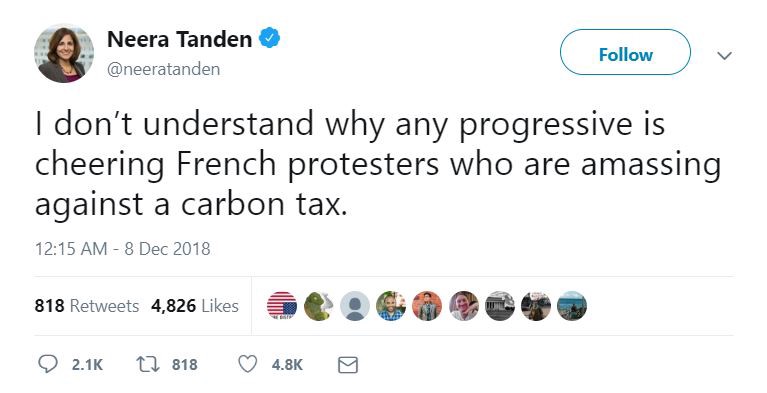
Sadly, some in the American liberal and Democratic establishment rushed to side with Macron and the Carbon tax. Neera Tanden, the President of the Center for American Progress – a third way centrist liberal organization, tweeted: “I don’t understand why any progressive is cheering French protesters who are amassing against a carbon tax.” These elitist so-called progressives are out of touch with working class people and are unable to realize that people are struggling and morally shouldn’t shoulder the burden of climate action, especially given the fact that large multi-national corporations are primarily responsible for the effects of climate change. Journalist Glenn Greenwald commented on these reactions, “The inability of rich neoliberal centrist elites in western capitals to understand – or even hide their scorn for – the anger & grievances of rural and working-class people over their economic suffering is one of the 2 or 3 most important causes of contemporary political changes.”

Growing income inequality and mistrust of the government’s ability to have the best interests of working people will only lead to more unrest. Martin Luther King repeatedly said that riots were the language of the unheard. When everyday citizens believe that they have no real channel to voice their opinions or anger, they have no other option. These protests are the result of this frustration. We must stand in solidarity with working class people around the world and work towards creating an international movement for the fair and just society we want to live in. The protests in France should be a lesson to the rest of the world and more specifically to the American political elite. The insurgent campaign of Bernie Sanders on the left shows people are unhappy with the direction of the establishment of the Democratic party. The embarrassing defeat of Hillary Clinton to the most disliked and scandal ridden candidate, Donald Trump, is proof that 30 plus years of crushing neoliberal politics has taken its toll on society. People are hungry for real substantial change. This is why Americans voted for the ‘hope and change’ candidate – Barack Obama. While Obama saved the country from falling off of an economic cliff, he didn’t go far enough, a corrupt and Wall Street funded Democratic party didn’t go far enough. It has been 10 years since the Great Recession began and the wealthy have recovered and are doing very well, while the rest of us are fighting over the scraps of whatever the rich decide to throw to us. People see this. People feel this. This is one reason, among many, why Donald Trump was able to win the presidency. Trump is but a symptom of a rigged system that will only get worse if substantial changes are not made. We cannot simply revert back to the status quo that was before Trump. If we do we will only be inviting the next Trump to take power, only next time we may get an intelligent and skilled politician instead of a bumbling imbecile.

Dale Seufert-Navarro