Henry Wallace: ‘The Dangers of American Fascism’

fascism boots
Photo Illustration by Slate. Photo via Corbis/Getty Images 

Everywhere you turn, you hear the word fascism. With Donald Trump’s affinity for violence and a superficial toxic masculine world view, the comparisons between him and historical fascist strongmen are not hard to connect. Because of all of this renewed discussion about fascism, I decided to explore the topic and its historical roots in America.

In 1944, at the height of World War II and the rise of the European fascists – Hitler, Mussolini, and Franco – the Vice President of the Unites States, Henry Wallace, wrote an op-ed in the New York Times warning about the influence and threats of fascist ideology taking root in America. While some of the content of his piece is distinct to the situation and time in which he wrote it, wartime 1940’s, it is still shockingly relevant to our modern era.

Before I posted my own piece on fascist ideology in American politics, I wanted to present Henry Wallace’s entire NYT op-ed article to highlight him in his own words. As you read his piece, imagine the world he faced and the circumstances that created that world. Now look around at the world us today. What are its warnings? What are its parallels?

Dale Seufert-Navarro


*************************************************************************************

An article from the New York Times, April 9, 1944.

From Henry A. Wallace, Democracy Reborn (New York, 1944), edited by Russell Lord, p. 259
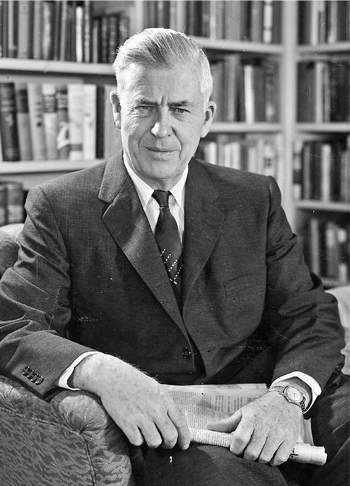
henry wallace
Henry Wallace

On returning from my trip to the West in February, I received a request from The New York Times to write a piece answering the following questions:

  1. What is a fascist?
  2. How many fascists have we?
  3. How dangerous are they?

A fascist is one whose lust for money or power is combined with such an intensity of intolerance toward those of other races, parties, classes, religions, cultures, regions, or nations as to make him ruthless in his use of deceit or violence to attain his ends. The supreme god of a fascist, to which his ends are directed, may be money or power; may be a race or a class; may be a military, clique or an economic group; may be a culture, religion, or a political party.

The perfect type of fascist throughout recent centuries has been the Prussian Junker, who developed such hatred for other races and such allegiance to a military clique as to make him willing at all times to engage in any degree of deceit and violence necessary to place his culture and race astride the world. In every big nation of the world are at least a few people who have the fascist temperament. Every Jew-baiter, every Catholic hater, is a fascist at heart. The hoodlums who have been desecrating churches, cathedrals, and synagogues in some of our larger cities are ripe material for fascist leadership.

The obvious types of American fascists are dealt with on the air and in the press. These demagogues and stooges are fronts for others. Dangerous as these people may be, they are not so significant as thousands of other people who have never been mentioned. The really dangerous American fascists are not those who are hooked up directly or indirectly with the Axis. The FBI has its finger on those. The dangerous American fascist is the man who wants to do in the United States in an American way what Hitler did in Germany in a Prussian way. The American fascist would prefer not to use violence. His method is to poison the channels of public information. With a fascist the problem is never how best to present the truth to the public but how best to use the news to deceive the public into giving the fascist and his group more money or more power.

If we define an American fascist as one who in case of conflict puts money and power ahead of human beings, then there are undoubtedly several million fascists in the United States. There are probably several hundred thousand if we narrow the definition to include only those who in their search for money and power are ruthless and deceitful. Most American fascists are enthusiastically supporting the war effort. They are doing this even in those cases where they hope to have profitable connections with German chemical firms after the war ends. They are patriotic in time of war because it is to their interest to be so, but in time of peace they follow power and the dollar wherever they may lead.

American fascism will not be really dangerous until there is a purposeful coalition among the cartelists, the deliberate poisoners of public information, and those who stand for the K.K.K. type of demagoguery.

The European brand of fascism will probably present its most serious postwar threat to us via Latin America. The effect of the war has been to raise the cost of living in most Latin American countries much faster than wages of labor. The fascists in most Latin American countries tell the people that the reason their wages will not buy as much in the way of goods is because of Yankee imperialism. The fascists in Latin America learn to speak and act like natives. Our chemical and other manufacturing concerns are all too often ready to let the Germans have Latin American markets, provided the American companies can work out an arrangement which will enable them to charge high prices to the consumer inside the United States. Following this war, technology will have reached such a point that it will be possible for Germans, using South America as a base, to cause us much more difficulty in World War III than they did in World War II. The military and landowning cliques in many South American countries will find it attractive financially to work with German fascist concerns as well as expedient from the standpoint of temporary power politics.

Fascism is a worldwide disease. Its greatest threat to the United States will come after the war, either via Latin America or within the United States itself.

Still another danger is represented by those paying lip service to democracy and the common welfare, in their insatiable greed for money and the power which money gives, do not hesitate surreptitiously to evade the laws designed to safeguard the public from monopolistic extortion. American fascists of this stamp were clandestinely before the war, and are even now preparing to resume where they left off, after “the present unpleasantness” ceases.

The symptoms of fascist thinking are colored by environment and adapted to immediate circumstances. But always and everywhere they can be identified by their appeal to prejudice and by the desire to play upon the fears and vanities of different groups in order to gain power. It is no coincidence that the growth of modern tyrants has in every case been heralded by the growth of prejudice. It may be shocking to some people in this country to realize that, without meaning to do so, they hold views in common with Hitler when they preach discrimination against other religious, racial or economic groups. Likewise, many people whose patriotism is their proudest boast play Hitler’s game by retailing distrust of our Allies and by giving currency to snide suspicions without foundation in fact.

The American fascists are most easily recognized by their deliberate perversion of truth and fact. Their newspapers and propaganda carefully cultivate every fissure of disunity, every crack in the common front against fascism. They use every opportunity to impugn democracy. They use isolationism as a slogan to conceal their own selfish imperialism. They cultivate hate and distrust of both Britain and Russia. They claim to be super-patriots, but they would destroy every liberty guaranteed by the Constitution. They demand free enterprise but are the spokesmen for monopoly and vested interest. Their final objective toward which all their deceit is directed is to capture political power so that, using the power of the state and the power of the market simultaneously, they may keep the common man in eternal subjection.

Several leaders of industry in this country who have gained a new vision of the meaning of opportunity through cooperation with government have warned the public openly that there are some selfish groups in industry who are willing to jeopardize the structure of American liberty to gain some temporary advantage. We all know the part that the cartels played in bringing Hitler to power, and the rule the giant German trusts have played in Nazi conquests. Monopolists who fear competition and who distrust democracy because it stands for equal opportunity would like to secure their position against small and energetic enterprise. In an effort to eliminate the possibility of any rival growing up, some monopolists would sacrifice democracy itself.

It has been claimed at times that our modern age of technology facilities dictatorship. What we must understand is that the industries, processes, and inventions created by modern science can be used either to subjugate or liberate. The choice is up to us. The myth of fascist efficiency has deluded many people. It was Mussolini’s vaunted claim that he “made the trains run on time.” In the end, however, he brought to the Italian people impoverishment and defeat. It was Hitler’s claim that he eliminated all unemployment in Germany. Neither is there unemployment in a prison camp.

Democracy to crush fascism internally must demonstrate its capacity to “make the trains run on time.” It must develop the ability to keep people fully employed and at the same time balance the budget. It must put human beings first and dollars second. It must appeal to reason and decency and not to violence and deceit. We must not tolerate oppressive government or industrial oligarchy in the form of monopolies and cartels. As long as scientific research and inventive ingenuity outran our ability to devise social mechanisms to raise the living standards of the people, we may expect the liberal potential of the United States to increase. If this liberal potential is properly channeled, we may expect the area of freedom of the United States to increase. The problem is to spend up our rate of social invention in the service of the welfare of all the people.

The worldwide, agelong struggle between fascism and democracy will not stop when the fighting ends in Germany and Japan. Democracy can win the peace only if it does two things:

  1. Speeds up the rate of political and economic inventions so that both production and, especially, distribution can match in their power and practical effect on the daily life of the common man the immense and growing volume of scientific research, mechanical invention and management technique.
  2. Vivifies with the greatest intensity the spiritual processes which are both the foundation and the very essence of democracy.

The moral and spiritual aspects of both personal and international relationships have a practical bearing which so-called practical men deny. This dullness of vision regarding the importance of the general welfare to the individual is the measure of the failure of our schools and churches to teach the spiritual significance of genuine democracy. Until democracy in effective enthusiastic action fills the vacuum created by the power of modern inventions, we may expect the fascists to increase in power after the war both in the United States and in the world.

Fascism in the postwar inevitably will push steadily for Anglo-Saxon imperialism and eventually for war with Russia. Already American fascists are talking and writing about the conflict and using it as an excuse for their internal hatreds and intolerances toward certain races, creeds and classes.

It should also be evident that exhibitions of the native brand of fascism are not confined to any single section, class, or religion. Happily, it can be said that as yet fascism has not captured a predominate place in the outlook any American section, class, or religion. It may be encountered in Wall Street, Main Street or Tobacco Road. Some even suspect that they can detect incipient traces of it along the Potomac. It is an infectious disease, and we must all be on our guard against intolerance, bigotry, and the pretension of invidious distinction. But if we put our trust in the common sense of common men and “with malice toward none and charity for all” go forward on the great adventure of making political, economic and social democracy a practical reality, we shall not fail.

Henry Wallace
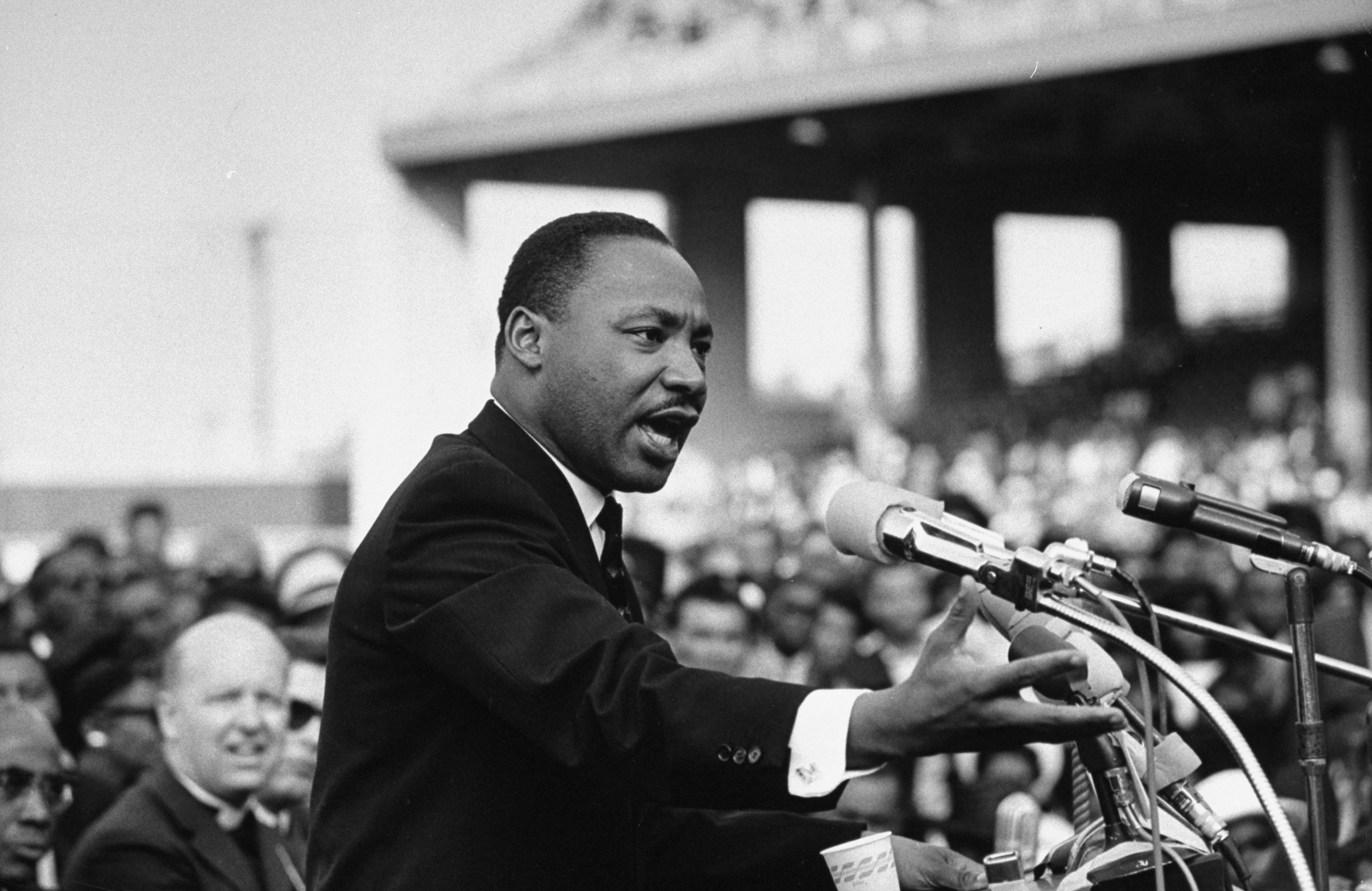
The Sanitation and Revisionism of Dr. King

Martin Luther King Jr.
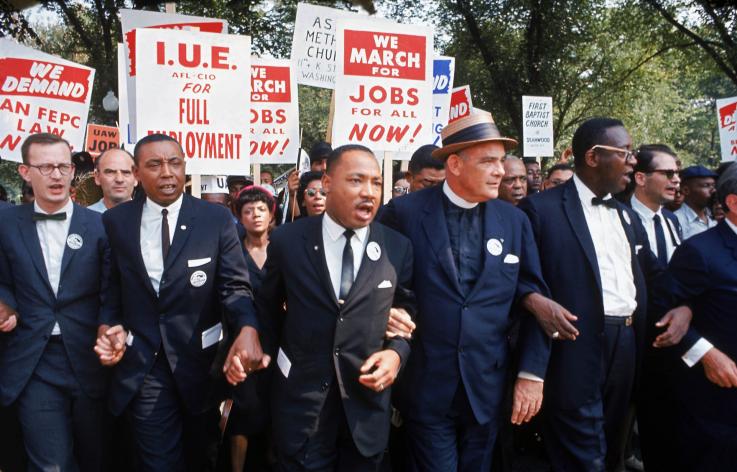
Julian Wasser – The LIFE Images Collection/Getty Images

Martin Luther King may be one of the most well-known figures of the 20th Century, with an approval rating pushing over 90 percent. As children we learn, briefly, about his role in the civil rights movement. Almost everyone knows about his I Have a Dream speech, although most people do not really know the content of this speech aside from those four words. He has a federal holiday dedicated to him, and most major cities around the country have a street named after him. With that said, who is Dr. King? What is the true face of this iconic man?

King was a dynamic and complicated man like many of our leaders. The man that ‘mainstream’ accepted history has given us is a watered down and commercially friendly version of the truly revolutionary man that he was. His sermons on the intersectionality of race, gender, class, and imperialism are just as relevant now as they were in 1968 when he was killed. The story of Dr. King is a story of evolution. In a time of great unrest, he was able to connect all of the dots that make up our extremely rigged and unjust society.

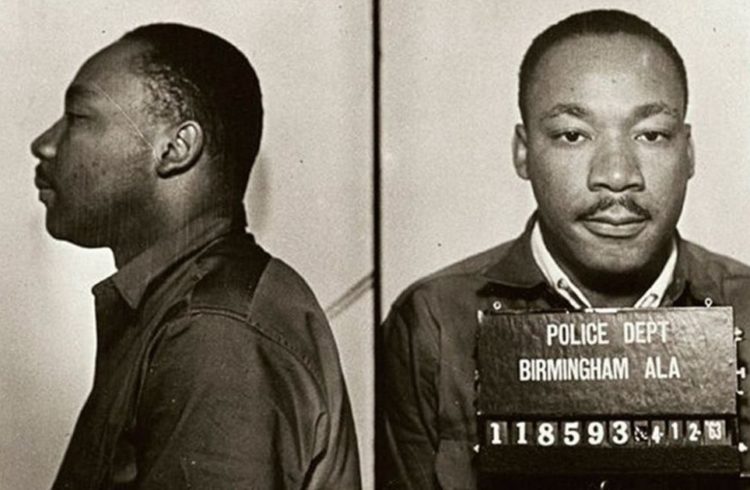
Most people are taught that Martin Luther King was the epitome of non-violent civil disobedience, the historical polar opposite of the militant Malcom X. While it is true that King advocated for nonviolence, his ideas were not so diametrically opposed to the likes of Malcom X.  In fact, Dr. Kings ideas and political leanings grew very radical between the time he wrote his letter from a jail cell in Birmingham, Alabama and his death in 1968. Modern history has relegated King’s ideas to racial segregation and nothing more. His journey in the civil rights movement of the 1960s led King to an understanding that even some people can’t seem to grasp 50 years later – racial justice and economic justice are inherently connected.

king
An imprisoned Dr. King – Missioalliance.org

The March on Washington in 1963 where Dr. King delivered his I have a Dream speech is very well-known, but most forget that the full name of that march was, The March on Washington for Jobs and Freedom. The march was organized by civil rights leaders and labor organizations, uniting a call for the end of racial segregation and democratized economic opportunity. One of the last programs he was a part of before his death was the Poor Peoples Campaign. King lamented that even if segregation were abolished and black people were allowed in every establishment, they may not be able to afford anything in that establishment. He understood that integration would not solve all evils. The powers and inequities of capitalism would still need to be fiercely fought. King was even quoted as saying he was worried that the objective of the civil rights movement was to ‘integrate into a burning house’. Sadly, this is a blind spot for bourgeoisie elite liberals that fail to see how racism is deeply connected to class struggle. In 2016, during a Democratic primary debate between Hillary Clinton and Bernie Sanders, Clinton made the claim that breaking up the banks would not solve racism, a way for her to criticize Sanders for not focusing on issues facing minority communities. While this claim is technically true, economic reforms like breaking up the big banks is a step in the right direction. In fact, recently many of the top banking institutions were found guilty of using racist policies towards black Americans. In the spirit of Roosevelt’s New Deal, Dr. King called for an Economic Bill of Rights. He realized that economic mobility translated into political power, and that is what was most feared by the political establishment.

As Dr. King navigated through the civil rights movement he began to expand his message of racial and economic justice. He saw the struggles of marginalized people around the world as connected. His vision turned to the conflict in Vietnam as he vehemently opposed the war. In his powerful and controversial, Beyond Vietnam, speech King laid out his argument for opposing the war. He famously said,

“We were taking the black young men who had been crippled by our society and sending them eight thousand miles away to guarantee liberties in Southeast Asia which they had not found in southwest Georgia and East Harlem. So, we have been repeatedly faced with the cruel irony of watching Negro and white boys on TV screens as they kill and die together for a nation that has been unable to seat them together in the same schools. So, we watch them in brutal solidarity burning the huts of a poor village, but we realize that they would hardly live on the same block in Chicago. I could not be silent in the face of such cruel manipulation of the poor.”

Here he connects the ‘Three Evils’ as he called them – racism, poverty, and war – claiming they were the biggest threats to democracy. His vocal opposition to the war became the leading reason many people turned against him in his later years.

The way history is presented, and the way current politicians fawn over Dr. King, you would think that he was championed by nearly everyone in the 60s. Unfortunately, he became on outcast by many in the civil rights movement at the end of his life. As his message evolved into a more economic and anti-imperialist one, even many of his allies turned on him – Newspapers wouldn’t run his op-eds, black churches wouldn’t have him, and black politicians didn’t want to be seen with him. The last years of his life were some of the hardest and most isolating years of his life.  As King railed against the U.S. involvement around the world and the capitalist system, the political establishment grew worried about his message. He was painted as a communist and anti-American. He was heavily surveilled and blackmailed by the FBI, with the bureau even sending a letter to his wife demanding King commit suicide.

martin king
ROBERT W. KELLEY/THE LIFE PICTURE COLLECTION/GETTY

Dr. Martin Luther King Jr may be one of the most recognized and admired figures in the world, but the true face of this icon has been hidden, distilled into a neutered version that he wouldn’t recognize, nor even find acceptable. The writers of history have turned him into something that doesn’t offend conservative minded bigots and makes affluent white liberals feel good about themselves. This is why we as a society celebrate Dr. King but feel uncomfortable by Malcom X. King has been narrowed down into short slogans used for capitalist advertising, when he himself said that slogans are not solutions. Living in this deeply corrupt and fractured society it is evident to see why this historical revisionism has occurred. Dr. King had to fit into the prevailing capitalist and imperialist narrative. The true King – the one that railed against American Imperialism – cannot be glorified by an imperialist nation. The true King – the one that advocated for economic justice – cannot be honored by a greedy corporate capitalist system. This is why his message has been forgotten.

“Only in the darkness can you see the stars.” – Martin Luther King Jr

Dr. King was a brilliant and fearless individual. In philosophical study, the ideas of black thinkers are not given equitable placement at the table as are their white counterparts. The philosophies of King deserve to be studied and treasured, and not just for his calls for racial equality. In his emotional last speech before he died, King knew that his days were numbered. He knew that the world was against him, but the trajectory of history would continue forward. Dr. King was truly a man ahead of his time. He was able, in the midst of unrest and oppression, to connect the dots of global and domestic solidarity. To remember Martin Luther King Jr is to remember the whole King; all of him. To honor the legacy of Dr. King is to see the solidarity between the Trayvon Martins of the world, the countless imprisoned and disenfranchised people in a corrupt criminal justice system, the thousands of striking teachers around the country, the struggling mother working two jobs trying to put food on the table, the poor communities from east Harlem to the oppressed people of Palestine, and to the dying children in Yemen. The story and legacy of Martin Luther King Jr is one about power. He understood the powers that hold our society hostage, preventing us from creating a world of justice and equality in all meaning of the word. But he also understood the power that we hold, and he refused to give up that power even as the snakes of this world threatened his very life. He was a fighter until the very end and we should honor the message that he preached, the true message.

“Well, I don’t know what will happen now; we’ve got some difficult days ahead. But it really doesn’t matter to with me now, because I’ve been to the mountaintop. And I don’t mind. Like anybody, I would like to live a long life — longevity has its place. But I’m not concerned about that now. I just want to do God’s will. … I’ve seen the Promised Land. I may not get there with you. But I want you to know tonight, that we, as a people, will get to the Promised Land.” – Martin Luther King Jr

Dale Seufert-Navarro

Yemeni Blood on American Hands

yemeni girl

Yemeni Girl – The New York Times

Since 2015 the country of Yemen has been embroiled in a chaotic civil war between the internationally accepted government and the Houthi rebels. This conflict has become somewhat of a proxy war between Saudi Arabia and Iran. The Saudis have been relentless in their attacks on the poorest country in the Arab world, with most of the damage being inflicted by their massive bombing campaign. Now three years later, many international observers are calling the conflict in Yemen the world’s largest humanitarian crisis. An estimated 10,000 civilians have been killed, 1 million people are infected with cholera, a sever famine is causing millions to starve to death, and over 3 million people have been displaced. With very few people on the ground, these numbers are very rough estimates since it has been difficult to access the sheer size of the situation.

Until recently, the conflict in Yemen – and the United States involvement – has been largely ignored by the Western media.  MSNBC, so-called ‘home of the resistance’ to the Trump administration, has failed to substantially cover the war. The death of journalist Jamal Khashoggi has thrust Saudi Arabia, and by extension Yemen, into the public’s consciousness. Now lawmakers on both sides of the isle are beginning to question Americas relationship to Saudi Arabia and our involvement in Yemen. The tragic irony is after thousands of deaths in Yemen, it took the death of one man to spark enough outrage to make the general public take note. It is now evident that Khashoggi’s death was ordered by the Saudi government and by the crowned Prince, Mohammad bin Salman more specifically. The prince was once heralded as a reformer when he took power, but this is now proving to be untrue.

The Pentagon has admitted that there are 7 Navy battleships in the region, just off the coast of Yemen. The U.S. government had long claimed that these ships are not aiding in the naval blockade of the country, but with that many in the area that can’t possibly be true. Since the country depends on imports to survive, the U.S. military and government is directly aiding in the deaths of thousands of innocent civilians. In 2016 it was reported that a U.S. ship off the coast of Yemen was fired upon. No ships were hit in the alleged attack. The media has reported that the ‘Iran backed’ rebels, the Houthi, fired the missiles. By reporting it in this way, it gives the impression that Iran is directly responsible for the attack. There is also no context given in the reporting of the incident as to why the rebels would fire a missile at a ship in the region. There is no mention of the fact that Yemen has relentlessly been bombed since 2015. By not stating this obvious fact, it makes it seem like any U.S. response is a retaliation and therefore justified. On the so-called ‘progressive’ MSNBC, Rachel Maddow gave what is essentially a process critic on the incident instead of discussing the war more broadly. She said that then candidate Trump said that if Iranian sailors even looked at our sailors wrong, he would blow them out of the water. She then questions what President Trump is to do to retaliate for the attack. Maddow conflates the supposed attack directly with Iran when the country has not fired any missiles at our ships and no evidence exists to show that they directly aided the rebels in the act. This is narrowly defined media coverage and outright war machine propaganda. Instead of debating the validity of our imperial wars or how we interact with the rest of the world, the critique is that he will not implement said imperial wars effectively. It is indeed worrisome that a petulant imbecile is at the helm of our military, but we should be asking ourselves if we should even be involved in these situations around the world. This is about Geo-political influence and is modern day colonialism and imperialism. Have we learned nothing from the middle east in the past 30 plus years.

The country of Yemen has been devastated by the Saudi regime with the help of the U.S. and British governments. The U.S. has been a longtime seller of weapons to Saudi Arabia, with the Obama administration seeing the largest sale of weapons to the country in history. From 2008-2015 Obama saw close to $94 billion in arms to the regime. The U.S. has also provided in-air refueling of Saudi jets, logistical aid, and intelligence support. As the war in Yemen escalated and the situation became more of a humanitarian crisis with more and more innocent life lost, the sale of weapons and support continued. There has been virtually no push-back from the U.S. or Britain. A school bus carrying children was bombed killing at least 40 children. In October of 2016 Saudi Arabia bombed a funeral within Yemen killing close to 140 civilians and injuring almost 500. The Saudi government said that the bombing was based on incorrect information and was a mistake, but the use of a ‘double-tap’ attack suggests otherwise. This form of attack is when the first bombing is followed by a second strike soon after with the intent of killing wounded survivors and aid workers. The bomb used was identified as a U.S. made bomb by the company Raytheon. These specific types of bombs were provided to Saudi Arabia with the understanding that they would make their targeting more accurate. Mark Hiznay, the associate arms director at Human Rights Watch, have called these bombs “dumb bombs with graduate degrees”.

bomb

U.S. made bomb used by Saudi Arabia in Bombing of Yemen – CNN.com

The Trump administration has signaled that they would no longer refuel Saudi jets but has refused to stop arms sales to the country or put any kind of pressure on the regime. In fact, President Trump has doubled down on his support for the country. Donald Trump’s first foreign trip as president was to Saudi Arabia, the first for a U.S. president. Even after the death of journalist Jamal Khashoggi, Trump refused to hold the crown prince or Saudi Arabia accountable. Could this be because Trump and his family have many financial interests in the country?

The conflict in Yemen is a war that the U.S. government is clearly helping the Saudi’s wage. This war has never been debated nor authorized by the U.S. Congress. One glimmer of hope in a sea of darkness filled by the deaths of thousands of innocent lives occurred recently. The Senate passed a resolution, 56-41, to end all military assistance to Saudi Arabia in relation to the war in Yemen. The bill was co-sponsored by Sens. Bernie Sanders (I-VT), Chris Murphy (D-CT), and Mike Lee (R-UT), and had bipartisan support. After failing to pass months earlier, the death of Jamal Khashoggi helped push it over the threshold this time around. Sadly, the measure was blocked in the House of Representatives. The House Rules committee, on behest of Speaker Ryan, slipped in a provision of the rules to the Farm Bill that prevented the House from voting on a Yemen resolution for the rest of this term. The narrow procedural vote was 206-203, with 18 Republicans voting against and, despicably, 5 Democrats voting for the bill. Ryan knew that many Republicans in the House would join Democrats in voting to end U.S. support for the war in Yemen. This disgusting act of cowardice and malicious continuation of immoral bloodshed will not be forgotten, especially those five Democrats. Collin Peterson (D) of Minnesota callously stated he didn’t know a “damn thing” about the war in Yemen.

A tide is turning in this country and in the public’s consciousness. People are finally starting to wake up to what their country is doing. The media is starting to report on the tragic conflict thousands of miles away. It is interesting to note that the United States started helping the Saudi’s in their bombardment of Yemen under the Obama administration, yet is only beginning to reflect on the situation now that Trump is in office. When the media does comment on the conflict, it is narrowed in an imperialist way that does not significantly question the U.S. involvement around the world. Instead, we should move past this worldview and ask what the validity of these actions are and how safe or unsafe they make us and the rest of the world. I write this piece with a heavy heart and with tears in my eyes. We are told to approach policy with logic and not with emotion, but often we need emotion to cut through the veil of mistruth and propaganda. At the moment our government is using our taxes to fund the deaths of innocent children. This imperialism makes us less safe and fuels extremist ideology. It does not serve to protect the American people as these actions are so often sold. Instead they serve American weapons manufacturers, defense contractors, and Geo-political influence in the region over natural resources like oil and capitalist consumer markets. Without foreign assistance the Saudi regime would not be able to wage this unjust and immoral war. It is past time the American people demand our leaders stop allowing this unnecessary bloodshed to continue.

Dale Seufert-Navarro