Books and works of literature have a way of transporting us to far away lands, transcending our hearts and minds. They feed our souls with knowledge and inspiration. As activists or even informed citizens, we need information about our history and the world around us to form opinions and ultimately to create a just world that we all deserve. At ‘to the LEFT’ I would like to start a book club of sorts, ongoing recommendations of books that I have read and think have intellectual importance to the left and to society at large. I invite you all to comment with recommendations of your own. As corny as it is, knowledge truly is power. Join me in spreading and democratizing knowledge and ultimately power.
In a recent CNN interview, Tulsi Gabbard announced that she would be running for president in 2020. The young Congresswoman is somewhat of an enigma in the Democratic party, with her policies seeming to be a mix of the left and centrist wings of the party. Most notably, her announcement has stirred up some fierce opposition, with others clamoring to defend her.
Tulsi Gabbard was born in Leloaloa, Samoa, to a Samoan-European father and a mainland American born mother. She grew up in a mixed-religion household, her father catholic and her mother a practicing Hindu. As a teen she chose Hinduism as her faith. She went to Hawaii Pacific University, receiving a Bachelor of Science in Business Administration in 2009. She is a member of the Hawaii State National Guard and has been deployed to Iraq and Kuwait. In 2002, at age 21, she became the youngest state legislator in Hawaiian history and the youngest female legislator in U.S. history, representing Hawaii’s 42nd state district. She decided not to run for reelection after being ordered to deploy for the National Guard. In 2011 she won a seat on the Honolulu city council. Then when Hawaii’s 2nd congressional seat became available in 2012, she successfully ran and won, becoming the first Samoan-American and the first Hindu elected to the U.S. House of Representatives.
In the House, most of her work and legislation had been focused on military and environmental issues. She has proposed bills to assist wounded veterans and military victims of sexual trauma. The Congresswoman holds many economically progressive views as well. She fought very hard against the passage of the Trans Pacific Partnership, which became a focal point of the 2016 Sanders presidential campaign and the greater American left. She supports the reinstatement of the Glass-Steagall Act, which separates commercial and investment banking, and raising the minimum wage to $15. She is equally as vigilant on the environment. She is continually endorsed by the Sierra Club and in 2017 she introduced legislation that would transition the United States to 100% renewable energies by the year 2035. In 2016 she, along with many other veterans, traveled to North Dakota to protest against the construction of the Dakota Access Pipeline near the Standing Rock Indian Reservation.
Gabbard at the DNC – Saul Loab/AFP/Getty Images
On social issues, Gabbards positions become a bit more nuanced. Early in her life and career she held many openly conservative views on abortion and LGBTQ rights, most likely due to her conservative catholic fathers influence. She previously opposed same-sex civil unions and marriage, working with her father and his various organizations to promote ‘traditional marriage’ and conversion therapy. When her mother ran for office in Hawaii she gave this alarming quote, “This war of deception and hatred against my mom is being waged by homosexual activists because they know, that if elected, she will not allow them to force their values down the throats of the children in our schools.” She now has said she regrets those views and fully supports the rights of the gay community to marry and their full equal inclusion in society. She credits her tours in the Middle East for her change in views. To her credit, she has supported every pro-LGBTQ legislation since her time in the House, actively speaking out against measures aimed at restricting gay rights. She has also reversed her position on abortion and has received two 100% lifetime ratings from Planned Parenthood and NARAL America.
Her foreign policy positions also need some defining and clarification. She has been an outspoken critique of American military intervention with regards to regime change, opposing the invasion of Iraq, Libya, and the intervention in Syria. She calls these measures counterproductive to American security. Gabbard has also voiced opposition to our relationship and arms sales to Saudi Arabia. While she has spoken out against much of the U.S. governments policies in the Middle East, she is a bit more hawkish when it comes to the so-called ‘War on Terror’. She most likely would continue the use of drone strikes in the region, which has been a driving force of animosity towards the U.S. in the area. Gabbard commended the Obama administration for clarifying that the use of drones would not be authorized for non-combatant U.S. citizens, but has not spoken out against the use of drones on civilians in the Middle East. The U.S. currently carries out drone strikes in 5 known countries. These so-called ‘targeted killings’ are anything but, with excessive civilian collateral damage documented. The exact number of these causalities are nearly impossible to compile. Critics claim that the excessive amount of civilian casualties greatly outweigh the amount of combatants killed. Gabbard has also been criticized for her support of far-right Indian Prime Minister, Narendra Modi. Modi is a controversial figure domestically and internationally, criticized for Hindu nationalist policies and anti-Muslim sentiment.
Tulsi Gabbard is fairly new to the national consciousness but has quickly become a polarizing figure in the Democratic party. In 2016 she stepped down as Vice Chair of the Democratic National Committee to support Bernie Sanders in his presidential campaign. She criticized Debbie Wasserman-Shultz and the party for tipping the scales in favor of Hillary Clinton, through unfair media coverage towards Sanders and an anemic debate schedule. Much of the criticisms coming from the party’s establishment and loyalists are due to the fact that she refuses to toe the party’s corporate line. She bucked the party in 2016 and that is not acceptable to many in party leadership. She also represents a realignment of American foreign policy, one without a lust for regime change and constant military intervention that is short cited and reckless. For this she is unacceptable to the D.C. military establishment that is intertwined with the corporate world and both major parties.
The future of Tulsi Gabbards presidential campaign remains to be seen, but one thing for sure is she faces a steep uphill battle to win over some in the Democratic party. Will she be able to get past her old anti-gay comments and her pursuit in opposition to a key Democratic base? In the past, other Democrats have been able to show their evolution on this issue, Hillary Clinton and Barak Obama, and were embraced by the party. Bill Clinton was the president that signed the Defense of Marriage Act into law in the 1990s, throwing the gay community under the bus for political expedience. Some will argue that these Democrats did not go as far as Gabbard, but there is precedent to suggest that people can evolve and be forgiven. Gabbard is not what the leadership and establishment of the Democratic party wants in a candidate – that is evident from the relentlessly negative reporting from the media, right or wrong – but that doesn’t mean she isn’t good for the party. Centrist establishment candidates get glowing coverage from the corporate media, glosses over or conveniently omitting information, while hammering hard on progressive candidates that question corporate or established opinion. She questions the economic and militaristic direction of the Democratic party, and that is a good thing. She will further add a voice to the conversation that should have been had a long time ago – where is the heart and soul of the Democratic party?
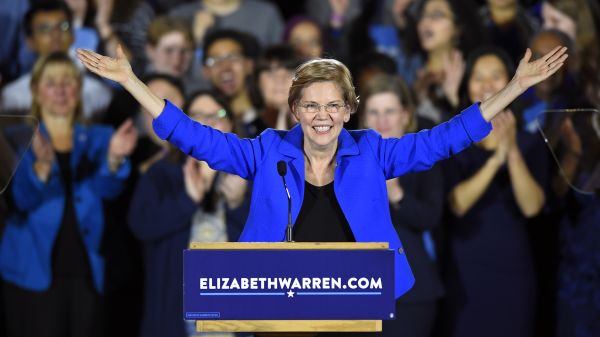
It’s official, the first major player from the Democratic party is running for president. On the eve of the new year, Elizabeth Warren announced that she would be forming an exploratory committee to run for president. While this is not an official announcement, she is all but telling us that she’s running. Along with her twitter announcement, she released a moving and very powerful video explaining her reasoning for wanting to become the next president of the United States. Many progressives have called on the Senator from Massachusetts to run for president since the 2016 primaries, and now we will see if Elizabeth Warren can pull it off.
Warren was born in Oklahoma City to modest middle-class parents. Her father worked at Montgomery Ward and as a maintenance man. After her father had a debilitating heart attack and was unable to work, her mother started working at Sears to help pay the bills. At 13 years old, Warren started waiting tables at her aunt’s restaurant to help with the family’s income. In 1968 she married her high school sweetheart, Jim Warren, and received a Bachelor of Science from the University of Houston two years later in 1970. After moving with her husband to New Jersey, she enrolled in Rutgers Law School at Rutgers University-Newark. After graduating in 1976, she wrote wills and real estate contracts for clients out of their home. The couple had two children but divorced in 1978. Soon after she remarried Bruce Mann but kept the name of her first husband.
Warren as a Special Advisor to President Obama – CNN.com
Elizabeth Warren has taught law at several universities including: Rutgers University, the University of Houston, Texas, Pennsylvania and most recently Harvard Law School. Warren quickly became an expert in bankruptcy and commercial law. In the 90s, she worked to protect consumers as an advocate on the National Bankruptcy Review Commission. In the aftermath of the recession of 2008, Harry Reid appointed Warren to a Congressional Oversight Panel to monitor the government’s handling of the financial crisis. Her work on the committee led her to advocate for the creation of the Consumer Financial Protection Bureau (CFPB), which she later helped to formally establish. In 2010, after the death of Senator Ted Kennedy, Warren was elected as the first female Senator from Massachusetts in a special election.
Although a former Republican, Warren has been a darling of the progressive wing of the Democratic party since her election to the Senate. While she advocates for many progressive issues, her main focus has been on banking and the financial sector. Videos of her relentless questioning of Wall Street executives have gone viral and have been shared by thousands. Following the crash of 2008, she has repeatedly called for the resignation and criminal investigation of banking executives. In October of 2017, during a Senate Banking Committee hearing, Warren called out Wells Fargo CEO, Tim Sloan, stating “At best you were incompetent, at worst you were complicit”.
The progressive and feminist battle cry, ‘Nevertheless she persisted’ has been attributed to Warren and other female leaders. It originated from the Senate confirmation process of Jeff Sessions to Attorney General of the United States by President Donald Trump. During debate on the Senate floor, Warren objected to his appointment and began to read a letter written by Coretta Scott King in 1986 when she opposed the nomination of Sessions to be a federal court judge. A Republican Senator interrupted her and reminded her of a Senate rule against attributing “to another senator or to other senators any conduct or motive unworthy or unbecoming a senator.” Warren was unfazed and continued to read, but Majority Leader McConnell instructed the Senator to cease and have a seat. A vote along party lines silenced Warren for the rest of the hearing. McConnell’s own words were used as a rallying cry — “Senator Warren was giving a lengthy speech. She had appeared to violate the rule. She was warned. She was given an explanation. Nevertheless, she persisted.”
Two important pieces of legislation put forth by Senator Warren are the Anti-Corruption and Public Integrity Act and the sweeping Accountable Capitalism Act. The Anti-Corruption bill is aimed at curbing corrupt campaign spending and getting money out of politics in all three branches of the federal government. The bill would place a lifetime ban on lobbying for presidents, vice presidents, federal judges, members of Congress, and cabinet members and a multi-year ban for federal employees. It would force presidents to place all assets in a blind trust and require candidates to release a certain amount of tax returns in an effort to prevent conflicts of interests. The bill would also change the rule-making process to restrict corporate influence on law-making. Most importantly, the bill would create a new independent office that would investigate and enforce rules of ethics.
The Accountable Capitalism Act is far more important in that it is one of the most sweeping bills to combat corporate power in decades. The basic premise of the bill is that if corporations claim the legal rights of personhood, following the disastrous Citizens United Supreme Court Case, then they should also accept the moral obligations as well. Currently, corporations have prioritized shareholders and enriching their bottom lines over the very workers that make those profits possible. Her bill puts more power in the hands of those very workers and ensure they have a voice in business decisions, not just shareholders. The law would require businesses with profits over $1 billion – a small group, but with a large share of economic activity and employment – to allow workers to elect 40 percent of the membership of their board of directors. The bill also requires executives to wait at least five years to sell stocks that are received as pay compensation in an effort to disincentivize stock buybacks as a way to enrich their own pay instead of investing in workers and the business.
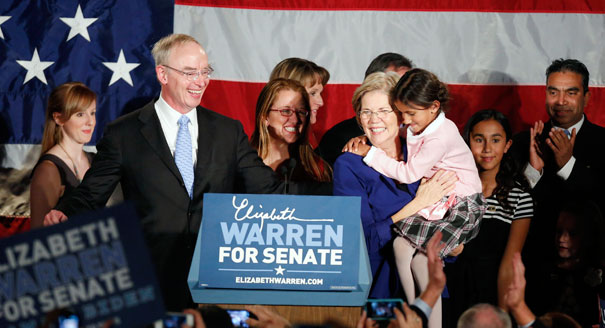
Elizabeth Warren and family – Politico
Elizabeth Warren is better known for her progressive populism, but she also supports many other ideas that will excite Democratic voters. The Senator has said she supports new hot topic policies like Medicare for All and a Green New Deal. She is pro-choice and a strong supporter of reproductive rights. Warren is equally as supportive of the LGBTQ community, supporting same-sex marriage and passage of the Employment Non-Discrimination Act. In 2015, she was one of several Senators to write a letter to the FDA asking them to lift the ban on gay men from donating blood saying it perpetuates the stereotype that all gay men pose a health risk to the rest of society. She supports an overhaul of the criminal justice system, calling it a racist and prejudiced against black and brown Americans. Warren has also advocated for the rights of states to legalize marijuana.
While there are many things for progressives to love Elizabeth Warren for, there are a few things that have made the left stop and question. The Senator from Massachusetts was noticeably silent when water protectors from the Sioux Tribe were protesting the construction of the Dakota Access Pipeline near Standing Rock Indian Reservation. Members from the tribe and protesters from around the country were brutally assaulted by local police using extreme force and fire hoses during below freezing weather. Future Congresswoman, Alexandria Ocasio-Cortez attended some of these protests. She did eventually release a statement in support of the water protectors, but many said it was a little too late, waiting until President Obama halted construction. Many on the left were also disappointed that the Senator didn’t endorse and support Bernie Sanders during the 2016 primary season, waiting to endorse Clinton until she had all but wrapped up the nomination. With Sanders losing Massachusetts by only 1.2 percent, many claimed the endorsement from one of the most loved members of the progressive wing of the party could have pushed Sanders to victory. People on the left also worry about Warrens foreign policy. In 2017 she voted for a whopping $700 billion budget for the military, way more than the Pentagon or even President Trump asked for. When it comes to Israel and Palestine she says she supports a two-state solution but adds that Palestinian application to the UN doesn’t help the peace process. If I may add, nothing but a clear and adamant condemnation of the treatment of the Palestinian people by the Israeli state is short of moral and just.
The announcement of Warren for president has been met with cheers and relief from Democrats of all shades. Warrens voice will be sure to add a needed momentum and continued economic push leftward of the Democratic party. For too long the Democratic party has lost sight of what really matters, creating a society in which every voice is valued. The New Democrats of the 80s and 90s traded corporate power and money, tossing the interests of the working class to the wayside. The prospect of the first woman president is also sure to bring voters to the polls. With a few other female candidates rumored to run as well, Elizabeth Warren will have to find a way to make herself stand out. Her relentless pressure on corporate power will motivate and excite Democratic voters, but will it be enough to set herself apart in a crowded field of candidates. Only time will tell, but as it stands right now Elizabeth Warren will quickly become a frontrunner.
The 2020 general election may be over a year away, but the Democratic primaries have officially begun. The first candidate to announce a bid for the White House is Richard Ojeda, a state Senator from West Virginia. With very little name recognition, it is very likely that most of you have never even heard his name.
Ojeda is 48 years old and was born in Rochester, Minnesota. His paternal grandfather was born in Mexico, and his father lived there until the age of 8. After high school Ojeda joined the Army where he served for 24 years, reaching the rank of Major. While in the military he graduated from West Virginia State University and Webster University, earning his Masters Degree in Business Administration. After retiring from the Army, he worked as a high school teacher before successfully running for West Virginia State Senate in 2016.
Ojeda first came on the national scene in progressive circles when he ran for the U.S. House of Representatives in the 2018 election cycle. He also gained notoriety for being very vocal in his support for the 2018 West Virginia teachers strike. Unfortunately, he did not win his bid for Congress but most notably he improved the Democratic results by 32 points, only losing to his Republican opponent by 12 points. For a Democrat in West Virginia this is pretty impressive given the fact that the previous Democrat only won 24% of the vote, with Ojeda taking 44% of the vote.
Ojeda has called himself a moderate Democrat, but many have said that his views are more in line with a left-wing populist platform. In the West Virginia State Senate, he has made increasing teacher pay a key part of his agenda, criticizing the states moderate pay increase. He also sponsored the Medical Marijuana Act, which was signed into law in 2017.
In November of 2018 he announced that he would be running for president on the Democratic ticket. A large part of his campaign is an anti-corruption and anti-lobbying platform, pledging not to take any corporate PAC money. In his 2018 House run, he only accepted small donations from individual donors and labor unions. He has endorsed Medicare for All and full legalization of marijuana.
While Ojeda may have some economic planks in his platform that will appeal to progressives, there is one notable obstacle that Democrats may not be able get past – in 2016 he cast his vote for Donald Trump for president. He stated that he thought Trump would be good for West Virginians, but has since said that he regrets that decision. Ojeda tried to justify his vote by saying that on the campaign trail Trump talked a good game about the little man and helping working class people, but since becoming president, he has become a twitter using, divisive con-man, that has empowered the very characters he claimed to reign in.
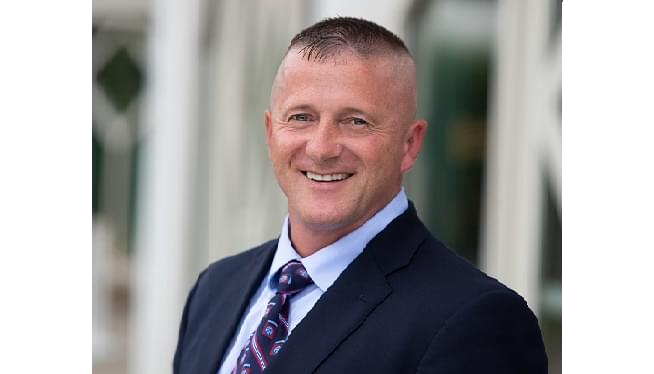
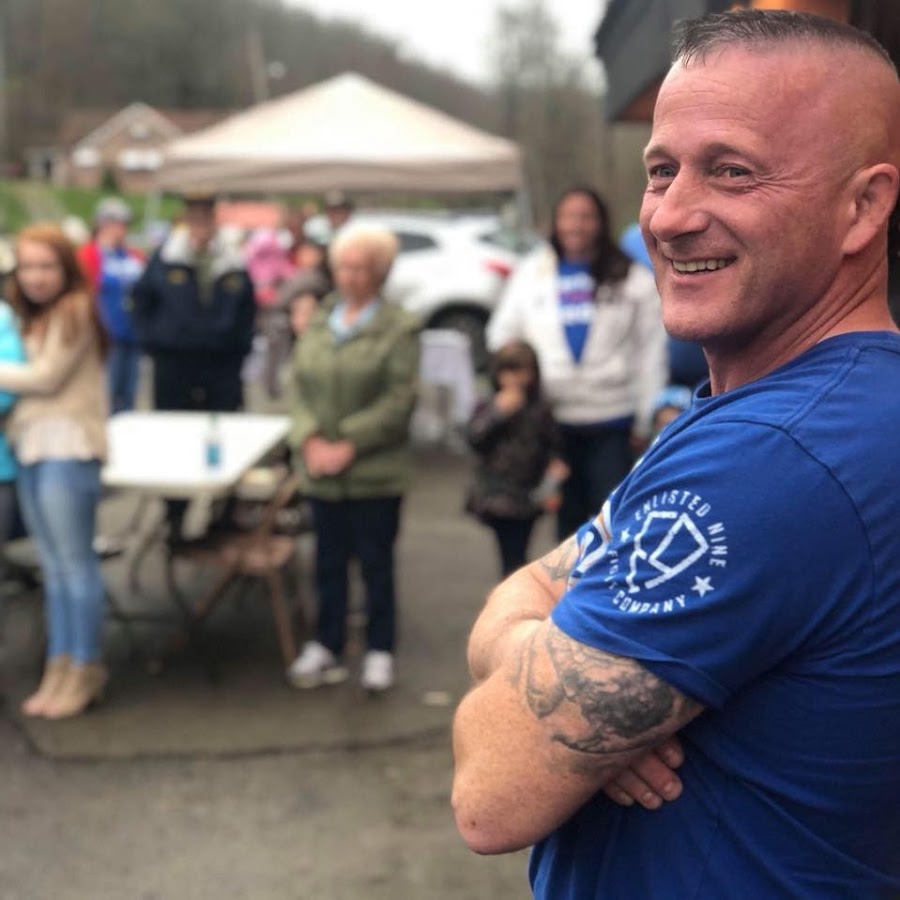
Richard Ojeda – youtube.com
In what is going to be a very crowded primary season, with candidates battling over who is the most progressive choice, does a Trump voting Democrat stand a chance? Ojeda lacks national name recognition and is relatively new on the political scene. Just last primary season, Bernie Sanders, who also had low name recognition, almost successfully took down one of the most well-known and powerful Democrats, Hillary Clinton. Ojeda is hoping for the same underdog success this time around. A key difference is the fact that while Sanders was not very well-known nationally, he was a sitting U.S. Senator and had been involved in politics for almost 40 years. The West Virginian is also personally pro-life but has said that he believes access to abortion should be legal. In a time when reproductive rights are under assault and the very existence of Roe v. Wade is in question this may also make some Democrats hesitant about supporting the candidate.
The Democratic primaries have kicked off and are sure to be fiercely fought by all of the candidates. Richard Ojeda is arguably the biggest longshot of the race but if 2016 proved anything, it’s that all political norms have been tossed aside and anything can happen, and at least Ojeda is more qualified than the current occupant of the Oval Office. That being said, I don’t see Ojeda being a frontrunner in any way, except in helping to push the party in a more economically populist direction focused on the working class.
Personally, 2018 was a whirlwind year that brought amazing moments and adventures with family and friends. On the other hand, 2018 was politically very stressful. With an endless news cycle and an even more endless amount of scandal and idiocy coming from a flailing and disjointed White House, there was no shortage of headaches to be had in 2018. Looking back this was truly the never-ending year. We saw a fiercely fought midterm election that gave Democrats control over the House of Representatives. New and exciting names emerged, from Alexandria Ocasio-Cortez to Ayanna Pressley, to name a couple.
Brett Kavanaugh & Christine Blasey Ford – CNN.com
The Supreme Court nomination of Brett Kavanaugh became a media spectacle when Christine Blasey Ford stepped forward with allegations of sexual abuse years prior. A process that is usually only followed by politically minded citizens, the hearings that ensued entranced the nation with everyone voicing their support or condemnation of both parties. The incident added fuel to the #MeToo movement and sparked continued debate on the insidious way that sexual violence permeates our society.
Emma Gonzalez – CNN.com
In February of 2018 the Parkland School shooting set in motion one of the biggest grassroots movements of the year. With Emma Gonzalez leading the way, students of Stoneman Douglas High School stood up to a powerful gun lobby and demanded real legislative change to a issue that seems to be a uniquely American problem and threatens our nation’s children.
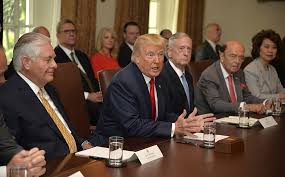
Trump Administration Cabinet CNN.com
The year in review for the Trump administration was one epic eye roll. An obviously incompetent and corrupt president acts more like a cornered animal lashing out then a steadfast leader. Trumps tweets and press conferences reveal himself to be nothing more than a petulant child with only selfish self-interests. The president’s cabinet has been ripe with scandal and has seen numerous resignations.
jamesgmartin.center
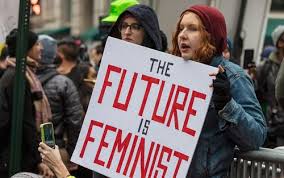
Given all of the unsavoriness of the past year, one glimmer of hope is the new feminist revolution. 2018 was truly the ‘year of the woman’. Bad-ass women everywhere stood up and demanded their voices be heard. When the new Congress is sworn in this month, it will have the most female representation in U.S. history.
2019 will be a very crucial and exciting year. With Elizabeth Warren announcing that she is throwing her hat in the ring for the Democratic party’s candidacy for the president in 2020, the primary battles on the left will start heating up. The primary challenge in the Democratic party will be nothing short of a battle for the soul of the party and of the nation itself. The new Democratic majority in the House of Representatives will have an opportunity to legislate in a way that will have real significant benefits to American family’s. The American public and progressive activists will need to hold the Democratic party and members of Congress accountable. It is time to put words into action.
Please join me at ‘to the LEFT’ in the year to come for a critical discussion of key factors affecting our nation and politics. New content and features will be added to the site to shine a light on important information. For the new year I would like to wish everyone a blessed and successful 2019!
Since 2015 the country of Yemen has been embroiled in a chaotic civil war between the internationally accepted government and the Houthi rebels. This conflict has become somewhat of a proxy war between Saudi Arabia and Iran. The Saudis have been relentless in their attacks on the poorest country in the Arab world, with most of the damage being inflicted by their massive bombing campaign. Now three years later, many international observers are calling the conflict in Yemen the world’s largest humanitarian crisis. An estimated 10,000 civilians have been killed, 1 million people are infected with cholera, a sever famine is causing millions to starve to death, and over 3 million people have been displaced. With very few people on the ground, these numbers are very rough estimates since it has been difficult to access the sheer size of the situation.
Until recently, the conflict in Yemen – and the United States involvement – has been largely ignored by the Western media. MSNBC, so-called ‘home of the resistance’ to the Trump administration, has failed to substantially cover the war. The death of journalist Jamal Khashoggi has thrust Saudi Arabia, and by extension Yemen, into the public’s consciousness. Now lawmakers on both sides of the isle are beginning to question Americas relationship to Saudi Arabia and our involvement in Yemen. The tragic irony is after thousands of deaths in Yemen, it took the death of one man to spark enough outrage to make the general public take note. It is now evident that Khashoggi’s death was ordered by the Saudi government and by the crowned Prince, Mohammad bin Salman more specifically. The prince was once heralded as a reformer when he took power, but this is now proving to be untrue.
The Pentagon has admitted that there are 7 Navy battleships in the region, just off the coast of Yemen. The U.S. government had long claimed that these ships are not aiding in the naval blockade of the country, but with that many in the area that can’t possibly be true. Since the country depends on imports to survive, the U.S. military and government is directly aiding in the deaths of thousands of innocent civilians. In 2016 it was reported that a U.S. ship off the coast of Yemen was fired upon. No ships were hit in the alleged attack. The media has reported that the ‘Iran backed’ rebels, the Houthi, fired the missiles. By reporting it in this way, it gives the impression that Iran is directly responsible for the attack. There is also no context given in the reporting of the incident as to why the rebels would fire a missile at a ship in the region. There is no mention of the fact that Yemen has relentlessly been bombed since 2015. By not stating this obvious fact, it makes it seem like any U.S. response is a retaliation and therefore justified. On the so-called ‘progressive’ MSNBC, Rachel Maddow gave what is essentially a process critic on the incident instead of discussing the war more broadly. She said that then candidate Trump said that if Iranian sailors even looked at our sailors wrong, he would blow them out of the water. She then questions what President Trump is to do to retaliate for the attack. Maddow conflates the supposed attack directly with Iran when the country has not fired any missiles at our ships and no evidence exists to show that they directly aided the rebels in the act. This is narrowly defined media coverage and outright war machine propaganda. Instead of debating the validity of our imperial wars or how we interact with the rest of the world, the critique is that he will not implement said imperial wars effectively. It is indeed worrisome that a petulant imbecile is at the helm of our military, but we should be asking ourselves if we should even be involved in these situations around the world. This is about Geo-political influence and is modern day colonialism and imperialism. Have we learned nothing from the middle east in the past 30 plus years.
The country of Yemen has been devastated by the Saudi regime with the help of the U.S. and British governments. The U.S. has been a longtime seller of weapons to Saudi Arabia, with the Obama administration seeing the largest sale of weapons to the country in history. From 2008-2015 Obama saw close to $94 billion in arms to the regime. The U.S. has also provided in-air refueling of Saudi jets, logistical aid, and intelligence support. As the war in Yemen escalated and the situation became more of a humanitarian crisis with more and more innocent life lost, the sale of weapons and support continued. There has been virtually no push-back from the U.S. or Britain. A school bus carrying children was bombed killing at least 40 children. In October of 2016 Saudi Arabia bombed a funeral within Yemen killing close to 140 civilians and injuring almost 500. The Saudi government said that the bombing was based on incorrect information and was a mistake, but the use of a ‘double-tap’ attack suggests otherwise. This form of attack is when the first bombing is followed by a second strike soon after with the intent of killing wounded survivors and aid workers. The bomb used was identified as a U.S. made bomb by the company Raytheon. These specific types of bombs were provided to Saudi Arabia with the understanding that they would make their targeting more accurate. Mark Hiznay, the associate arms director at Human Rights Watch, have called these bombs “dumb bombs with graduate degrees”.
U.S. made bomb used by Saudi Arabia in Bombing of Yemen – CNN.com
The Trump administration has signaled that they would no longer refuel Saudi jets but has refused to stop arms sales to the country or put any kind of pressure on the regime. In fact, President Trump has doubled down on his support for the country. Donald Trump’s first foreign trip as president was to Saudi Arabia, the first for a U.S. president. Even after the death of journalist Jamal Khashoggi, Trump refused to hold the crown prince or Saudi Arabia accountable. Could this be because Trump and his family have many financial interests in the country?
The conflict in Yemen is a war that the U.S. government is clearly helping the Saudi’s wage. This war has never been debated nor authorized by the U.S. Congress. One glimmer of hope in a sea of darkness filled by the deaths of thousands of innocent lives occurred recently. The Senate passed a resolution, 56-41, to end all military assistance to Saudi Arabia in relation to the war in Yemen. The bill was co-sponsored by Sens. Bernie Sanders (I-VT), Chris Murphy (D-CT), and Mike Lee (R-UT), and had bipartisan support. After failing to pass months earlier, the death of Jamal Khashoggi helped push it over the threshold this time around. Sadly, the measure was blocked in the House of Representatives. The House Rules committee, on behest of Speaker Ryan, slipped in a provision of the rules to the Farm Bill that prevented the House from voting on a Yemen resolution for the rest of this term. The narrow procedural vote was 206-203, with 18 Republicans voting against and, despicably, 5 Democrats voting for the bill. Ryan knew that many Republicans in the House would join Democrats in voting to end U.S. support for the war in Yemen. This disgusting act of cowardice and malicious continuation of immoral bloodshed will not be forgotten, especially those five Democrats. Collin Peterson (D) of Minnesota callously stated he didn’t know a “damn thing” about the war in Yemen.
A tide is turning in this country and in the public’s consciousness. People are finally starting to wake up to what their country is doing. The media is starting to report on the tragic conflict thousands of miles away. It is interesting to note that the United States started helping the Saudi’s in their bombardment of Yemen under the Obama administration, yet is only beginning to reflect on the situation now that Trump is in office. When the media does comment on the conflict, it is narrowed in an imperialist way that does not significantly question the U.S. involvement around the world. Instead, we should move past this worldview and ask what the validity of these actions are and how safe or unsafe they make us and the rest of the world. I write this piece with a heavy heart and with tears in my eyes. We are told to approach policy with logic and not with emotion, but often we need emotion to cut through the veil of mistruth and propaganda. At the moment our government is using our taxes to fund the deaths of innocent children. This imperialism makes us less safe and fuels extremist ideology. It does not serve to protect the American people as these actions are so often sold. Instead they serve American weapons manufacturers, defense contractors, and Geo-political influence in the region over natural resources like oil and capitalist consumer markets. Without foreign assistance the Saudi regime would not be able to wage this unjust and immoral war. It is past time the American people demand our leaders stop allowing this unnecessary bloodshed to continue.
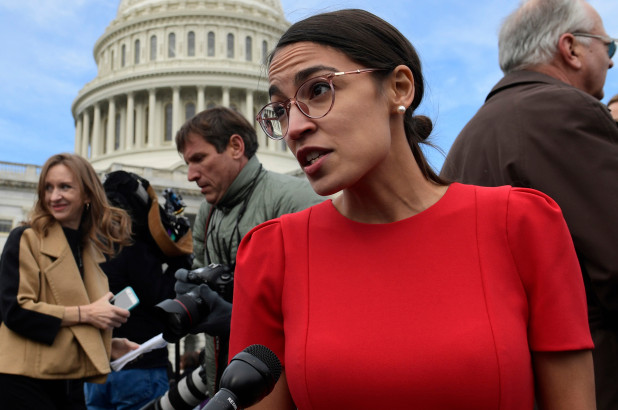
One of the biggest complaints about Congress is that it is too out of touch, unable to understand the basic needs and struggles of everyday Americans. The halls of Congress are filled with elitist millionaires with bank accounts larger than what most Americans will ever see. The average net worth of a Senator is $3.2 million and $900,000 for a Representative in the House. Studies have shown that Congressional offices give preferential treatment to large campaign donors while ignoring calls from everyday citizens. While most members of Congress are unattainable, there is one freshman congresswoman making waves and changing the way members of Congress interact with their constituents. Alexandria Ocasio-Cortez has become a political rockstar ever since she beat longtime Democratic incumbent, Joe Crowley, in their June primary. From the very beginning of her campaign, she has shown that she will be beholden to her constituents and the movement behind her. In a debate with Crowley she was asked if she would support and endorse her opponent if she lost her primary challenge. Her response was brave and honest. She said that decision would not be up to her alone. She was representing a movement and would therefore need to go back and discuss what would be best for the larger movement. This is what it means to be the leader of actual people and not special interests. As it turns out, honesty and sincerity are still important to voters.
Now that Ocasio-Cortez will officially be a member of Congress, she intends to be a different kind of politician, one that sees herself as part of, instead of above and seperate, from a community. Ocasio-Cortez has been very open and honest about her struggle to find affordable housing in the D.C. area, where housing prices are some of the highest in the nation. Many in the media, and on the right, have criticized her and made a joke out of her financial situation. In pointing to, in their minds, her inadequate savings, they have revealed how out of touch they really are. According to the Economic Policy Institute, the median American household has less than $5,000 in savings, with about 30% having less than $1,000. What makes her appealing and relatable is the fact that her situation is more like the lived experience of everyday Americans than the wealthy beltway pundits laughing at her bank account or lack thereof. This is especially true of millennials. Millennials get a very bad rap when it comes to the job market and the housing market, but what some fail to acknowledge is that this generation – my generation – came of age during a time of financial crisis; a time and economy very different then our parents’ generation. Wages have stagnated, the types of jobs have changed, the labor market has become less unionized, the cost of living has increased, the cost of education has skyrocketed, and housing has become very unaffordable. That equation has been very difficult for younger generations to maneuver, and Alexandra Ocasio-Cortez is speaking truth to power about this experience. Unless more millennials and young people run for office and become politically engaged, the political system will not be prepared to speak to the problems affecting a new economy.
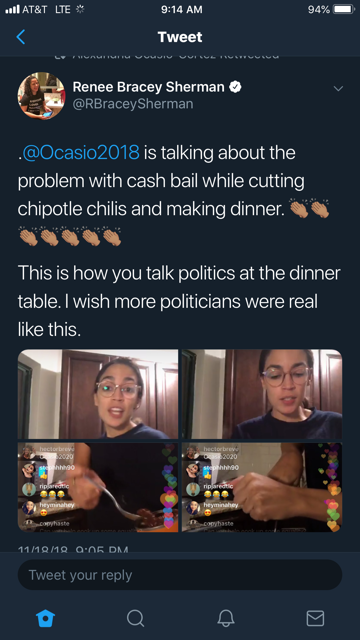
Society is changing and calls for making all aspects of it more democratic grow louder, as it should. One part of this is social media (although there are many downsides to this platform as well). Social media has become a very prevalent part of our society, especially for young people. Her strategic use of the platform is smart and builds on the innovations of the Obama and Sanders campaigns. If you are not following her on Instagram, then you are truly missing out. The voters sent her to Washington and now she is bringing everyone along for the ride. Her posts narrating congressional freshman orientation will put a smile on your face and are very useful in lifting the mysterious veil over Congress. Even before heading to Washington she regularly live-streamed herself cooking dinners at home while discussing politics with her followers.
Via Twitter @Envisioned_One
These Instagram live-streams are comparable to the FDR fireside chats during his presidency in the 30s and 40s. Roosevelt knew that accessibility was important to the general public, and Ocasio-Cortez knows this as well. Alexandria Ocasio-Cortez brought us along with her as she navigated her first week of orientation, fangirling her meetings with other members of Congress. The videos of her discovering underground hallways in the capital building and the Congressional train remind you of an excited kid starting at a new school.
Instagram
Instagram
Instagram
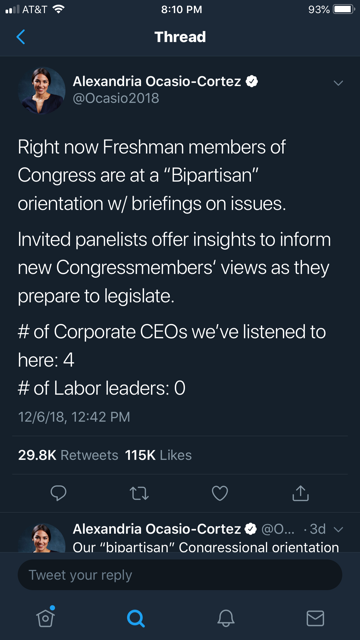
But don’t let this excitement fool you, Alexandria is an articulate and gifted fighter. Recently she revealed that a panel for congressional orientation was packed with corporate CEO’s and lobbyists, but conveniently excluded labor and activist representation.
Via Twitter @Envisioned_One
How often do our elected officials reveal how intertwined and compromised our politicians are to business interests? Many times, candidates run on a platform of change and populism only to abandon those promises once elected. Ocasio-Cortez appears to be sticking to her guns. What she is doing is very important. She is lifting the veil on a mysterious institution clouded in mistrust and showing ordinary people that Congress and politics is not just for rich old white men but can and should be for anybody. I can’t wait to see what she does with her new-found power and platform. I see a long and exciting career ahead of her, even living in a certain famous house one day.
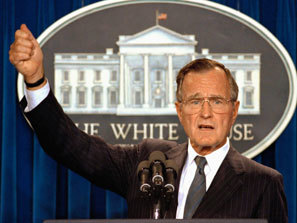
George H.W. Bush was a member of the House of Representatives, a United States Ambassador to the UN, director of the CIA, Vice President under Ronald Reagan, and finally the 41st President of the United States from 1989-1993. On November 30th Bush died at the age of 94. Since his death the media has showered the former president with adoration and praise, painting a very favorable picture of his time in the White House while glossing over the more inconvenient aspects. Columnists have said the late president represented civility and dignity. During his campaign and presidency Bush Sr called for a ‘kinder, gentler America’, but did his actions reflect this belief.
While there were some good things to come out of the Bush presidency — presiding over the end of the Cold War, standing up to the NRA, and signing the Americans with Disabilities Act — there are many problematic details about the first Bush’s term in office. Bush Sr was one of the most important men in modern history and to only focus on the positive parts of his legacy while ignoring the negative parts is dishonest and disingenuous.
As a gay man, the way Bush dealt with the AIDS crisis in the early 90s was disgraceful. The HIV/AIDS virus was discovered in 1981 but it took Ronald Reagan almost 4 years, not until the year 1985, to even utter the word AIDS in public. When Bush took office in 1989 he continued this policy of inaction and indifference. Although Bush signed the Ryan White Comprehensive AIDS Resources Emergency Act, his administration lacked urgency. As thousands continued to die, and activists demanded funding and treatment, Bush’s main response was of ‘personal responsibility’. LGBTQ activists famously sprinkled the ashes of fallen loved ones on the lawn of the White House in an effort to call attention to the epidemic.
George Bush Sr devastated Iraq in the Gulf War based on half-truths and lies and helped to ensure that American military intervention would be the default foreign policy for decades to come. At the time, Bush claimed the U.S. had no choice but to use force because Saddam Hussein had invaded Kuwait. Yes, the invasion of Kuwait violated international law, but many commentators now believe that the U.S., through its ambassador to Iraq, essentially gave Hussein the green light to invade Kuwait in order to have an excuse to invade Iraq. The U.S. bombed the Amiriyah Shelter, knowing full well that the site was being used for civilians, killing over 400 innocent lives. The Iraqi civilian infrastructure was devastated, also violating international law. Electrical power stations and food plants were bombed in an effort to cripple the country’s infrastructure in order to make Iraq dependent on international assistance after the war. Post-war sanctions further devastated the country. The administration also said that Saddam was preparing to invade Saudi Arabia with troops being deployed at the border. This turned out to be a lie as well. A reporter, at the time, purchased commercial satellite data and saw that in fact there were no troops at the Saudi border. Like his son to come, the administration used lies and misinformation to lead us into a war that cost the U.S. and Iraqi countless lives.
Many in the media have neglected to point out that Bush was criticized for helping to cover up potential crimes involving the Iran-Contra during the Reagan Era. During Ronald Reagan’s presidency the administration facilitated arms sales to Iran, in clear violation of an arms embargo, in order to raise money to fund the Contras in Nicaragua. At the time the Contras, favored by Reagan and the U.S. government, were in a struggle against the ruling Sandinista party. Right before the trial of Defense Secretary Caspar Weinberger, Bush issued pardons to him and many other individuals involved with the incident. The president also refused to cooperate with the investigation in which he was directly involved as Ronald Raegan’s Vice President. This seems all too familiar to the current situation with Trump and Robert Mueller.
Upon taking office Bush continued to ramp up the ‘War on Drugs’, which has had clear racial implications. During one of his first Oval Office press conferences, Bush displayed a bag of crack cocaine that he said was sold and confiscated right across the street from the White House. Bush wanted to show the American people that the crack epidemic was rampant in every corner of American society, but this was also a charade. The man that sold the crack cocaine to undercover DEA agents was in fact lured to the spot near the White House by agents in order to mislead the nation. The stunt was used by the administration to call for, in his words, more prisons, jails, and prosecutors. This was just the beginning of what was to become an incarceration nation, with the U.S. imprisoning more people than any other developed nation.
For all the talk of Bush being a civil and decent human being that wanted a ‘gentler and kinder’ America, journalists forget about the extremely racist Willie Horton ad during his 1988 presidential campaign. Even many Republican operatives at the time said that it went too far. The ad described a convicted rapist that was allowed a weekend furlough pass. While out he raped a young woman and killed her boyfriend. Their aim was to tie the incident to the Democratic candidate and stoke racial fear. Lee Atwater famously said at the time, “We’re going to talk about Willie Horton so much that people are going to think he’s Michael Dukakis’s running mate”. How is this not similar to the blatantly racist ad that the Trump administration put out before the 2018 midterm election about the traveling migrant caravan from Central America?
Let us also not forget that President bush sent troops into Panama to issue an arrest warrant for its leader, Manuel Noriega. The arrest warrant was for drug trafficking charges. Noriega was an ally to the U.S. and was even on the CIA payroll. We must remember that George H.W. Bush was once the director of the CIA, and during this period the U.S. government, through the CIA, frequently meddled in Central American affairs. Over 20,000 troops were deployed into the small Central American country, killing over 3,000 Panamanians. The move was seen by most of the international community as an illegal invasion of a sovereign country. The invasion of Panama was one of the first uses of military force after the end of the Cold War, and helped to introduce the U.S. policy of using force to ‘protect’ democracy around the world.
When any life is lost it always a somber time, especially for family and people close to the person lost, but death does not absolve a person of his or her sins. We must always be critical of our leaders and their legacies, no matter who they may be? The positive and the negative must be brought into the light. Introspection is a way to learn from our collective past. Journalists have a duty and responsibility to be critical of our leaders and current events, not just a mouthpiece for the government or the powerful. Patriotism does not mean that one must never criticize or question. Too often people use the threat of anti-patriotism or being anti-American has a way to crush dissent and debate. It is not blindly accepting the words and motives of our leaders. Instead, true patriotism is aspiring for your country to be better, holding it accountable to the ideals of freedom, respect, and liberty. We must never bow down to this threat and always strive to surpass even our own expectations. When we are gone, how will the next generation look back and judge our decisions?
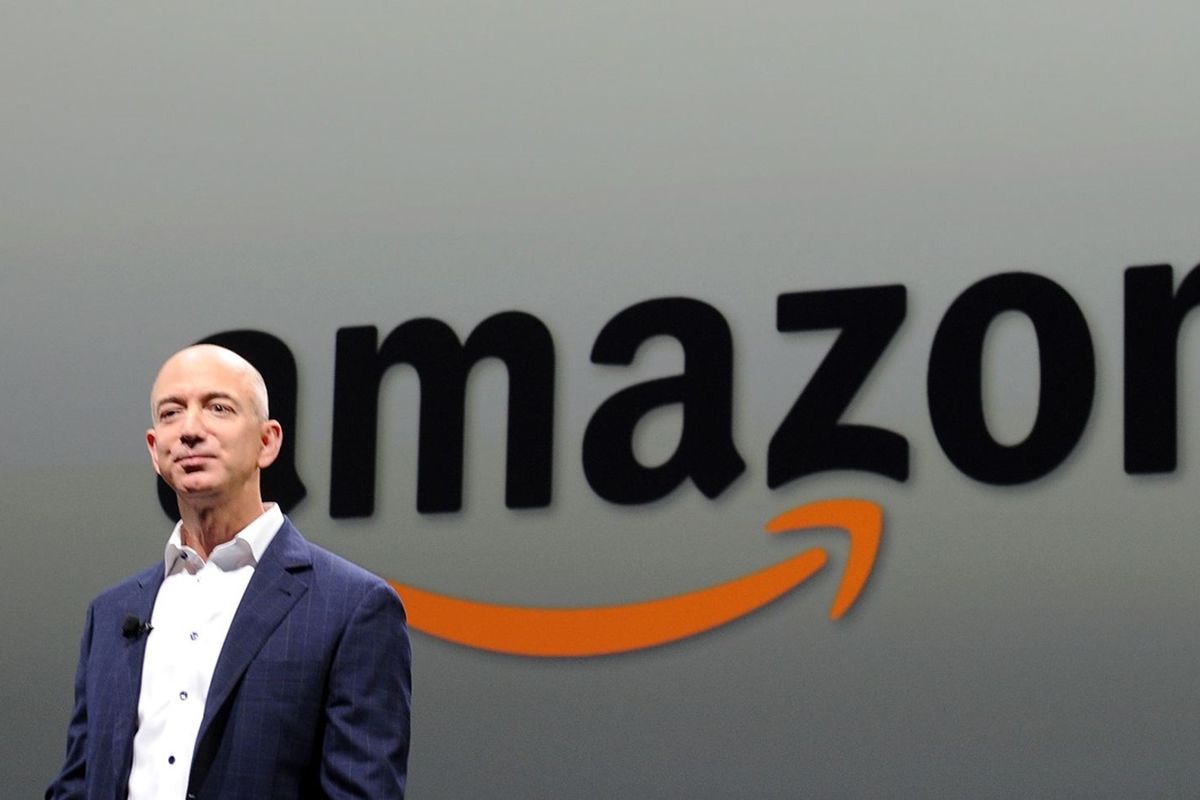
With online shopping sales quickly outpacing brick and mortar sales, one online retailer stands above all the rest. As Amazon’s sales skyrocket so does their reach and influence. Amazon was founded by Jeff Bezos in 1994, and it quickly became a giant in the online shopping market. In 2017 Amazon brought in almost $180 billion dollars in sales, with Jeff Bezos’ net worth topping $100 billion. As its sales grew, so did criticisms about its business practices and its effects on local economies. Working conditions of its warehouse workers, potential monopoly accusations, and its effects on local housing markets have been the most frequent criticisms against the company. As the U.S. is currently in the midst of an affordable housing crisis, large cities all over the country are seeing a spike in homelessness and overpriced housing options. From San Francisco to New York city, gentrified neighborhoods and skyrocketing rents are outpricing residents, pushing them out of their own cities. As news is surfacing about Amazons new headquarters in Virginia and New York many people are wondering what will happen to the area in which these facilities will be built, especially since these two areas are already expensive at the moment.
For some insight into the potential effects of these new Amazon headquarters we can look to Seattle, Washington which has had an Amazon headquarters since 2007. A former classmate of mine, Shenetta Sims, has been living in the Seattle area since 2015.
It has now been some time since Amazon announced that its secondary headquarters will officially be split between Long Island, New York and Alexandria, Virginia putting home buyers, apartment owners, and businesses in a flurry to capitalize on the impending commercial boom. Virginia Tech has already announced a new innovation campus to offer a hub of talent to choose from. Amazon employees are rushing to buy homes in both cities (some before the official announcements), and some Metro stations are already in the process of obtaining facelifts to support this new influx of people. Things seem to be looking up for both cities in anticipation of the move, but some are rightly concerned as to what this could mean for the infrastructure of their respective cities. In order to understand the possible impacts of a behemoth company like Amazon, we only have to study Seattle’s rise in the past ten years from its reputation as a musically inclined fishing hotspot to a technological powerhouse.
Amazon announced Seattle as its headquarters in 2007 during which time the city was home to nearly 600,000 residents and home sale prices hovered around a median of $390,000. It’s worth mentioning that while Microsoft already had an office about 20 miles away in Redmond and Google would also establish an office in 2009, 13 miles away in Kirkland, Amazon was the first major technologically based company to move centrally into Seattle. Since then the city has experienced a growth explosion that has yielded new restaurants and entertainment that people flock from all over the world to enjoy. This is reflected in tourism rates which have risen around 5% annually between 2010 and 2016 bringing billions in city revenue. It’s a great time to live in Seattle…if you earn well over the average income of $82,000 per household. Many of the new experiences coming to Seattle are cost prohibitive. Seattle’s median home sale prices have skyrocketed to a peak of $720,000 in January of 2018, rent prices have increased by 62%, and homelessness among people living without any sort of adequate shelter has more than doubled. The result is that many Seattleites who once called the city home are pushed farther into the suburbs and surrounding cities which are in turn experiencing their own cost of living increases and loss of diversity. The city of Seattle, realizing that they were facing a crises on their hands, did attempt to remedy this situation by passing a head tax bill which would charge any business grossing more than $20 million a year to pay a tax of $275 per Seattle employee which would then go towards helping combat the homeless and housing the problems the city was facing due to the business influx. However major corporations in the city protested by hiring a consulting firm with ties to President Trump’s campaign to gather signatures in protest. Amazon in particular shut down all construction in Seattle forcing the city to repeal the tax less than a month later. This is leaving us with a city that is struggling to maintain its identity as it’s pushed closer and closer to something akin to San Francisco.
With these effects in mind, it is understandable to view the new announcement with trepidation if you are someone living in Alexandria or Long Island City. Amazon, like many other large-scale corporations, does have a history of less than ideal business practices and treatment of workers which both cities should anticipate and address as the move occurs. However, as someone who has moved to Seattle from Virginia, I believe that the experience will be much more positive in the new cities. Not only do they have what is essentially a play book of Amazon’s practices going back ten years, but the cities themselves are established in handling large scale industry that is much more diversified than what we have in Seattle. Infrastructure is already in place to handle the mass amount of people moving around two of the nation’s biggest cities, and the current transient nature of Seattle’s population would be nothing new to the areas. In addition, the main tech industry hubs have been largely centered on the West Coast until now, creating a specific culture that will be interesting to see with a more East coast influence. In conclusion, I believe that the move will be mostly exciting for the people in the affected areas. But it will be up to these people and their governments to not be blinded by the increase in revenue and to force companies to maintain a standard of doing business in the area that will protect the most vulnerable; something that would be best accomplished by all three cities working together to put pressure on Amazon to do the same. — Shenetta Sims
While most commentators on the left are critical of Amazon and skeptical of the complete benignity of the company’s intentions there are some conservatives who are also weary of Amazons influence on local communities and the market at large. Patricia Neil is a conservative that lives outside of Boston, Massachusetts and works in the pharmaceutical industry. As a former resident of one of the newly announced Amazon headquarters in Crystal City, Virginia, she also has a good idea about the potential effects of the company’s new headquarters.
Being that Crystal City is a gateway to Washington D.C., it is already densely populated and congested. There are no shortages of job opportunities in the area as well. An Amazon site is going to be a traffic and population nightmare for Northern Virginia, which already has these issues. Since there isn’t an unemployment problem in Northern Virginia a windfall like this would have been more beneficial in other areas of the state or country. Since Northern Virginia is very expensive to live in already I would be very curious to see an impact analysis on the area. The majority of jobs that will be brought to the area will be lower to middle incomes. These people will not be able to afford housing in the area of the headquarters so will have to commute long distances to work. The commuters from the Fredericksburg area, central Virginia, and Maryland will tax the already maxed out highway system and Wilson Bridge.
Apart from the impact on local communities there is a debate to made about the use of subsidies by states when trying to entice corporations to move to a specific area. Any state that is giving subsidies to Amazon or the optics of Amazon even asking for subsidies is somewhat reprehensible given that they are now a $1 trillion company. As a conservative and a capitalist, unfortunately this is capitalism at its worst. The bottom line is when you’re that powerful you have a choice, you can have your power do something good or you can have that power run the table. I think Bezos is letting his influence run the table, otherwise why would he put a distribution center in Northern Virginia and take subsidies from New York. The part that really bothers me about this deal is that you know there was a room full of bean counters figuring out what the earnings per-share would be as a result of building in Northern Virginia and New York with the subsidies versus say going to a more economically depressed area. We’re talking about cents on the dollar for a company of this size. So, for a cents on the dollar impact on your earnings per-share they would rather have that earnings per-share be a couple cents more than put something in a place that could really benefit from it.
At the end of the day we’re talking about cents on the dollar translating into earnings per share and stockholder value. There is no question that Bezos could’ve gone somewhere that would have had a better economic impact on the local community. Honestly as a conservative I’m offended by how Amazon is behaving. I believe Amazons game is a monopoly, and it’s only a matter of time before the federal government steps in, not unlike the government did with Microsoft. Jeff Bezos should take a page out of Bill Gates playbook and learn from the example set forth by the monopoly rulings of Microsoft. — Patricia Neil
While Amazon, and its two-day prime shipping, has helped to foster a world of convenience, there needs to be a larger discussion about its effects on communities and our economic society at large. Do we really want a company as large as Amazon having as much power as it does, with its tentacles reaching far into every aspect of our lives? Is it time for the government to step in and more heavily regulate Amazon? Is Amazon slowly becoming a monopoly? These are hard questions that need to be asked and investigated. The real question is, will we as a society ask these questions before Amazon gains too much power and it is too late?
With Democrats regaining control of the House of Representatives, a new speaker will be stepping up and taking the gavel. Just a day ago, Pelosi, running unopposed, won the Democratic nomination to become Speaker of the House. In the secret ballot she received 203 votes with 32 opposing her nomination. In January she will need 213 votes to become speaker, so she has some work to do in winning over some of those ‘no’ votes. Most observers believe that Nancy Pelosi will once again prevail in her role as leader of the caucus. She has led House Democrats since 2007, when she became the first woman Speaker of the House. Her bid for the role has been in question. She has faced challengers before and come out on top. Most recently, in 2016, she defeated Ohio Democratic Representative Tim Ryan in the role of minority leader. With that being said, the opposition to her winning Speaker are more tangible and seem to be more of a threat than ever before. Pelosi has always been a boogeyman figure on the right, but she is now facing criticism from members in her own party. Many Democrats believe that new leadership is needed, and it is time for someone new to take the reins. A critique from the left is that while she has led House Democrats, she has seen substantial losses in the 2010 and 2016 elections. Many new and younger members have voiced a desire for new leadership, some even running on the pledge not to support her for Speaker in their 2018 campaigns. Pelosi’s supporters will point to the fact that Democrats won big in 2018 and that she is one of the best fundraisers in politics. Critics will say that the reason Democrats won big this cycle is not necessarily because of her, but because of the toxicity of President Trump and Republican party. The Presidents party is never favored in an off-year midterm election. Some people have claimed that there is an underlying sexism in the calls for Pelosi to be replaced.
Virtually no one is calling to replace Chuck Schumer in Senate leadership. Schumer has seen substantial losses in the Senate and compared to the Democratic base, he is far to the right. Chuck Schumer has been completely ineffective against Trump and the Republicans, even enabling them in many ways. He stood aside as centrist Democrats voted for bank deregulation and thus, putting the economy and livelihoods of Americans at risk. He was no fan of the Obama era Iran Deal, which he voted against in 2015, and barely put up a fight when Trump singled that he was going to pull out of the deal. In regard to Israel and Palestine, he is very far to the right of the Democratic base. He even celebrated the American embassy move to Jerusalem. The media and many in the party are not calling for new leadership in the Senate. With new leadership in the House needed, then it is also needed in the Senate. If Pelosi is to be replaced, who should replace her?
A few freshman members of Congress have voiced support for a new leader, but they have not put forth any names of who her replacement should be. The role of speaker is very complex, so a freshman or newer member is probably not the best idea. Also, the few names floated to replace her are man and Democrats to the right of her. This is not a good idea for a party that is increasingly moving to the left, and the optics of a group of men coalescing to unseat a woman is not good for a party that just elected record numbers of new women to Congress. Something else to remember is the time from now until the 2020 presidential election is crucial for the party. Everything the Democratic party does between now and then will either kill their chances to take back the White House or aid in their success. An effective speaker and legislation to energize the base will be pivotal. One name that has been briefly floated by the more progressive wing of the party is Barbara Lee of California. She has been a member of the House since 1998 so she has plenty of experience in the workings of House politics. Most importantly she is very exciting for the Democratic base. She was the only member of the House to vote against the use of force in Iraq after 9/11, and routinely advocates for the repeal of the 2001 War Authorization Act. Also, there has never been an African American Speaker of the House and many Democrats have complained that black House members have been practically locked out of leadership roles. Black women are the most loyal demographic of the Democratic base, with a whopping 94% supporting Clinton in the 2016 election. Our Congressional leadership should look like the country that it represents. The Democratic party is supposed to be the party of inclusion. Instead of taking a loyal voting block for granted, party leadership needs to step it up and actually be the party that it claims to be. Change is indeed needed in the role of speaker and much of the House leadership, I just don’t know if now is the right time with 2020 looming in the not so distant future. Is a viable option available? Is a progressive champion ready and willing to take on the difficult job of uniting the party in the only part of the federal government Democratically controlled?
While anything can happen between now and January, Pelosi’s chances look good. She has loyal members with whom she has formed strong alliances with in the 10 years she has been the Democratic leader. One thing is for sure, Nancy Pelosi isn’t going down without a fight.











 to the LEFT